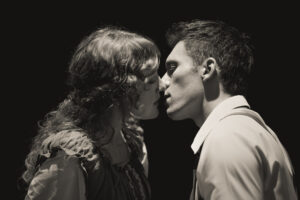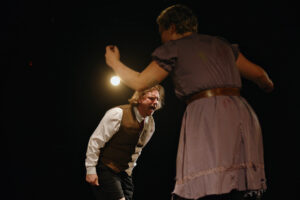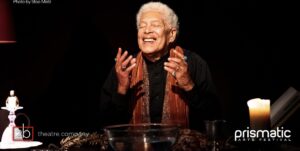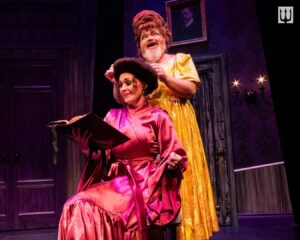
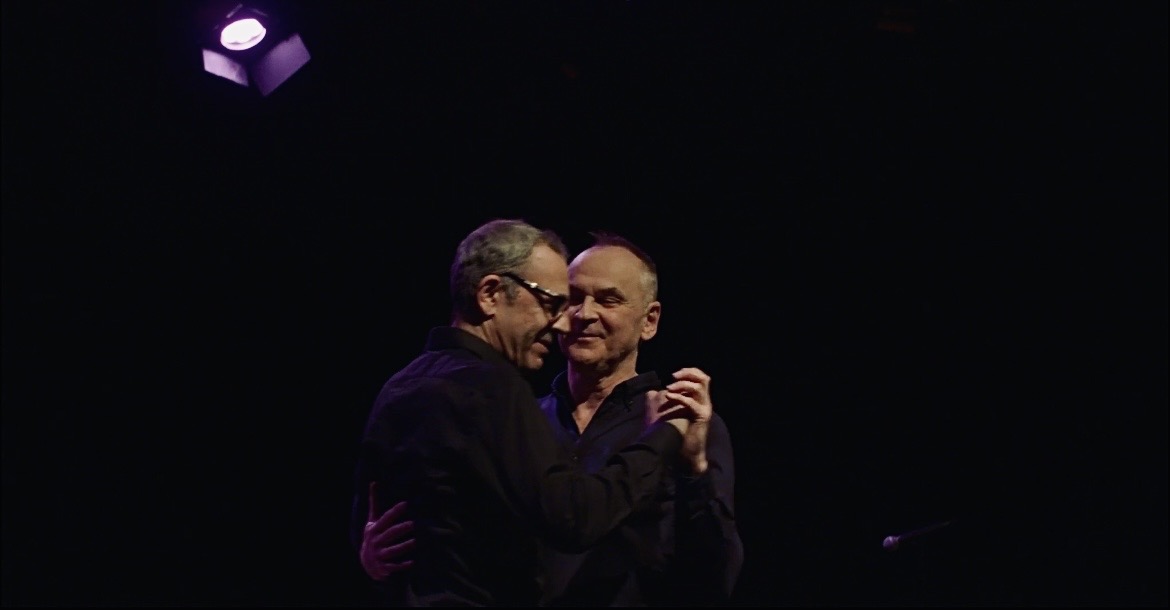
Daniel Brooks and Daniel MacIvor in The Work
In a conversation with Mark Wigmore at New Classical FM esteemed Canadian Theatre director, actor and playwright Daniel Brooks was speaking about his solo show Other People, directed by Brendan Healy and dramaturged by Daniel MacIvor, he said of doing the show, “It is hard work… One of the great privileges of my life is that I’ve had great work to do, that I love work; I love my work. So, it’s the work itself that is exciting and challenging, and difficult, and thrilling.”
I recently watched Daniel MacIvor’s documentary about the overlap of making his shows Who Killed Spalding Gray and Let’s Run Away with Daniel Brooks, his longtime collaborator and best friend, and Brooks making his show Other People, and in the centre of this overlap is Brooks receiving a terminal diagnosis: Stage 4 Lung Cancer. The documentary is aptly titled The Work.
At the beginning of the documentary we are brought into the inner workings of the theatre- the cluttered and distinctly unglamorous backstage, and then on stage where MacIvor and Brooks with their collaborators are doing the meticulously unglamorous work of setting proper lighting levels and spacing during tech. These aren’t the moments that folks necessarily imagine when they think of what fun it must be to be an actor, to be in “show business,” if we can even call the Canadian theatre that. This is slow and finicky work, as MacIvor tries to negotiate getting in and out of a chair behind a small table seamlessly, but without moving the chair back as you would do in real life. The table is smaller than he had imagined it would be, and this movement, while speaking his lines, is requiring a high level of concentration and repetition to become natural in his body.
In Who Killed Spalding Gray MacIvor explores a real event that happened to him in January of 2004 when he went to San Rafael, California to see Paul Goodberg, to have a malevolent entity removed from him. He was told that he had this entity trying to kill him because his ex boyfriend’s intuitive, Ellae Elinwood, had told him so. In the documentary we see MacIvor visit with both Goodberg and Elinwood more recently, which helps bring this story from Who Killed Spalding Gray into a much more tangible realm for the audience. We also spend a lot of time with MacIvor in a car. He is driving through these unfamiliar streets, trying to navigate smoothly, and at times we see him become frustrated and impatient because he doesn’t know where he is going. This seems to be both in literal and metaphorical terms.
In the rehearsal hall with Daniel Brooks MacIvor seems much more grounded and sure- maybe not of where exactly they are going- but that they are going to get there. We see Brooks giving MacIvor notes on the performance, at one point asking, “Are you doing too much for us?.. Do you know what I’m suggesting?” to which MacIvor responds, “no,” and the two begin to talk over one another in this hilariously beautiful portrait of intimacy, where they will negotiate their way out of this tricky theatrical moment simultaneously- not with just Brooks’ idea or just MacIvor’s but a seamless melding together of both until it feels right- until it works. In a Talk Back with playwright Michael Healy MacIvor says that early in the process of creating the show, “we run it, we don’t know what it is, but we run it, and I just end up doing things.” On the surface this sounds vague, but in practice it shows such a solid trust in the process they have created together. Even when they don’t know what it is, what it could be, where exactly they are going- they run it and, eventually, they find it.
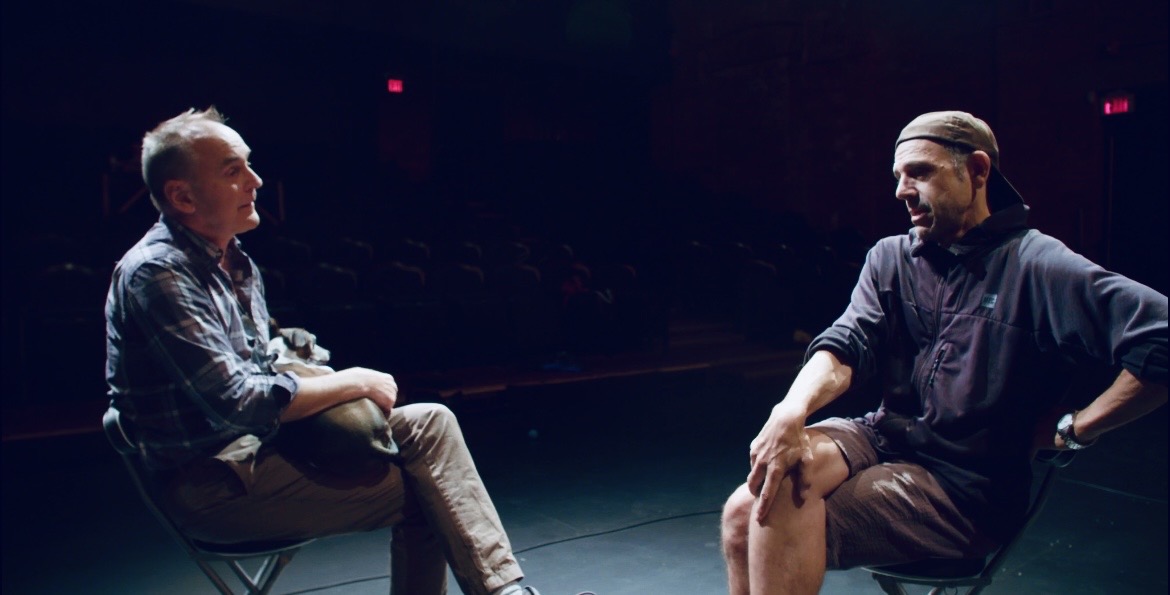
MacIvor mentions that he was raised with the concept of God, who he says is a kind of audience, and that in his relationship with Brooks is “30 years of [him] watching me,” to which Brooks responds that yes, he has seen MacIvor’s face more than his own. The difference in their energies is captured here- MacIvor- playful, frenetic, verbose, vulnerable, wide open to an array of possibilities, thoughts, and ideas (a door with no doorman, as he says in Your Show Here), a hint of hesitancy sometimes, and an array of emotions easily accessible that make him such an engaging performer who can oscillate between bursts of joyful theatricality, dry wit, and devastating poignancy. Daniel Brooks has two daughters, and there is a “girl dad” vibe in him that I think is, in part, what drew me to him as a mentor when I was a young theatre critic starting out in Toronto. As a girl who grew up without a father, if I could have chosen attributes to create my own “perfect dad,” I think there would be a lot of Brooks in what I would conceive. He smiles so much and so readily, with such genuine warmth and care and a profound attention to what is happening in this specific moment. There is a playfulness to his smile, that captures his immense intelligence, and the calm of a sage who speaks in a very meticulous way where he is so intentional about each word he chooses, and who doesn’t shy away from the silence. There is a moment in the documentary where Brooks and MacIvor sit on a stage across from one another, MacIvor with his dog, Buddy, on his lap, and they sit in a heavy silence. A big part of Brooks’ “dad vibe,” at least for me, is that he had this quiet, unassuming confidence and authority. There was a safety inherent in him. You got the sense that whatever it was that was thrown to him, he would just handle it.
Then, what was thrown to him was a terminal cancer diagnosis just as he and MacIvor were beginning the process of creating Let’s Run Away.
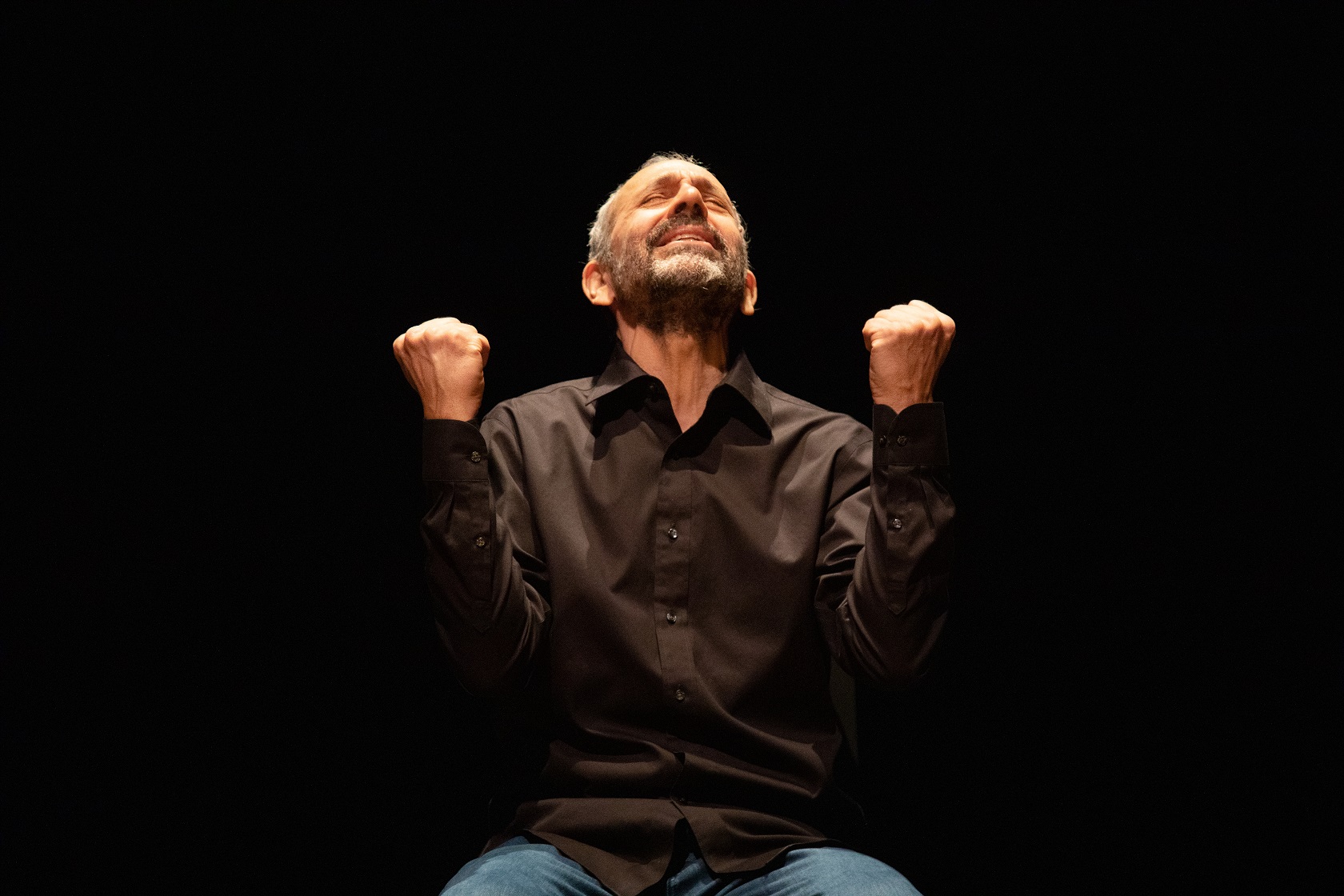
From seeing snippets of both the rehearsal process and the performance of MacIvor performing Who Killed Spalding Gray, suddenly everything shifts and it’s Brooks in the lights. Brooks is now rehearsing his own solo show Other People, a piece inspired by a ten day silent meditation retreat he went on shortly after getting this diagnosis. At one point the phone rings in the rehearsal hall and it’s MacIvor, who wants to be part of the process from afar. “You’re here whether or not you call,” Brooks tells him. This idea has been incorporated into MacIvor’s most recent solo show You’re Show Here, that Brooks is in the room whether or not he’s physically present. It’s interesting watching the director become the actor. The tables don’t turn a perfect 180 degrees because Brendan Healy directs Other People, but you still get a sense of the rehearsal hall having rotated around. The idea of “impermanence” comes up a lot in the documentary, and Brooks tells MacIvor that it is through writing that people can achieve a sort of permanence or immortality. In his conversation with New Classical FM Brooks said, “dealing with death and impermanence is one of the most profound, mysterious, and potentially beautiful things that we can do,” and that is what he sought to explore in his solo show.
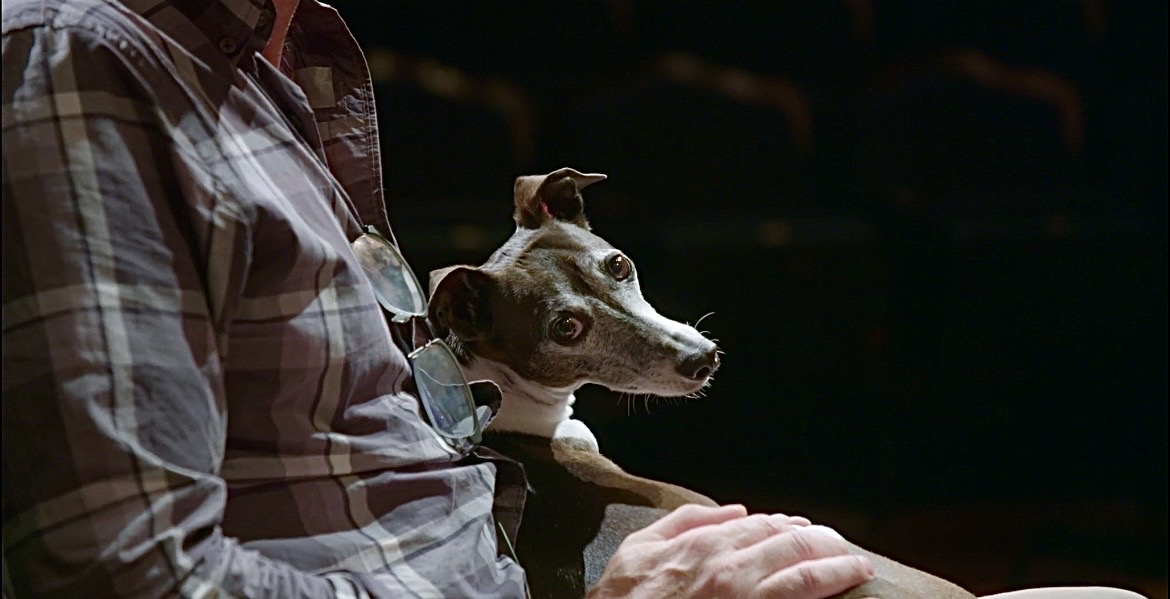
The camera leads us from a tidy dressing room through the unglamorous backstage of the theatre and MacIvor, with Buddy on his lap, sits in front of Brooks, who has recently been diagnosed with cancer, and MacIvor says that he has walked down those stairs from the dressing room to the theatre so many times in his life knowing what he’s doing, and that today he “doesn’t have a fucking clue.” We are taken then from the theatre to Wyoming where MacIvor is talking to Ellae Elinwood, the person who, for all intents and purposes, diagnosed MacIvor with the malevolent entity all those years ago, and they walk through a gorgeous landscape and speak about grief and performance and how grief is intrinsic to life. Brooks said that he wanted to created Other People for the audience, to help people, “I didn’t want to be private about it, I didn’t want to hide anything or be embarrassed, I wanted to be open as possible about the disease, and I found that that really helped me, and that I could potentially help others.” Elinwood also references the audience in relation to MacIvor, and the power that he has to be able to perform his grief in a way that is deeply “human,” and will resonate with others. We see throughout the documentary how essential the audience is for the work.
“Daniel embodied the idea that the work was not really separable from our lives,” said MacIvor, after Brooks’ death on May 22, 2023. “Not in that workaholic notion of work. It’s not an achievement-based work. It’s about engaging in curiosity and investigation and developing as people as part of our work developing.” This documentary “reaches to the audience” and brings them along to see first hand what this looks like in practice, and how it reflects the relationship between these two artists who live in and work as part of each other’s soul.
The Work was directed by Daniel MacIvor, with cinematography by John Price, edited by Kaija Siirala, and produced by Siirala with Marcie Januska of reWork Productions. You can watch it here.
Canadian Theatre Criticism is an essential part of a healthy and thriving theatre community. It helps theatre companies find new audiences for their shows, deepens audiences’ engagement with local artists and the work being created in their communities, and it is one of the best ways to preserve a snapshot of an ephemeral art form for future generations of theatre lovers. TWISI relies on support from its Subscribers, folks like you who care about the survival of local and independent arts coverage. Please consider becoming a Subscriber today, or click here for more information. Thank you so much for supporting TWISI.