Emma Donoghue
Thankfully, despite the provincial government’s disastrous budget cuts there will be two shows playing this summer on the North Mountain at Ross Creek Centre for the Arts in Canning, Nova Scotia. The Wind Coming Over the Sea by Emma Donoghue and The Monkey’s Paw, based on the famous story by W.W. Jacobs will open on June 27th as Two Planks and a Passion Theatre celebrates their 35th Season.
I had the opportunity to chat with Artistic Director Ken Schwartz about these shows via Zoom and audiences are in for a real mix of poignancy and fright this summer.
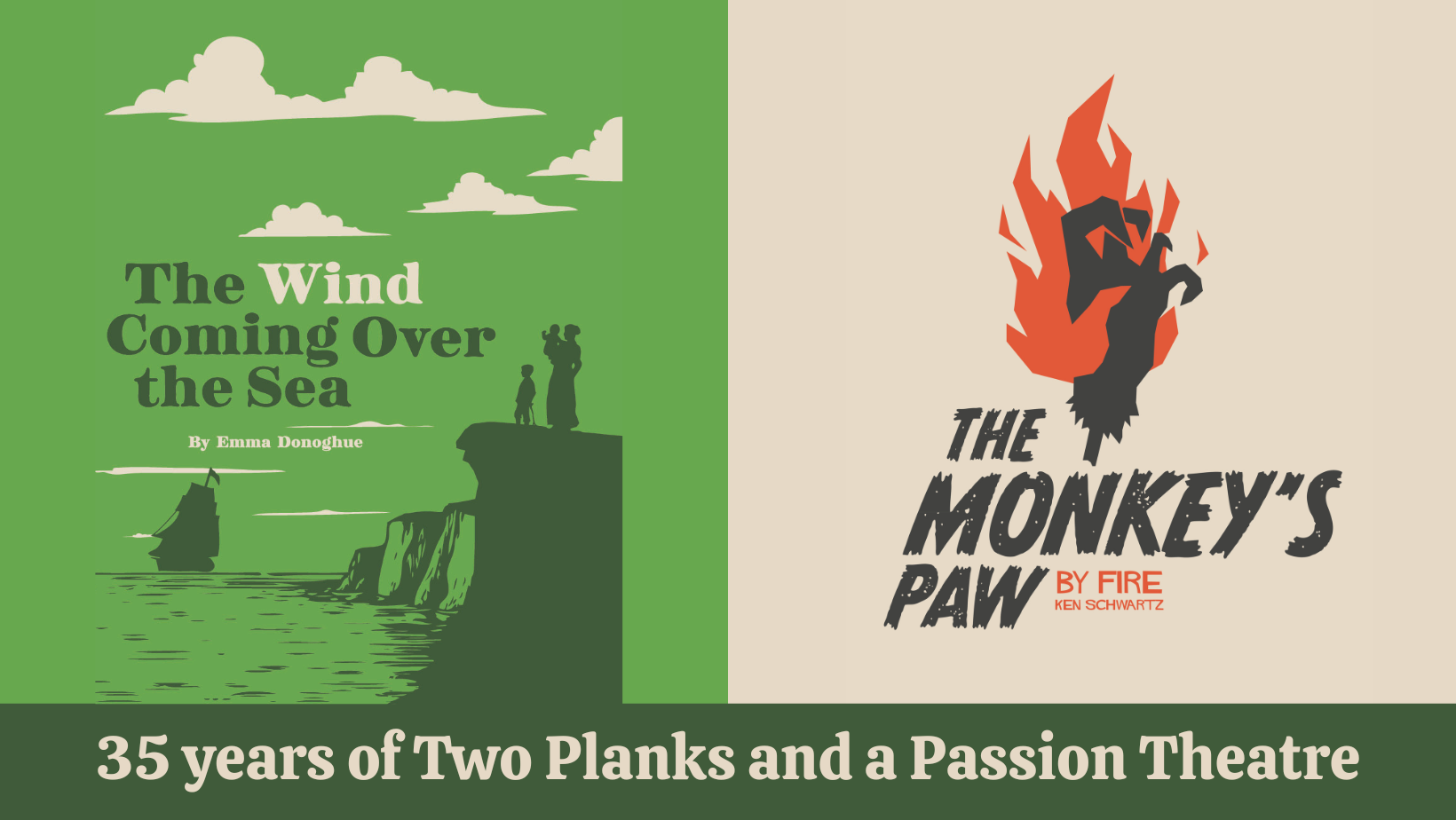
“The Monkey’s Paw” is a very short story by English author W.W. Jacobs that first appeared in Harper’s Monthly in September of 1902, and Schwartz says, “it’s a story that is so embedded in the culture in ways, even if you haven’t heard of the book itself.” It is often included in anthologies of ghost stories, and there’s even a segment of The Simpson’s “Treehouse of Horror II” based on this story. “It’s also used as an expression,” he adds, “almost like it’s another way of saying ‘a Faustian bargain.’ Where you’re offered a choice and it’s a choice you shouldn’t really take, but you take it anyway, and there are horrible consequences. [The play is] a psychological horror, so it’s a little bit like Turn of the Screw in that way.”
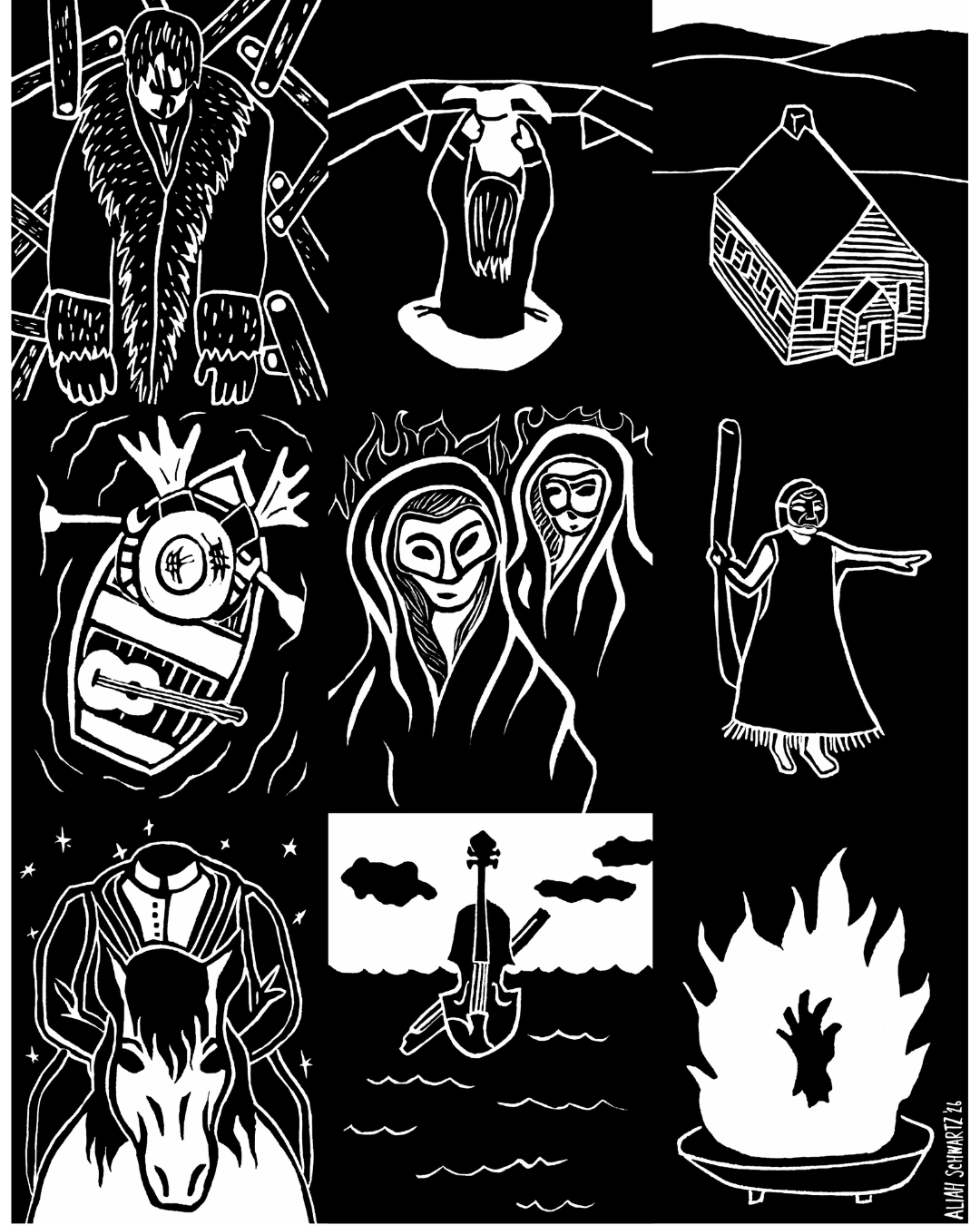
Schwartz adapted Henry James’ The Turn of the Screw for the company back in 2015, and as with that show this one will also be performed later in the evening around the campfire. “[The Monkey’s Paw] is about what’s going on in your mind and your heart as opposed to gory things. Essentially, somebody comes and visits this family and, especially in our play, which is a little bit different than the story, a couple essentially bestows this mummified monkey’s paw [to the family]. They are diplomats who have been in India and they come back from their consulate with this horrible story of a colleague who died, but bestowed this mummified paw, and he claimed that it could grant three wishes. What happens to this family, to the man who gets the paw, but to his family in general, explores ideas of fate. Should you or shouldn’t you mess with fate? For me, really, the horror of it is that it posits this idea that you shouldn’t mess with fate, which I actually find horrifying because I don’t agree with that. I think fate is bullshit… but in the same way that I think that werewolves are bullshit and ghosts are bullshit, but they’re still scary. So this posits a world in which even aspiring to be more wealthy than you are, or more affluent is messing with fate, and fate will make you pay for that.”
“It’s an idea I find abhorrent to the point where it is horrifying, which I find kind of interesting,” he continues, “It’s not a morality play [like] somebody did something bad and then they paid for it. They didn’t even do anything bad. That’s where the horror for me comes.”
Many of the plays that Schwartz has staged for Two Planks’ Fireside series haven’t been scary- they have done everything from The Iliad and A Midsummer Night’s Dream to a musical adaptation of The Winter’s Tale– but Schwartz says that the scary ones tend to be memorable for the audience. He says that The Turn of the Screw is the show that folks bring up to him the most often- telling him how terrified they were. “I think there’s something about horror around a real fire- this short story, just like The Turn of the Screw, begins, with ‘they sat around the fire’- so many of these stories start that way. These stories were written to be told around a fire… this particular play all takes place in one room. It’s the family’s room in their house by the fire. So everything that comes in and out happens in that one place. I’m really excited about it,” he says, “It’s like a little tiny jewel box of a play. The story is very compact. There are very few characters, and it’s kind of all about dread, and grief, really, in the end. Although when you sit down to watch the play, if you don’t know the story, it’s kind of hard to imagine how you’re going to get there. Everything seems so innocuous. And then these absolutely terrible things happen… and similar to Turn of the Screw, you can also explain the story as a series of coincidences. The terrible things that happen are real, but it’s the minds of the people on stage and in the audience that connect them… bad things happen, but then you create a structure to explain and support and deal with your grief. So, it’s kind of about that as well.”
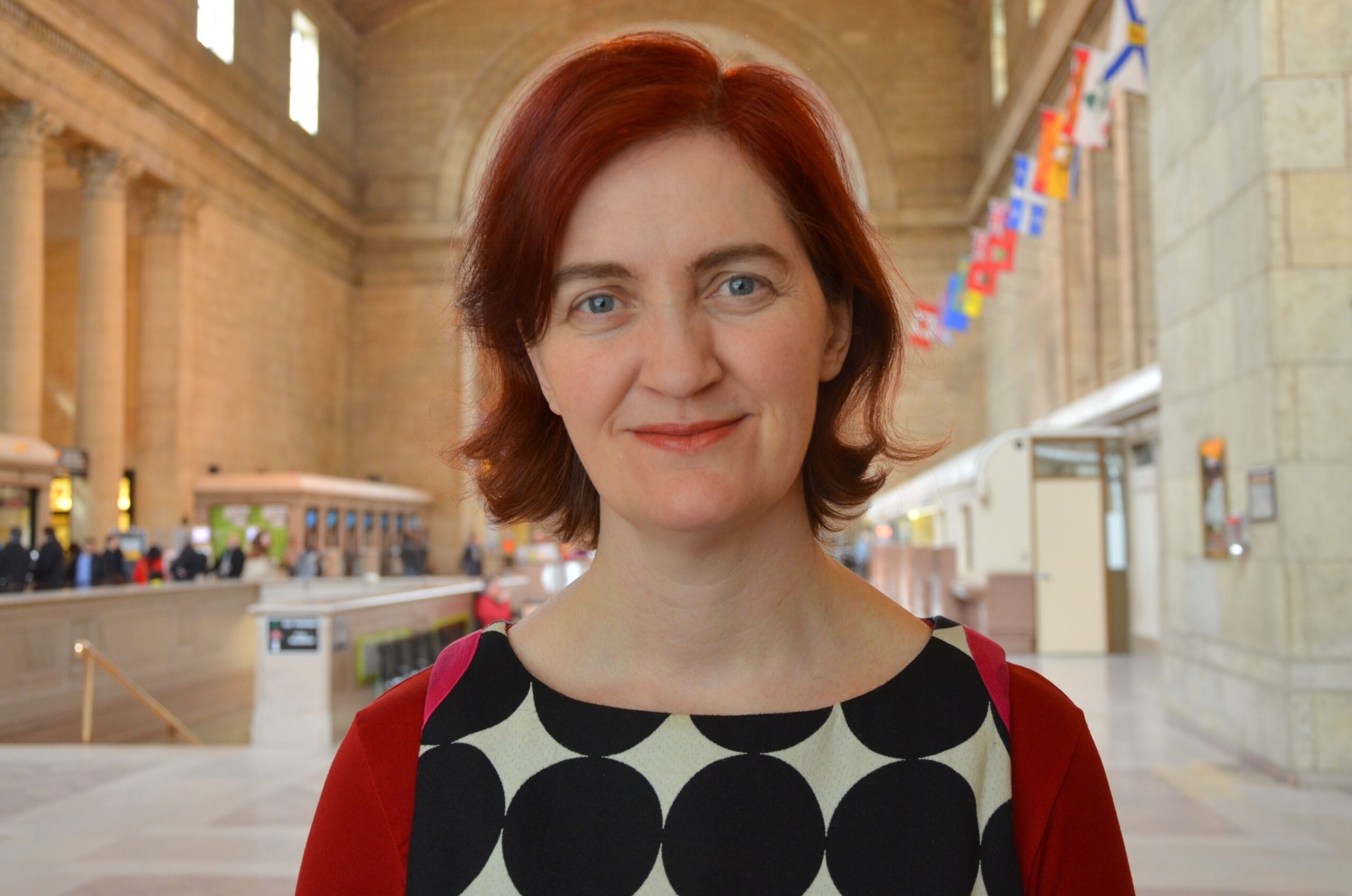
The Wind Coming Over The Sea is a folk musical written by Emma Donoghue, an Irish Canadian writer who is probably best known for her 2010 book Room, which was a finalist for the Booker Prize, and then was adapted into a 2015 film of the same name starring Brie Larson and Jacob Tremblay. This play was commissioned by the Blyth Festival in Ontario and had its premiere there last summer. “It’s based on real letters that Emma found between two people, a man who emigrated from Ireland to Canada, and his wife who he left behind. It paints this really vivid picture of the costs and the challenges of immigration in the late 1840s and early 1850s. It’s the Irish experience that we are focused on here in this play, but I think it becomes clear that it’s about the idea of immigration in general, and the costs of it to the people- especially immigration that is forced because of hardship- the refugee experience- and also the xenophobia and the abuse that immigrants face. It may not be 1850 anymore, but you watch what transpires in the play and you go, ‘oh, there’s so much that has not changed.’” The Irish, especially Irish Catholics, faced substantial prejudice and discrimination when they arrived in Canada, and they had disparate experiences in different provinces. The St. Patrick’s Day Parade was banned for more than a century, for example, in Protestant Toronto. It sounds absolutely absurd, but the parade was not allowed until 1988.
“The play really doesn’t pull any punches about what the experience was like,” says Schwartz.
He tells me that Donoghue herself has been an immigrant twice- the first time when she moved from Ireland to England and the second when she came here to Canada. “Of course we claim her and wrap our arms around her every chance we get, as does every other place that she lived in her life,” he says, “ but she wanted to write about the experience of immigration in a way that was authentic to her, I think. These letters were so vivid in a way that our text messages simply aren’t. They really had to make those messages count. You write a letter and send it, people would get it two and a half months later. What is it to communicate when you can only communicate that way? The letters are so full of emotion and promise. It’s quite heartbreaking.”
Schwartz mentions how perilous the journey from Ireland to Canada could be. In just one example, beginning in 1847, as a result of the Great Famine, thousands of Irish immigrants arrived on Grosse Île, a quarantine island in Quebec, many dying from typhus. Over 5,000 people died en route to Canada that first year alone. Cholera was also widespread. It’s from this moment in history that we get the 1991 Heritage Minute “Orphans” where the young girl who introduces herself as “Johnson, sir, Molly Johnson,” exclaims to the judge overseeing her adoption by a francophone couple, “No! We have to keep our Irish names. My mother told me just before she died- we have to- in memory of our homeland.”
Of Donoghue’s play Schwartz says, “It’s very uplifting in the sense of exploring what the impact of immigrating can be in a positive way on the generations of people who follow, but it’s also frank about the real costs. It feels like a really excellent time to be talking about immigration, and to be talking about discrimination. I hope that this specific examination can prompt a wider discussion about xenophobia… sometimes it’s easier to reflect on your own story by seeing something that’s quite removed from you- but you have that shock of recognition where you go, ‘I’ve heard people say that yesterday.’ and to reflect on how we have progressed and how we haven’t. We’ve got cures for cholera now, but are we still talking about immigrants the same way?”
The play also incorporates some of Ireland’s traditional music. “It’ll be a fun thing to direct because it’s very episodic. It’s a real invitation to explore what the style is in terms of, especially for us, always being outside gives us an added challenge and benefit, which is that it invites us to be really creative about how we tell the story.”
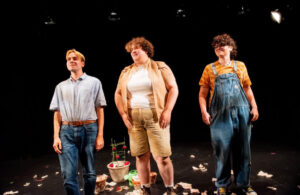
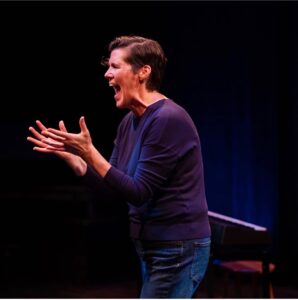
The 2026 company is made up of Lily Falk, Sophie Schade, Sam Vigneault, Becca Guilderson, Hugh Ritchie, Tim Machin, and Chris O’Neill. Sarah Prosper returns as choreographer. Azal Dosanjh, who just graduated from the National Theatre School of Canada, will be Assistant Directing. Diego Cavedon Dias returns as costume designer, and Karen Bassett is the fight coordinator.
When the provincial budget was released back in February Two Planks and a Passion was facing a nearly $50,000 shortfall, and with very little time in which to make any adjustments before they would need to begin rehearsals for the summer season. “Planning and contracting and all that stuff for theatre at the very least is a 12, 14, 16 month kind of lead time where you’re assembling your team… and in the theatre one of the biggest expenses is people. So, it’s really hard to cut that. So, while Chris and I and our colleagues were doing all that advocacy [surrounding the budget] we figured the only thing we could do, essentially, was go to our supporters, go to the public, and be honest and [tell them the situation]… We really owed it to the artists, and ourselves, not to just give up.”
Chris O’Neill added in a press release that the response to an urgent appeal sent to supporters was inspiring to everyone in the organization. “In ten days, we managed, with the help of dozens of supporters, to raise enough money to safely proceed with this very special season. We’re still feeling energized by this encouragement and overwhelmed by this generosity. Our advocacy work to ensure that our provincial government’s actions are aligned with our community’s values is ongoing. Our regular fundraising continues. Many, many challenges await. But through the support of so many people, we can continue to contribute to the well- being of our community through our art, our education programs and our advocacy.”
So much of the advocacy that artists were doing this winter was trying to explain (again) to the ‘Progressive’ Conservative MLAs that artists don’t exist in a vacuum- that they are fully embedded and valued members of their communities, and that they are essential to the way that their communities function. Ross Creek Centre for the Arts isn’t just a place where some people go once a year to see a play, it’s an arts centre that offers multidisciplinary arts classes to youth who live in this gorgeous, vibrant, rural part of the province all year round. It’s a testament to how vital Ross Creek and Two Planks are to their community that that community showed up and Schwarz and O’Neill were able to very quickly raise the money needed to bring their 35th Season to fruition.
This is an extra special milestone for the couple because they weren’t able to celebrate their 30th Season because of Covid. “Hardly anyone ever celebrates 35 [years] of anything. You have to be kind of lucky to do that,” says Schwartz.
The traditional anniversary gift for 35 years is coral or jade, but alternatively, emerald is also customary- so it’s very fitting that Two Planks is bringing us a story so rich in the music and the culture of the Emerald Isle.
Just no one gift him a monkey paw, okay?
The Wind Coming Over the Sea: A folk musical by Emma Donoghue opens June 27th, 2026 at 6:00pm (there is a preview performance on June 25th), and it runs until August 15th. Performances run on Tuesdays, Wednesdays, Saturdays, and Sundays. The Monkey’s Paw, adapted by Ken Schwartz, opens June 27th at 9:00pm and also runs until August 15th. Performances for this show run on Tuesdays, Thursdays, Fridays, and Saturdays. Tickets range in price from $15.90 for children, $26.50 for Artists/Underwaged Folks/Students and $$37.10 for General Admission. For more information or to book your tickets please visit this website.
Ross Creek Centre for the Arts is wheelchair accessible, and there is a golf cart available for those who may need help moving around the outdoor space. Please let the staff know when booking your tickets if you need wheelchair accessible seating or will require the golf cart. Sunscreen and bug spray and dressing in layers is advised for all theatre patrons. For more information about what to expect when you arrive at Ross Creek please visit this website.
Canadian Theatre Criticism is an essential part of a healthy and thriving theatre community. It helps theatre companies find new audiences for their shows, deepens audiences’ engagement with local artists and the work being created in their communities, and it is one of the best ways to preserve a snapshot of an ephemeral art form for future generations of theatre lovers. TWISI relies on support from its Subscribers, folks like you who care about the survival of local and independent arts coverage. Please consider becoming a Subscriber today, or click here for more information. Thank you so much for supporting TWISI.
Incoming search terms:
- https://www twisitheatreblog com/?p=6408