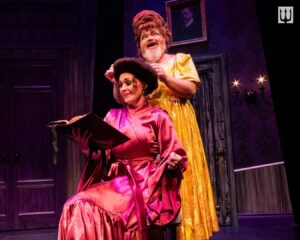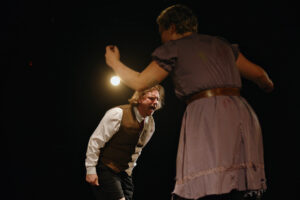
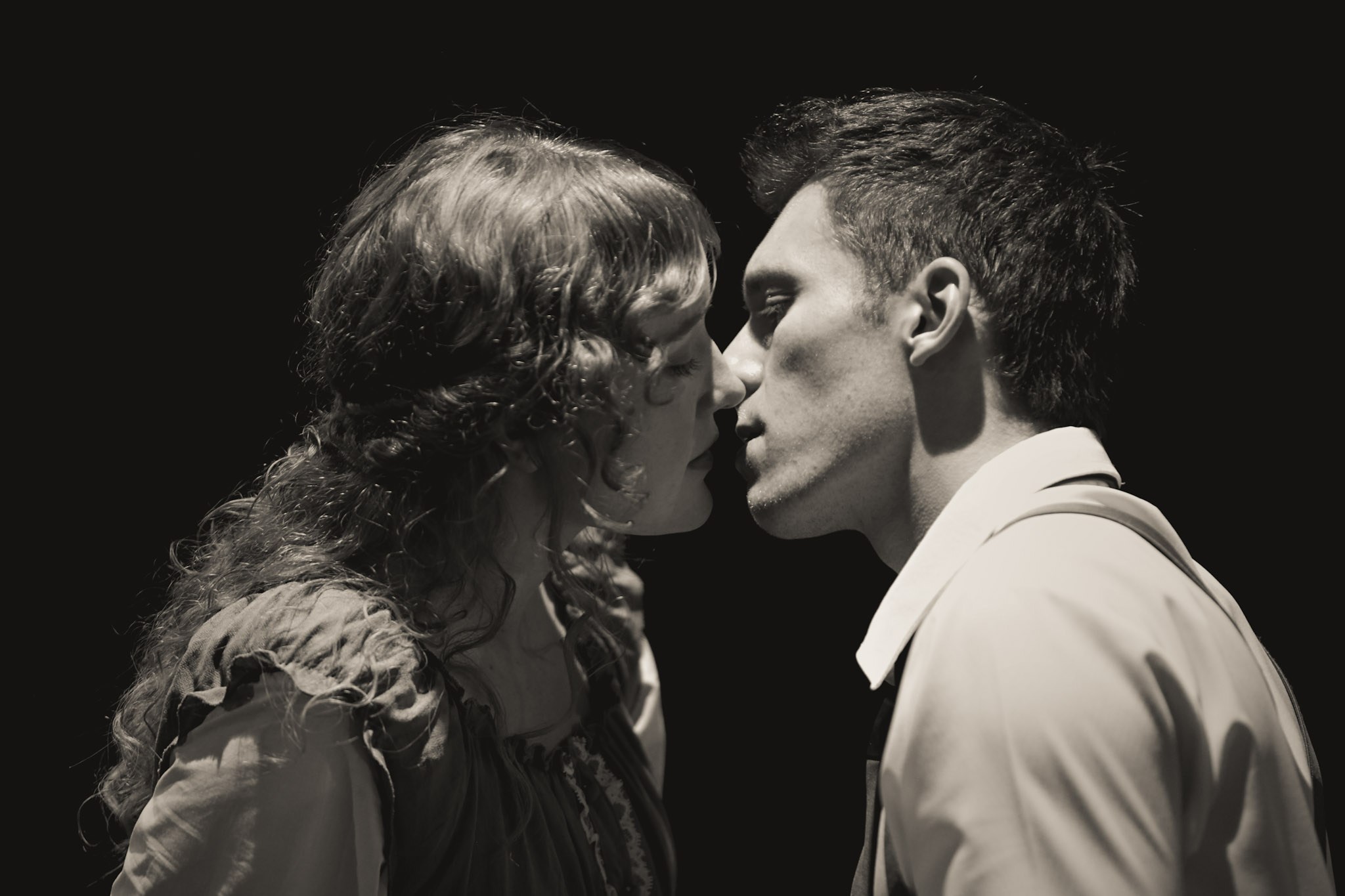
Maude McInnis and Landon Duquette Photo by Jon N. (@HfxPeople)
I was surprised when I heard that Artistic Director Josh Rigo was moving his theatre company, Elevator Theatre Company, from Ottawa to Halifax, and that no only were they going to be presenting the musical Spring Awakening this Fall at the Bus Stop Theatre, but that they had an entire season lined up. Theatre companies don’t often arrive here fully formed, and very few independent theatre companies here slate entire seasons. When the cast list of the show was revealed, I was even more intrigued to see a lot of unfamiliar faces (to me) in the cast, but all of them local, also an infrequent experience in a community this small. It’s all an extremely ambitious undertaking, and Spring Awakening remains a very intense and emotional trip to theatre. Rigo and this cast have done a commendable job bringing these characters to life in a vigorous and immediate way.
Spring Awakening is a rock musical with music by Duncan Sheik and a book by Steven Sater that won eight Tony Awards in 2007, including Best Musical. The Original Broadway Cast included Lea Michele as Wendla Bergmann, and Jonathan Groff as Melchior Gabor. It is based on the 1891 German play of the same name by Frank Wedekind. It is set in the late 19th Century in Germany and tells the story of three teenagers- Moritz Stiefel, Wendla Bergmann, and Melchior Gabor, who are each curious about their changing bodies and surging hormones, but only Melchior has a parent willing to teach him, or allow him to read, about puberty and sex, and so he takes it upon himself to educate Moritz. Mortitz’s sexual repression plagues him throughout the play, making it difficult for him to sleep or to focus on school, where he is falling behind. Melchior tries to reach out and to help Mortitz, to convince him that his erotic fantasies are normal and not a sign of mental illness or weakness, but Mortitz is getting mixed signals at home and feels desperate and hopeless about his future. Meanwhile Wendla asks her mother to tell her where babies come from, but she is refused. Falling in love with Melchior and allowing him to touch her doesn’t do much to clarify her understanding of how their bodies work. All three of the teenagers, and a number of their other friends come up against the brutality of the adults in their lives when their ignorance leads to perceived immortality, and this brutality has extreme and tragic consequences for everyone.
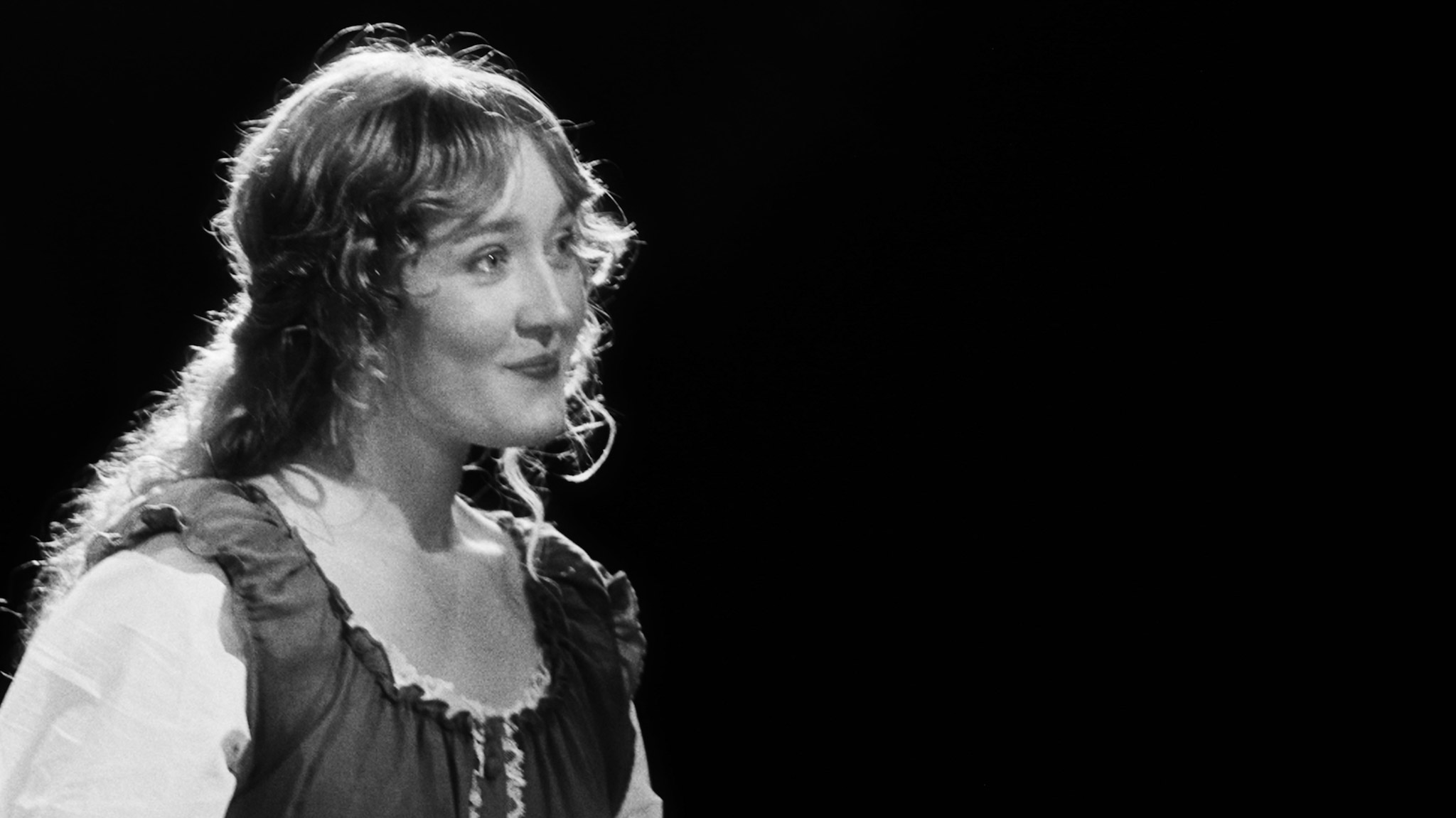
Maude McInnis is perfectly cast as Wendla, a sweet young lady with a fierce curiosity who daydreams about a more modern world where she has the type of freedom and opportunity that the boys that she knows do. Landon Duquette is charming and determined as the intelligent and brazen Melchior, whose progressive parents have made him overly confident in his ability to bring about fairness and reform at school and in the world more broadly. Mac Freeman plays Mortiz as sensitive, terrified, and constantly wanting to run and hide away in shame. Alena Grandy plays Martha and Al Newling plays Ilse, two friends of Wendla whose fathers are physically and sexually abusive. This revelation leads to a very disturbing scene between Wendla and Melchior where Wendla confuses Martha and Isle’s fathers’ violence for love because her own father largely ignores her. She wants to know what it must feel like to be beaten by a man, and begs Melchior to hit her with a wooden switch. After much coercing from Wendla Melchior takes it too far and scares himself. The last time I saw Spring Awakening was twelve years ago, which feels like a lifetime- Barack Obama was President of the United States back then- and in this current world, where a woman was just punched in the face at a Trump rally to cheers, this scene really hit me hard. Even sweet Melchior (one of the “good guys” #NotAllMen) was capable of becoming Martha and Ilse’s father- maybe not in terms of being a pedophile, but certainly in terms of being a brute. And what does that say about the inherent misogyny in a culture where Wendla would even fantasize about being hit in the first place?
Zack Miller and Laura Spencer play all the adults in the play- including two teachers intent on ruining students’ lives for sport, Mortitz’s exacting father, and Melchior’s sweet and supportive mother. Together Miller and Spencer present a powerful wall of oppression that these young folks keep throwing themselves against, with only a rare person like Melchior’s mother trying to give support, and even she ends up coming up short of knowing how best to help a kid like Moritz- and no one seems to be helping someone like Ilse, cast out from her family, and left to the wolves at the ‘free love’ artists’ colony where she is perpetually choosing between a rock and a hard place.
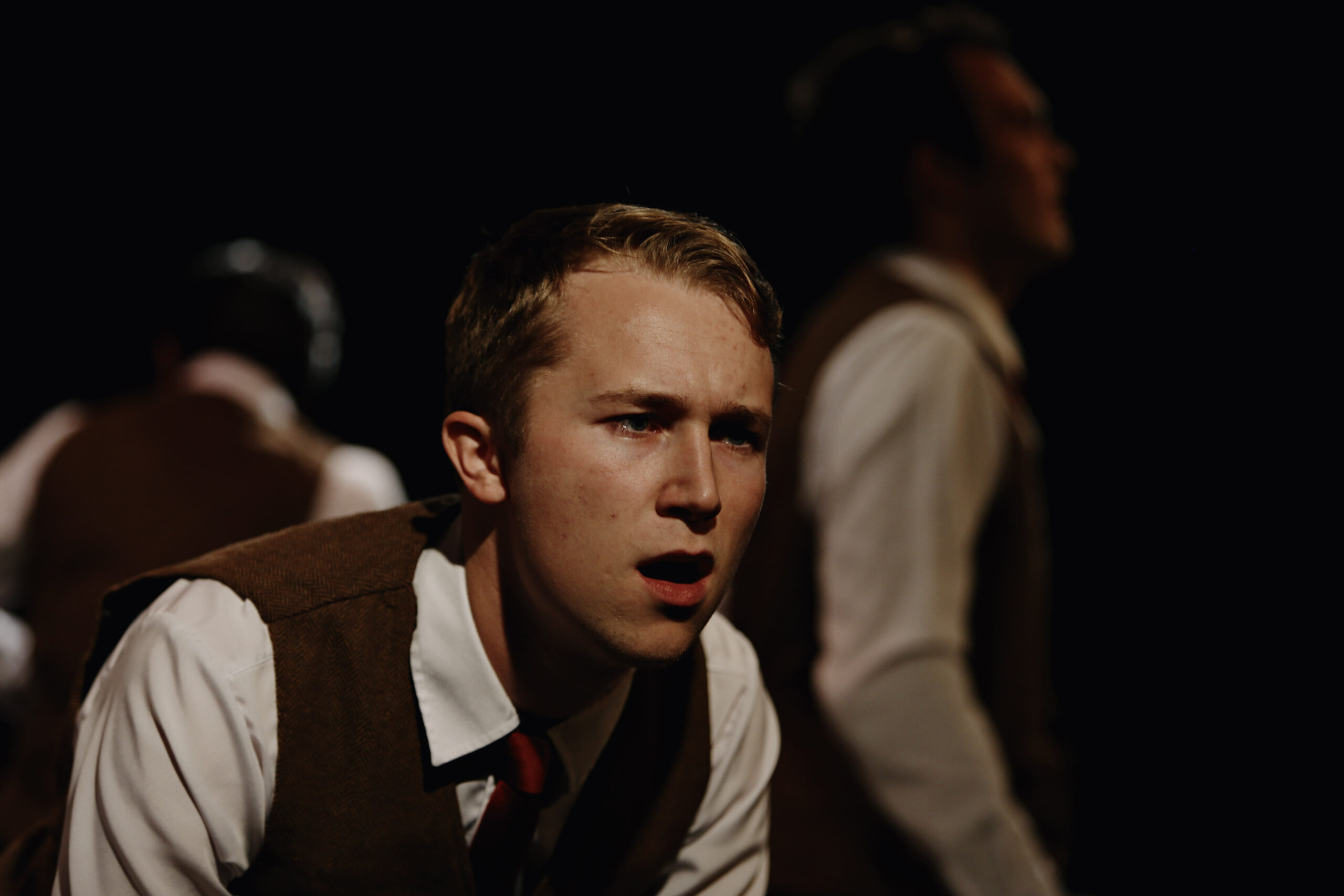
I liked Josh Rigo’s choice of alley seating for this production, and having seen some musicals at the Bus Stop before where the band overpowers the vocals I thought that the choice for the singers to not have microphones, the volume level of the five member band, and the choice to have them at what is normally the back of the seating area, was all very effective in keeping the focus on the intimacy of this very harrowing story, and the actors’ beautiful, emotional voices. There were a few moments where I felt like some of the characters, especially the adults, and Moritz were too open with their emotions, that it gave the impression of them being too healthily willing to admit that they felt sadness at all. Even in the face of the profound trauma in the narrative, I think keeping the characters more buttoned up shows the audience that this puritanical society is rigid and stubborn, and will take more than Moritz Stiefel and Wendla Bergmann to change. The alley staging and very minimal set pieces also make it hard for the characters to find and hold moments of intimate closeness and a sense of privacy. Rigo likes to keep the characters moving to show their restlessness, and that’s important, but I think there are a few moments where letting them be burrowed in together for a prolonged period of time shows that what these kids are craving most of all is just closeness and tenderness.
It’s interesting at the end of the musical because there are two characters, Hanschen and Ernst, played by Zacharie Zegers and Noah Tran respectively, who also fall in love, mirroring in a way Wendla and Melchior, and you feel like, in a way, in this world where their love has to be kept such a secret, they have, in a way, been spared the perils that girls like Wendla faced for daring to have sex with someone in a time before available contraception- when getting pregnant meant that it was impossible to keep a relationship like hers private. Yet, we in the audience know what is coming for Hanschen and Ernst, and for Melchior too- two World Wars and a Holocaust. Especially today, it is not difficult to see how fascism emerged and flourished out of this particular culture and society- but, at the same time, the culture and society depicted in Spring Awakening is not very different from those across Europe and in North America at the same time either. “All they say is ‘trust in what is written/ wars are made/ and somehow that is wisdom. Thought is suspect/and money is their idol/and nothing is okay unless it’s scripted in their Bible,” Melchior sings in “All That’s Known,” and it feels like these words have never been more true.
“It’s like, just kiss some ass, man/ then you can screw them all.”
Spring Awakening plays at the Bus Stop Theatre (2203 Gottingen Street, Halifax) until October 25th, 2026. Performances run Wednesday through Saturday at 7:30pm with 2:00pm matinee performances on Sunday. Tickets are $52.00 for adults, $47.00 for seniors, and $42.00 for students. They are available online here or at the door before the performance at 2203 Gottingen Street.
No assigned seating. All tickets are general admission.
Content Warning: Spring Awakening contains mature and potentially distressing content, including sexual content, sexual violence, abortion, suicide, self-harm, physical abuse, strong language, and themes of grief, trauma, repression, and adolescent mental health. Viewer discretion is advised.
The Bus Stop Theatre Co-op is a multi-use performance venue located on Gottingen Street in Kjipuktuk/Halifax. The theatre has been in operation since 2003 and operating as a co-op since 2012. It hosts over 100 different groups and shows annually and is booked for performances, rehearsals and gatherings of all kinds for 250+ days of the year. The Bus Stop Theatre Co-op’s goal is to operate theatrical facilities that serve both artists and audiences. It does this by operating the only independent, affordable, accessible and professionally equipped black-box space in Halifax. Not only that, it is owned and operated by those who use it and benefit from it! The theatre also includes a welcoming lobby with a licensed bar. The Bus Stop is an all ages venue and welcomes youth whether or not the bar is operating. A dry bar is also possible on demand. Furthermore, the theatre is one of the few physically accessible venues in the area with level access and front row seating for chair users.
Canadian Theatre Criticism is an essential part of a healthy and thriving theatre community. It helps theatre companies find new audiences for their shows, deepens audiences’ engagement with local artists and the work being created in their communities, and it is one of the best ways to preserve a snapshot of an ephemeral art form for future generations of theatre lovers. TWISI relies on support from its Subscribers, folks like you who care about the survival of local and independent arts coverage. Please consider becoming a Subscriber today, or click here for more information. Thank you so much for supporting TWISI.