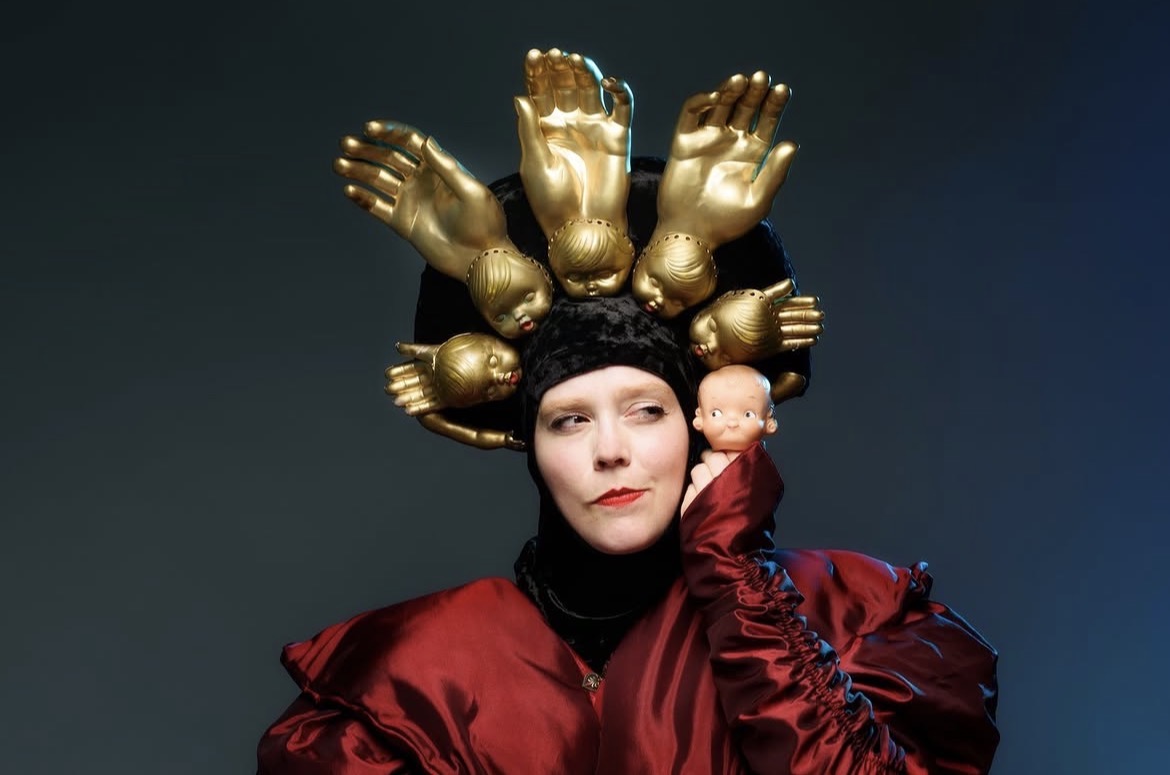
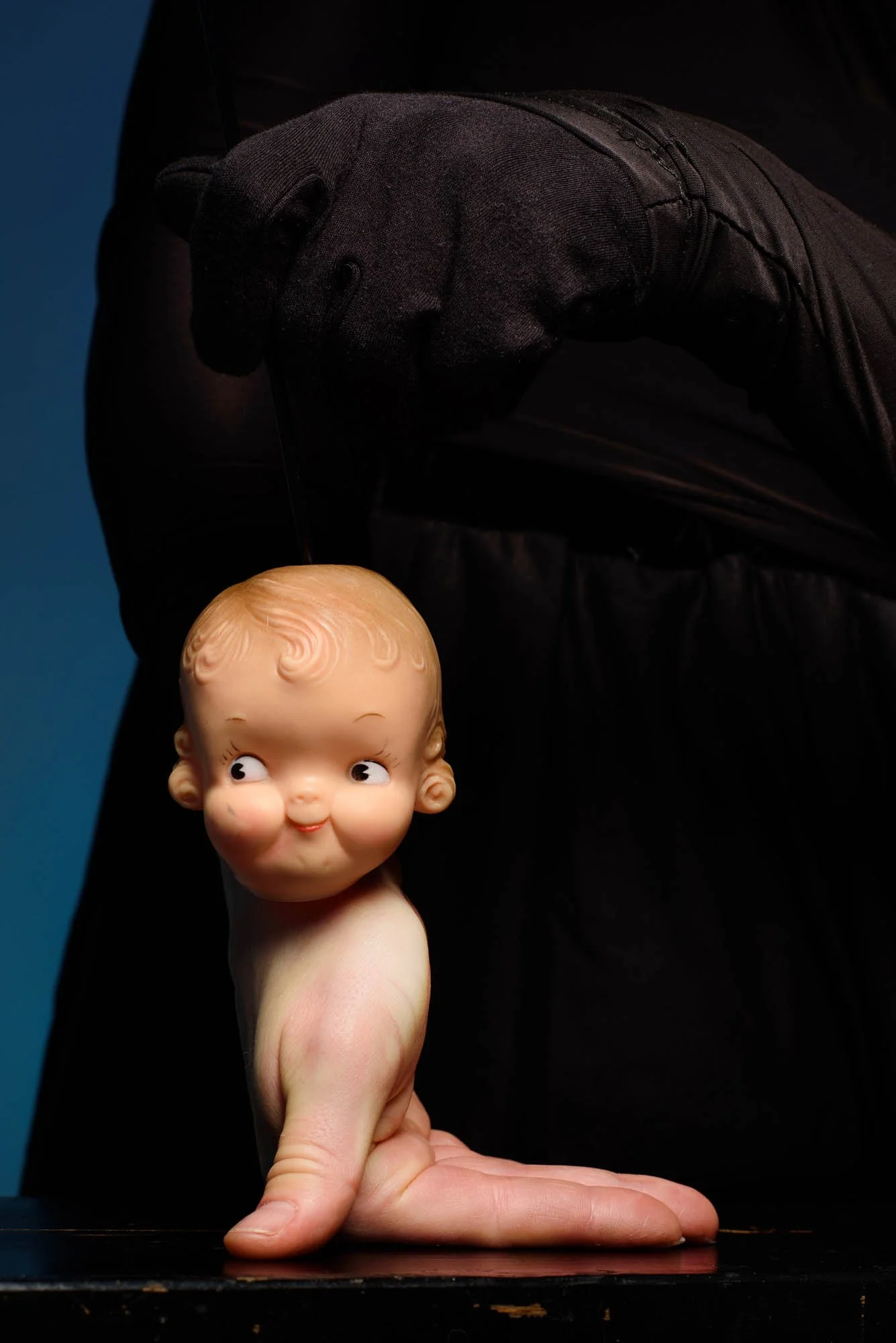
Ingrid Hansen & Baby Tyler Photo by Helene Cyr
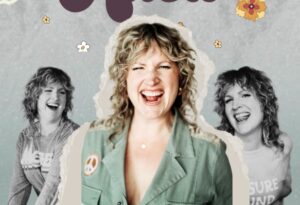
My second and last day at the Eastern Front Stages Festival started at the beautiful St. James United Church where I joined a large crowd to see Tanya Davis’ show Mass For Shut Outs.
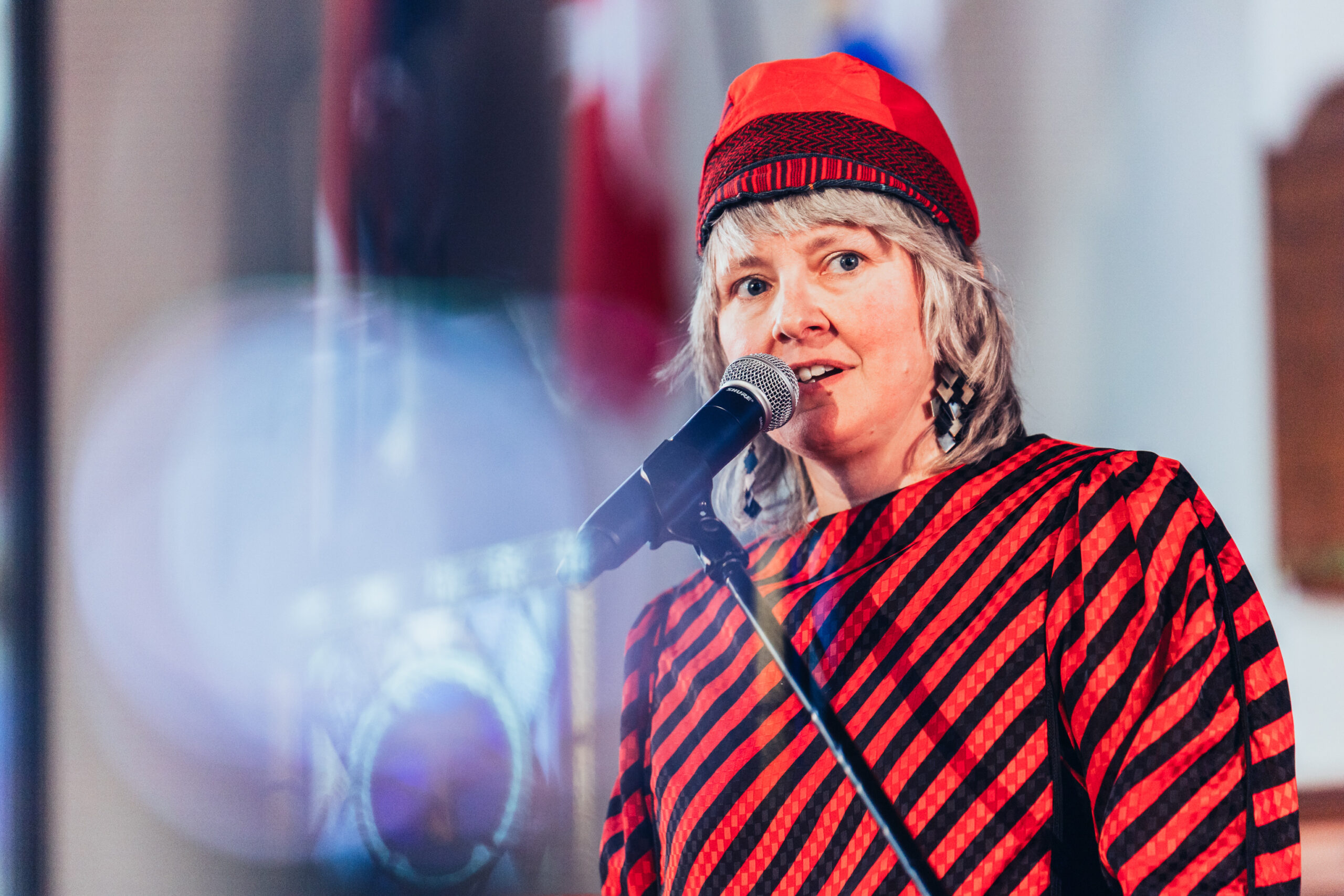
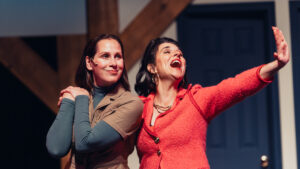
Structured around the various elements of a Catholic mass Mass For Shut-Outs imagines what a gathering might be like for a community of folks who have felt shut-out by the patriarchal, judgemental, and oppressive doctrine of the Catholic Church (or any religion). What would a “mass” that was truly open to everyone look like? If we aren’t coming together to be told what to do and how to think, nor to be magically absolved of our sins, what would be the point? Davis is really exploring what the benefits are to having this communal space where folks read words together aloud and sing together in one voice (accompanied by Carlie Howell), and exist in space together having a shared experience that is quieter and more reflective than most of the elements of our over-stimulating lives.
As the Priest-ish Davis comes out in her church clothes and the way she speaks to the audience is a seamless mixture of light, conversational connecting with this moment and the folks in the room, a monologue that one would expect from a solo show like this, and also, woven in so beautifully, spoken word poetry as only Davis can write and deliver, with her very distinctive melding of the wry and the earnest. The poetry has a way of not just changing the cadence of the show, which provides the ear with some variety, but it also brackets the ideas presented in the verse in a way that invites closer focus. The tone too oscillates from a feeling of the sacred, if the secular can be sacred and I think it can be, to moments of joy in being all together, and levity in exploring where a religion like Catholicism is inherently absurd, contradictory- if not overtly hypocritical, and, in some cases, just makes no actual sense. Why exactly are we drinking the literal blood and eating the literal flesh of our saviour, for example.
What struck me so much about the themes of the show was how often Davis evoked not just death, but all of our own collective deaths- combined with embracing the mysteries of the world and the universe and the vastness of all that we do not know or understand. These seem to be the uncomfortable truths that religions like Catholicism like to put at a distance and create myths around- myths that Davis points out, over time, have become “truths,” that seek to pacify the discomfort, or even numb the terror that can come from not knowing, not understanding, and wanting to live in some level of denial about our own impermanence here. In choosing to be curious about the possibilities inherent in not knowing Davis offers us an opportunity to be present in this, the known moment, and even to become more comfortable with the idea of not having or needing all the answers to placate our nervous system.
In her prayers and songs Davis focuses on the tangible joys of being human- on living amongst nature, on waking up in the morning feeling happy, excited, and motivated to do work that pleases us, and makes the world a better place- on being truly kind to one another and loving and being loved and working for peace, for dignity, stability, and abundance for all the people of the world. She focuses on the wonder and the awe we feel when we allow it in, and the empowerment, not power, that comes from being able to choose what we believe, or don’t, without feeling judged or shunned from the community because of it. We have this immense freedom of imagination and creativity; it seems crazy that so often we allow it to be stifled as we seek to ascribe instead to someone else’s problematic answers passed down to us like a self-serving game of telephone over more than two thousand years. For me Davis’ show offers us the reality that surely we could choose something better- something that speaks to the world we really want to live in and the people that we’d really like to be.
In my family I am a third generation lapsed Catholic, my grandmother was firmly atheist, while my mom was more agnostic, like me. After my grandmother died my mom and I liked to think that she was with the rest of our family somewhere, but we said it every time knowing we were just clinging to a nice idea we’d made up to make ourselves feel better. When my mom and my Aunt Carol both died in 2023 neither of them wanted to have a funeral, a wake, a visitation, anything at all- and it was only then, in my immense grief and the shock of the loss, that I really profoundly understood why these rituals have endured- because without them I was isolated and extraordinarily lonely at exactly the time when I wanted to be surrounded by love and care. I wondered why it was that we as a society are so bad at filling that void for folks when the religious ritual is broken like it was for me. How do you harness a community like the kind a church can create, while at the same time divorcing it from all that is oppressive, historically and contemporarily colonial and violent, and that shuts people out on purpose for homophobic, racist, xenophobic, and misogynistic reasons. Mass For Shut-Outs provides one such framework.
At the end of the “service” I did feel buoyed up, that there had been a sort of catharsis from having many of my own thoughts and feelings articulated in a much more poetic way, and for the opportunity to come together to sing with strangers, which I think is its own kind of joyful release. I left wondering if a gathering like this could be possible on a regular basis, without it falling into the same power traps and ideological minefields that plague both religions and cults. Aptly, I don’t know the answer, but I do relish the possibility. Heck yes.
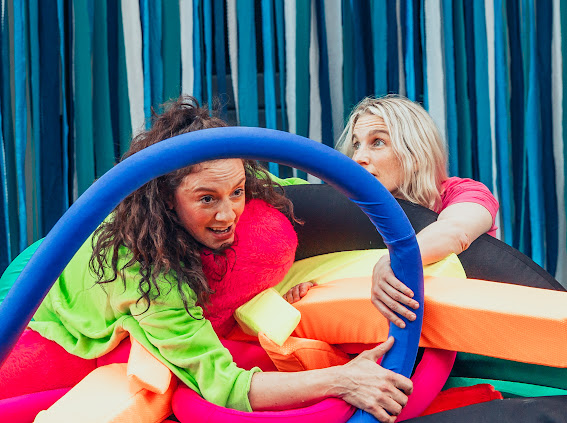
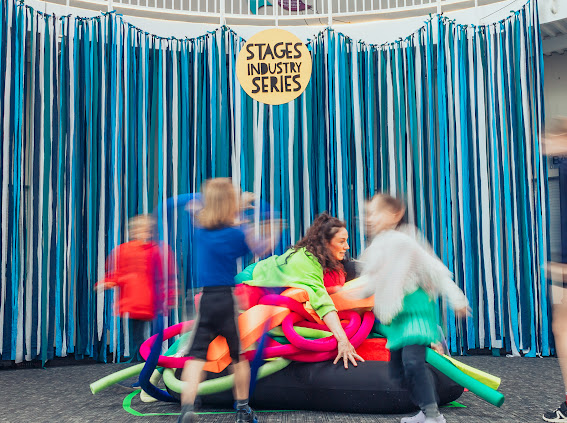
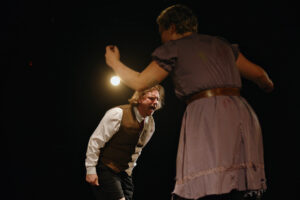
I then went to Alderney Landing to see Mocean Dance and Jacinte Armstrong’s Play, and I really lucked in to see this experimental work in progress with an audience of children who participated in all the ways that made this piece really joyful, fun, creative, and with an ease and an inherent curiosity that children have in abandon that adults often lose in their tendency to live way too much in their heads (myself absolutely included).
Jacinte Armstrong and Gillian Seaward-Boone started out the piece performing some short solo pieces and encouraging all of us in the audience to look at their movements very specifically and to draw some sort of pattern or sequence that we noticed- either in their full bodies or isolating one specific body part. They then collected each of these drawings or maps and they started to build new improvised dances, both individually and collectively, based on their own interpretations of these drawings. They then introduced a number of large tactile shapes- some were furry, some were foamy, some looked squishy- all were bright neon colours- and most of the children in the audience and some of the adults as well came up into the playing area and moved these pieces around, pretended to be the objects, and took part in creating movement from the drawings. The crux of the performance seemed to both showcase the ease at which Armstrong and Seaward-Boone are able to use their bodies to create these various creative and artistic pictures- how effortless they make this kind of dancing look- and to inspire everyone in the space to own their own ability to dance as well, in a way that can be empowering and celebratory.
It struck me that it would have been an entirely difference experience to see Play with an audience made up entirely of adults- as it’s likely many of them would have been more reticent to fully participate, and with such creative abandon. It is worthwhile to have spaces where adults can be either goaded into or inspired to be brave, to try something new, and to get back in touch with their inner child, but I was really glad that I got to see this performance with all the children because it was so effortlessly silly, exciting, and frenetic.
I ended my evening by seeing SNAFU’s Epidermis Circus, created and performed by Ingrid Hansen, which is a bizarre and hilarious puppetry vaudeville filled with audacious imagination, and just a little bit of mischief. Hansen is dressed in black for a practical reason, so that when she is doing the puppetry which usually involves just her hands or her face, and it is filmed and broadcast live on a large screen for the audience to watch, an illusion is created that her hands and her face are free floating in space. Her costume, designed by Jimbo the Drag Clown, also helps to create the sort of magician/puppeteer/enchantress character that she plays as the facilitator of the piece that creates the bridge between us in the audience and the world of the puppets. The vibe that I was getting from this character reminded me a lot of the viral Disneyland Evil Queen from Snow White (played by Sabrina Von B.) who went viral online for her incredible in-character interactions with park guests. Especially in Hansen’s interactions with the audience (and there is an entire part that relies on help from members of the audience) she is really giving Evil Queen Diva vibes.
The emcee for the puppet show is Florence McFingernails, Hansen’s two hands on a mirrored surface which creates the illusion of a mouth, or even a skeleton’s mouth- I found she made me think of Elder Gutknecht from the film Corpse Bride (2005). Florence is perpetually frazzled because her acts keep getting bumped in favour of younger stars (like brand new Baby Tyler, who is the puppetry darling this week). Hilariously Florence keeps yelling to Tim Houston, Nova Scotia’s disgraced premier, to negotiate how much stage time and clout she gets in the show.
Baby Tyler, a Kewpie-style doll head with an oddly coquettish expression who is balanced on Hansen’s hand, which gives him a body that changes depending on how her hand moves, is the evening’s star, and he performs a number of different cabaret-style acts. In the first he gives himself a bubble bath, in the second he meets a shark, in each one we marvel over Hansen’s ability to give this little doll head so much personality, and dexterity, just in using four fingers and a thumb to do it. Our eyes begin to play tricks on us- we think that we see his eyes moving when they are painted on; we start to really buy into Hansen’s fingers being legs or hands, or… other appendages… and we see Tyler’s head as being a cohesive part of the whole body, even though it makes no logical sense. Baby Tyler really seems to be able to, of his own volition, charm and delight the audience- as though he is performing especially for us- in the same way that we accept that Muppet performers are real in the way they interact with the humans around them- and like Muppets, despite the fact that you can watch Hansen doing the puppeteering if you’re not watching the action on screen. The Muppet comparison is apt here since Hansen has worked on the Jim Henson Company’s Fraggle Rock Back to the Rock (2022).
I really loved the part where Hansen uses a mirror to morph the way we see her face as she lip syncs to a song that also sounds like it would be very at home in a 1920s Vaudeville house. Throughout the whole performance I kept thinking about the ways that I used to play around with this type of stuff when I was a kid. My grandmother had this mirrored medicine cabinet with multiple doors and I could stand there for ages opening them at different angles magnifying and changing my reflection. I used to turn my fingers into puppets too. It’s incredible to see the possibilities this kind of childhood play can create when harnessed by a theatre maker’s brain. This show is truly one of the most creative pieces of theatre I have ever seen. It was co-created and directed by Britt Small, who did a fantastic job of making sure that all the magic Hansen is creating in her little puppet world is reaching the audience seamlessly.
The show ends with an unexpected pastoral number starring Bessie the Cow, which, again, asks what if you could incorporate the chaos (and danger!) of toddlers playing, but shape it in a way that it becomes performance art instead, and allow the audience to impose their own meaning onto it (or not).
I was truly riveted and laughed so exuberantly throughout this show. It is such fun to watch and so rare to get the chance to go on such a truly unique and wild ride with someone like Ingrid Hansen at the helm. I can’t wait for her to come back, and I hope that she will also perform her Baby Tyler Show, which is suitable for children, as I’d love to bring my niece to see her. As with Play I think it’s so valuable for children to see that if they can hold on to the creative ways they see and interact with the world as grownups, the opportunities are there for them to continue to play throughout their whole lives.
Overall, I had a very memorable Stages experience this year, and I am grateful to Eastern Front Theatre’s Artistic Director Kat McCormack who always brings these incredibly interesting, engaging, and innovative theatre artists to Dartmouth from across the country (and beyond), and creates a space where we can connect in ways that make our massive country feel a little bit smaller and more accessible. The Stages Festival has closed. Check out this website for all that is coming up next from Eastern Front Theatre.