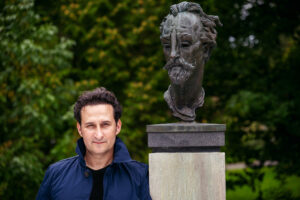
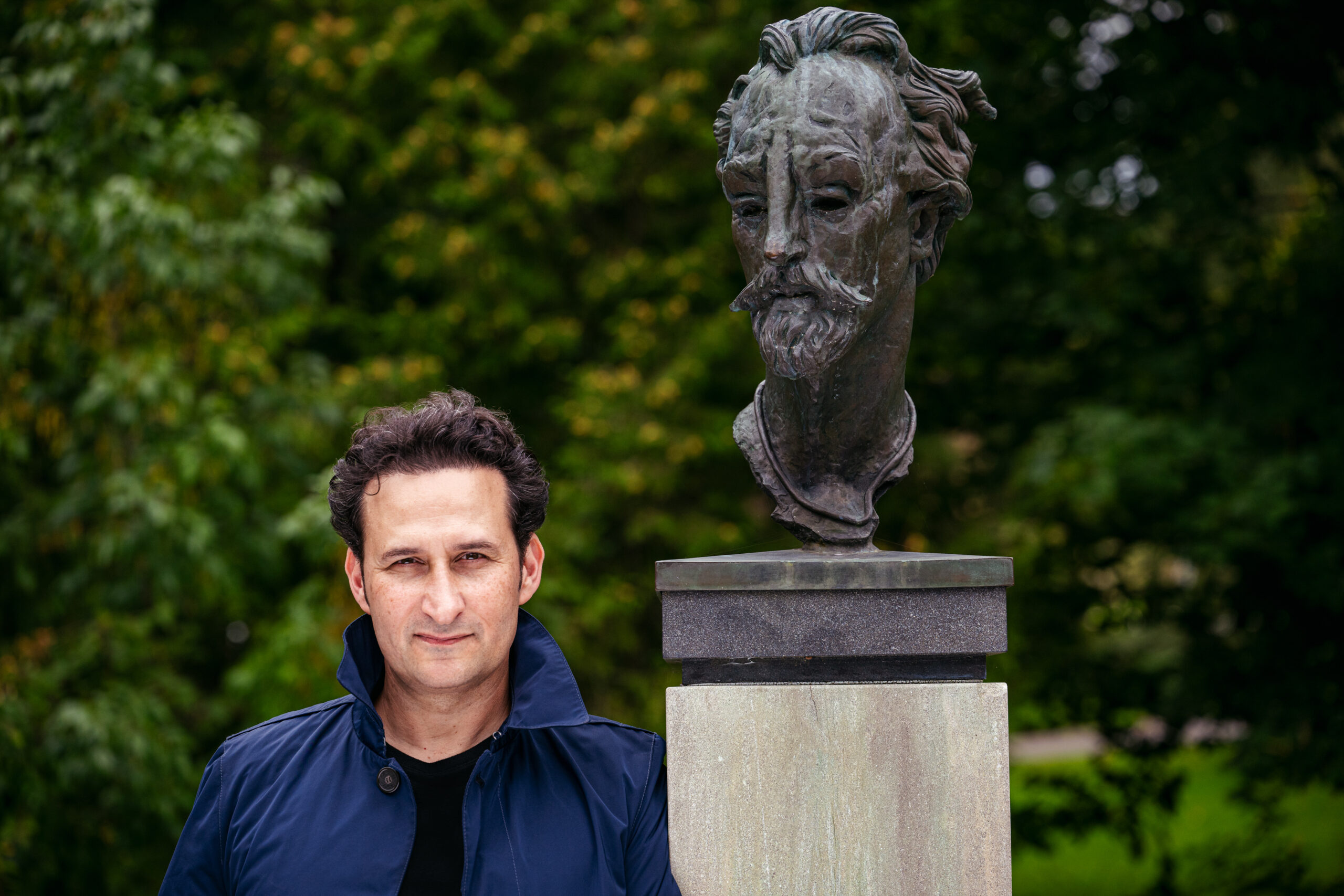
Raoul Bhaneja Photo by Ann Baggley in Stratford, 2026
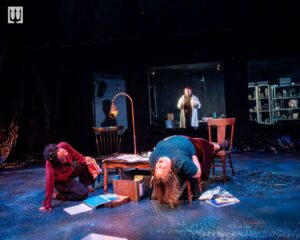
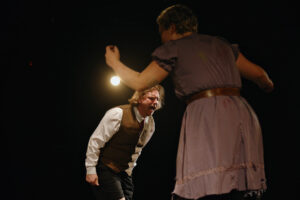
Nearly 20 years ago Raoul Bhaneja took the stage at the Theatre Passe Muraille Backspace in Toronto and played all the parts in an adaptation of William Shakespeare’s Hamlet that he called Hamlet (solo). He has since performed the work over 150 times in 25 different cities, most recently winning the 2022 Best Actor Award at New York’s United Solo Festival, the world’s largest festival for solo work. Now, he is bringing it back to the theatre where it all began for three fundraising performances November 6th to 8th to support the Andy McKim Endowment Fund for New Works, to ensure that Theatre Passe Muraille will always be a hub of new Canadian work. I had a chat with Raoul Bhaneja via Zoom about the trajectory of Hamlet (solo), and how it has become one of the most defining pieces in his career as a performer.
Bhaneja says that his first moment of asking himself “should I do this? Could I do this? Is [Hamlet] a solo play?” was actually quite a bit earlier than November, 2006. It was in the summer of 2000 when he did a read through of Hamlet from start to finish for Chris Abraham. At first they thought that they would put together a reading where Bhaneja would play Hamlet, and they would assemble a dream cast around him, but then Abraham had a different idea. Bhaneja describes him saying, “’Why don’t you read the Arden [edition] from beginning to end? And I’m going to bring my friend Ben Grossman,’ who is a specialist in medieval instruments, ‘and Ben’s going to sit on the floor and play medieval music while you read the whole thing’… and that was four hours,” says Bhaneja. “At the end Chris said, ‘I’m not sure what it is, but I think there’s something there with you doing it as a solo thing.'”
It became “impossible” to assemble a cast for a reading, and it was difficult for Bhaneja to “keep [Abraham]’s focus” on this project too because, he says, this was the “very naissance of the legend that has become Chris Abraham,” and so he was very busy. “Then my friend Robert Ross Parker, who I went to High School with in Ottawa, and we used to do the improv games together, he was doing his MFA in directing in Ohio, and one of his thesis projects was Hamlet.” He told Parker about his idea of doing the play solo and asked him if he would be interested in directing it. He knew Parker would be a good fit for the project from the start. He says that Abraham’s initial ideas had been “brilliant,” but with a big emphasis on design elements, and the shows that had first inspired Bhaneja to attempt this work had been more focused on just the actor’s performance.
“My version had really come from seeing Robert LePage do Elsinore in a dress rehearsal- his crazy sort of solo take on Hamlet. It was three and a half hours long, and he was solo, but he had guys dressed in black helping him do all these things, and he had cameras everywhere, and it was a total Lepage orgy of theatricality. I remember watching it and going, ‘that’s the incredible Quebecois theatre version of a solo Hamlet.’ And I remember thinking, ‘what would the Anglophone version [be]?’ The Anglophone version would be only the words- no sets, no costumes, no props, no helpers, just the actor.” He also saw Clare Coulter perform her monologue play The Fever by Wallace Shawn. “At that time I think she was the only actor in the world beside Wallace Shawn who was given permission to do it.” Bhanjea saw it while he was at the National Theatre School, and that performance was directed by Andy McKim. “One of the conceits of The Fever is that you do it in unconventional spaces. So, she would do it at dinner parties- she’d go to a dinner party, have a dinner chat with everybody, and then pull up a chair in the living room and do [the play] for people. So, when she did it at NTS she came into our rehearsal hall, just pulled up a chair and said, ‘Can I start now?’ and we were like, ‘yeah, okay,’ and she just started talking. 55 minutes later she stopped and we were like, ‘holy shit. I think that was a play.’
It was totally antithetical to what I’d been learning a play was, which has a design, and it has a set, and costumes, and other actors, and lights, and sound cues, and maybe even projections. So, that was another inspiration for me because I saw someone create, right in front of me, a super intimate and electrifying performance in a chair with nothing but the words and herself and the room and the audience.”
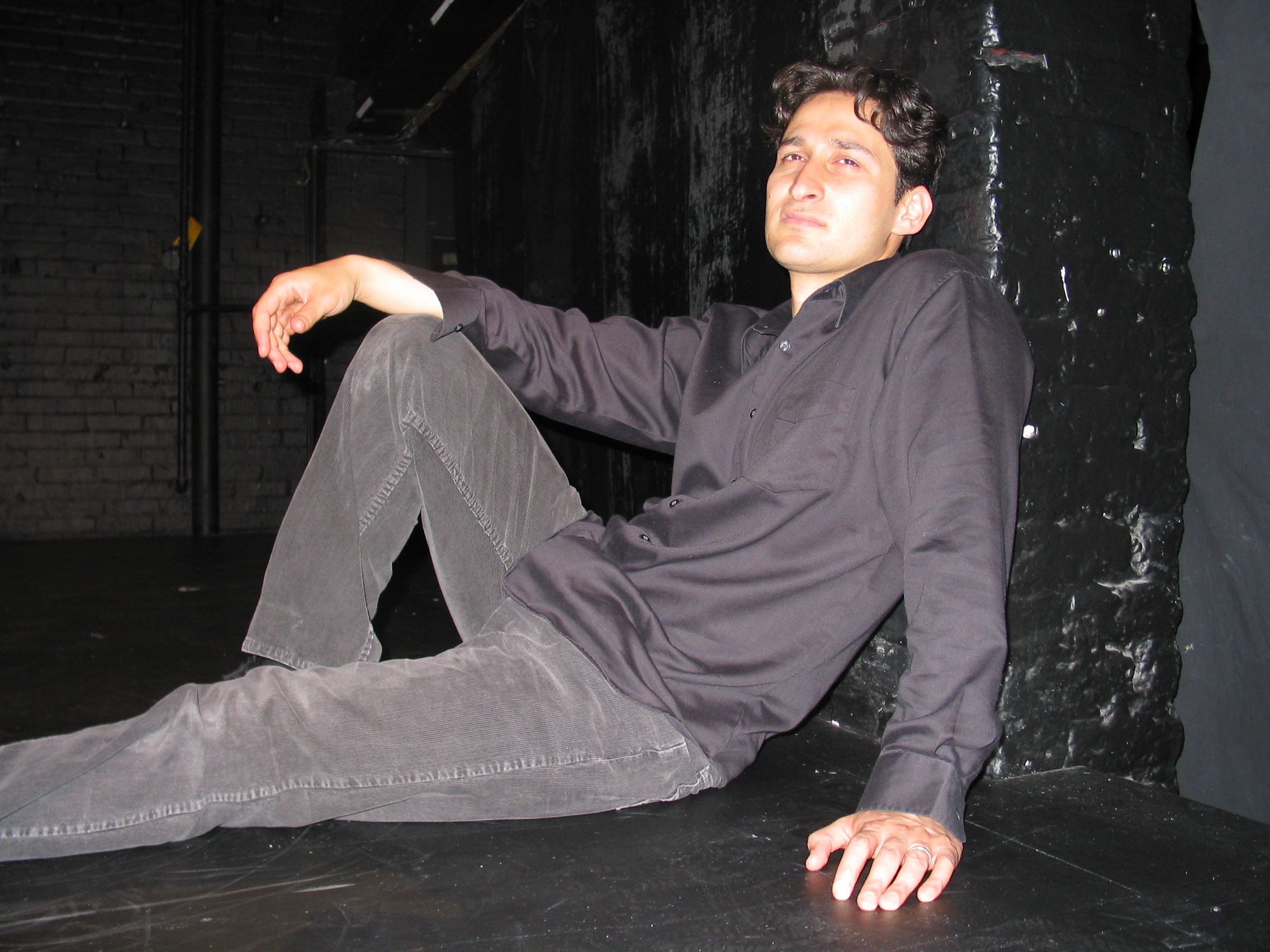
Like me, Bhaneja is fascinated by theatre history, and so he also latched on to a story that one of his teachers at NTS, Kurt Reis, told him about when Richard Burton came to Toronto in the 1960s for a pre-Broadway run of his Hamlet at the O’Keefe Centre. “Supposedly he had come to Toronto to do press before it opened, and he did a reading of a selection of Hamlet where he played all the characters- this was like the legendary news conference.” Those were his three “inciting ideas” in creating the show. “I knew Robert was someone who would have complete faith in the idea of a very actor-centred version because he also trained as an actor. He went to Concordia for his BFA, we’d come up through the same arts high school together, Canterbury in Ottawa, so he really got on board with me [by 2002]… and then there were many years of workshops.” The project was delayed a few times, once because Bhaneja needed back surgery. Then they had five or six weeks of rehearsal before they opened at Theatre Passe Muraille in 2006. “The really fun thing for me is that Robert’s agreed to come back for this run at Passe Muraille, so we’re going back into this space where we first staged it together again to kind of rediscover it. We’ve never been in the Backspace [with the show] since we closed in December of 2006.”
As everything has changed over the past twenty years the Backspace at Theatre Passe Muraille is no different. The seating has changed. It is now called the Bob Nasmith Innovation Backspace, named after a beloved board member and actor who was, like Andy McKim, vital to the work of the theatre. “It now has seating that retracts, and it doesn’t have a centre aisle; it only has a side aisle. One thing that’s interesting is that when I’ve done it in a football field, or I’ve done it in a 300 seat theatre or a 500 seat theatre, there are definitely elements of how it was first originated in Passe Muraille that stay with the show everywhere we go do it. Now, it’s interesting because we’re going back into it, and we’re like, ‘oh, the aisle’s not in the centre anymore, and you can’t get up to the top of theatre,’ so there’ll be some fun changes, but also I think the really cool thing about doing it in this space is that it’s probably, with the exception of one or two venues in New York where there’s only 40 seats, I think it’s probably the most intimate place we’ve done it.”
He says that having brought the show to so many different places over the years that the key to it working in a small space is the height of the ceiling. “There’s something about the height and language,” he says. There are only 45 seats in the Backspace now, and with only three performances, there is a very limited opportunity for folks to experience this show in the room where it happened. The last time Bhaneja did the show in Toronto was at Soulpeper in 2024, but that was in a much larger theatre- so this will be a different experience. The last time he did the show at all was in May of 2025 at the Shakespeare Company in Calgary. “All I knew when we opened in Toronto [in 2006] is that I hadn’t worked on it for five or six years to have a negative reaction to it stop me,” he says. He says that they hoped when they closed in 2006 that it would have a touring life beyond that initial run in the Backspace, and by the time they closed they did have a booking to bring it to the Banff Centre for the Arts. As someone from Ottawa based in Toronto Bhaneja says the Toronto theatre community runs the risk of sometimes being too insular- not always seeing the benefit of taking their work to other cities in other provinces. He also says it can be a competitive place to create and work. “There’s so many good actors, writers, and directors there,” he says. He didn’t want Hamlet (solo) to be defined just by the experience of 2006 Toronto, and it received a mixed reaction by the critics at the time, which Bhaneja says today folks are surprised to hear. “People assume that it was deeply supported by the whole industry, and community, and architecture of the scene… but that was not the case at all- it was a really weird idea that Passe Muraille got behind. Layne Coleman, a former Hamlet himself, gave me the best deal as he could on the space, and helped me out as much as he could. I was not the profile of an actor who should be playing Hamlet, who would play Hamlet, who would then have the audacity to think he could do all of Hamlet on his own,” says Bhaneja, who, while Canadian of course, is of mixed Indian and Irish ancestry, which in 2006 made him an ‘unusual’ choice to play the broody Dane, let alone everybody else in the play.
In classic Canadian theatre style Bhaneja took the show to the Edinburgh Fringe Festival, toured around England, and then came back to Canada with good reviews from the United Kingdom “that talked about how the Shakespeare was good, and then I was able to get booked all over Canada.” In a flash of incredible foresight Bhaneja documented much of the process of building this show on video beginning in the year 2000. As part of this archive he interviewed a number of Canadian actors who had played Hamlet before him including Christopher Plummer, Brent Carver, Paul Gross, and Tom Barnett. He also interviewed Bob Martin while he was in New York doing The Drowsy Chaperone, and Martin also mentioned that the Toronto press of the time could be stifling to new Canadian work and creativity in a way that was counterproductive. He said, “If there’s one thing that could be changed about the Canadian press could it be that they could be more understanding of the process of development, and more supportive of that, and less dismissive of works in their early stages?” He goes on to say that before it won five Tony Awards on Broadway The Drowsy Chaperone didn’t get great reviews in Toronto either. Personally, I find this sentiment to be very validating to my own ethos as a critic.
“Paul Gross tells a funny story of Christopher Plummer, he comes backstage to see him at Stratford [while he was playing Hamlet there], and Plummer had done the role there in 1957. Paul’s doing it in 2000, and Plummer comes backstage, and he’s a little shifty. Gross is looking at him, and Gross says, ‘You want to get up there and do Hamlet again, don’t you?,’ and Plummer would have been 70 [years old], and Plummer was like, ‘I would do it in the parking lot.’” Bhaneja said that of all the actors he spoke to all of them still had a desire in them to play Hamlet again, except for Brent Carver, who said that “[he] didn’t think [he] could go back there again.” “He put so much of himself into everything,” says Bhaneja knowingly. “Brent saw me do [Hamlet (solo) twice. He came and saw me do it in a tiny space in St. Catharines. I remember I looked out at the audience, and I was like, ‘holy shit, there’s 80 people here, and there’s Brent Carver three rows back taking it all in’- just one of the fuckin’ best actors who’s ever lived.”
“So to have the chance over all these years to keep going back to this work, and this play, and these characters, and the story, and have it teach me, and me inform it has been the coolest thing about it. I’m sure if someone saw it in 2006 and had a memory of it and they come to see it now, it some ways it will look identical, I’m sure, and then in other ways it will be totally different because I’m totally different, the world is totally different. The time has marched on. It’s hard physically, it’s harder to do now. I also don’t know how long I’ll be able to do it at the level I want to do it at- so it’s not a farewell tour yet, and I don’t know, maybe I’ll be 80 just doing it from a chair… just like Clare- someone sitting in a chair and doing all of Hamlet for you. Mine is very physical. It’s not like a conversation, it’s sort of like a possession in a way. I can be possessed by the thing, and then I exorcise it over two hours in front of you. And then I’m done, and you’re done, and the play had a chance to be heard and come out into the ether. And then I do it again.”
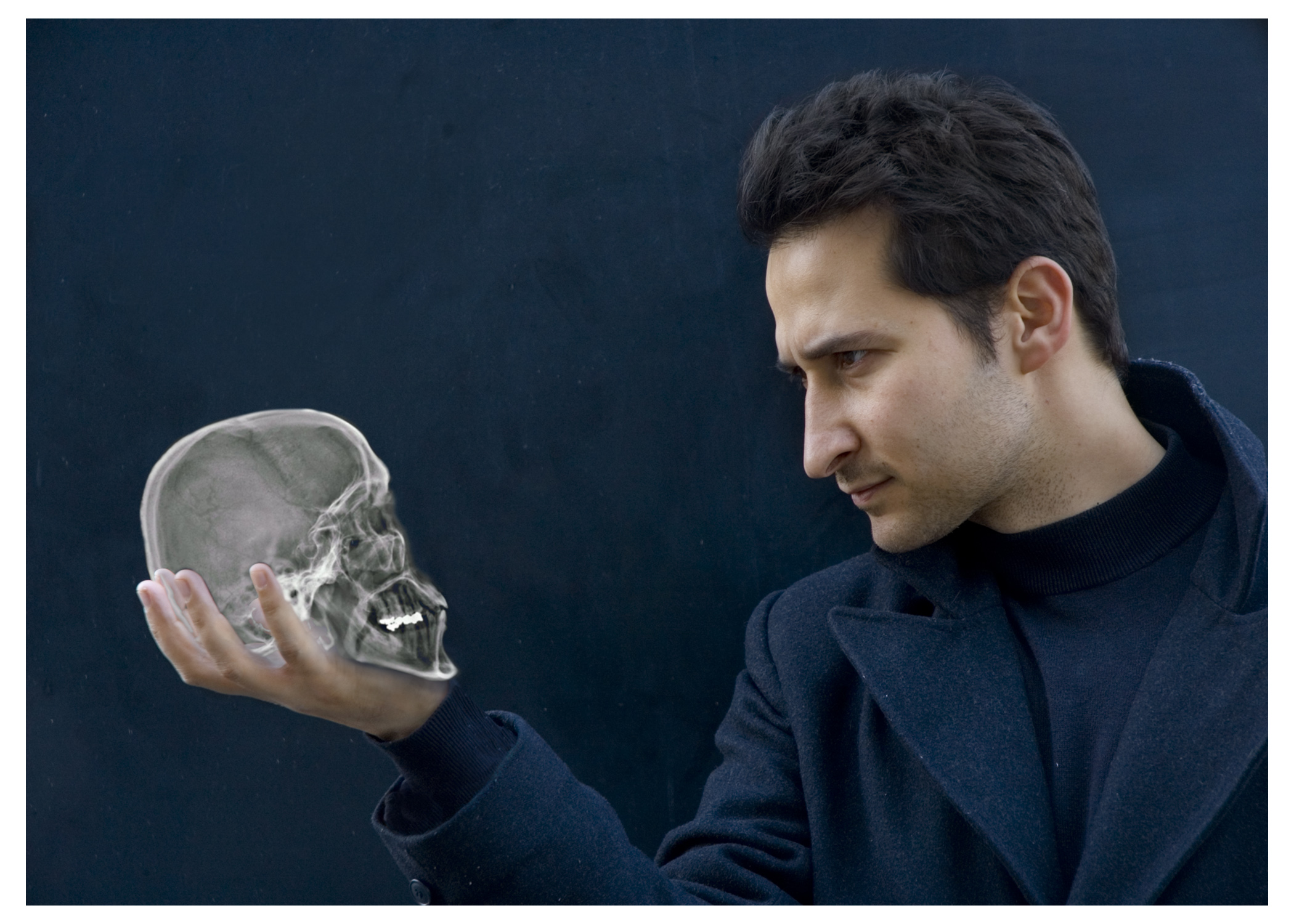
At the end of the Hamlet (Solo) documentary Bhaneja speaks about how he is one of the only people in the world who has attempted to bring a solo performance of Hamlet to fruition, and that he is in a small group of actors who even wanted to attempt this venture. Now, twenty years later Suzy Eddie Izzard has garnered huge success with her solo version of the play, which premiered in 2024. In a twist of fate that isn’t surprising actually within the context of Bhaneja’s life and career, he had the opportunity to chat with Izzard about Hamlet (solo) before her version premiered. “We worked on a tv show in Toronto together, and I was in the back of a minivan with her with a gun to her head for hours and hours, and we just started talking because the camera’s miles away, and we’re just sitting there. Izzard is one of the most interesting, original, engaging, unique people you will ever meet, who got their start as a street performer at the Edinburgh Fringe Festival, a busker in Covent Garden, whose biggest influence on her Hamlet is Richard Pryor. So, when you go see her’s there’s definitely similarities between ours because its one person doing Hamlet, but our way in is very different because hers is storytelling and stand up, and they’re physically very different. Suzy is just about to celebrate her 300th performance in two and a half years. I’m at 150 performances over 20 years. She’s a total warhorse of a performer and human being. She’s run 43 marathons in 51 days for charity. She performs her stand up in three different languages. She’s absolutely someone who could do a solo Hamlet. I’ve hardly met anyone who’s ever done it.” He says that when they were working on the TV show Izzard told him, “as a trans woman, no one’s ever gonna let me play Hamlet so I’m gonna do it on my own. I’m gonna do a solo version,” and Bhaneja says, “I just sort of stared at the ground. I said, ‘Well, you’re not going to know this, but for the last fifteen years I’ve done a solo Hamlet.’” That was a genuine moment of connection for them. Bhaneja went to see Izzard’s version in New York. “She’s not at all scared of finding the humour in Hamlet, and she really mines it, without hamming or anything, but she’s just so bright and open to the humour there. And for me, that’s been one of the great joys of doing it is that sometimes people when they see [Hamlet (solo)] they go, “I didn’t think it was this funny,” and you’re like, ‘yeah, it’s full of funny shit.’”
Similar to interviewing a wide array of Hamlets Bhaneja and Parker deliberately watched as many different versions of the play as possible when developing their show, and took inspiration from all of them. One of the most influential for him was the 2000 Linda Moore production at Neptune Theatre in Halifax in which he played Laertes and the Player Queen. “That was the one that’s in my head, of course, because that’s the one I was in rehearsal for, that’s the one I acted in. So, many, many, many of my interpretations and ideas are inspired by the people I was in that show with- the great Nigel Bennett [as Claudius], the beautiful and talented Patricia Zentilli, who was so great as Ophelia.” He says that even all these years later those Hamlets are rattling around in his and Parkers’ brains. “When we’re working on it, on a new bit, or something feels stuck, or needs to grow or change or transform, we will still sometimes reference, ‘oh yeah, it’s like the black and white Russian one from 1962, oh it’s a little more like Burton’s, or remember that time in the Plummer BBC one where he has this kind of fun here, and that kind of twist there, and says this line this way’… and still if I go see a version of Hamlet I’m always ready to steal anything, any good idea I haven’t tried. You’re not in this mode of protecting the sanctity of your own version, you’re giving over to the fact that it’s way bigger than you and you’re just a humble servant at the foot of the world’s most famous play… in our version I play 17 different people… I need all the help I can get.”
He tells me about how the audiences in different places who have seen the show over the last twenty years have been so different from one another. He remarks how uncanny it was to him that audiences at Neptune Theatre reminded him so much of audiences at the Edinburgh Fringe. “It was in an almost ethereal cosmic cellular way,” he says. “It was a little bit like people were at church, but in a good way.” He says that the show becomes kind of a “travelling lab” where he has been able to study the effects of watching a solo Shakespeare play through the lens of different cultures. He took the show to Inuvik in the Northwest Territories where the audience in a gymnasium was nearly silent for the entire first act. He says that during intermission he started to question himself and his choice to bring this show to this community, when the promoter came back with a huge smile on his face, so excited about how the performance was going. When Bhaneja questioned the response the promoter responded, “they’re listening. That’s what people do up here. If someone comes from away to share a story, people listen.” He says that effected the way he performed the second act, and that he was better able to bring the audience along with him because he better understood their experience. “Those are the things that I never could have experienced or understood in any other way except taking it out like a little monk [to different communities].” It was a wildly different experience of theatre there than in Toronto where audiences are sometimes dragged along unwillingly because it’s the thing to do, but many never reach that profound level of listening and engagement. He carries all these experiences with him as a creator and performer.
“Peter Brook said that the first line of Hamlet is ‘who’s there?’ and the rest of the play is the answer. I’m sure [Shakespeare] thought a lot about what his first line [should be]- ‘Who’s there?’ What is Hamlet about? Who’s there. Who’s there. Peter Brook would be that brilliant to think of it… That’s why solo Hamlet resonates with me, and Plummer said this to me too when we interviewed him, Plummer said, for anyone playing Hamlet, just the role of Hamlet, it’s really about you. It’s who you are. And that’s why it’s such a difficult role.” Bhaneja says that is one of the reasons why it’s actually rare to see the role played by a young actor, even though Hamlet himself is likely around 30, and certainly has to be young enough to still have living parents. Bhaneja mentions Kenneth Welsh being cast in the role at Stratford at 27. “It takes a lot of guts to put a young person in [the show] because it’s such a challenge, but also the play will resonate in a completely different way having a young actor do it. Plummer said Hamlet is about you, and that’s also what’s made playing Hamlet in my version the hardest part because I was able to interpret all these other people- my job is to play all of them to the fullest of my abilities- but Hamlet’s the part that’s taken years and years and years of doing it to get to a point where I feel like it’s good.. or better. I could probably do it for twenty more years and still [be] learning things. Hamlet’s the part that’s changed the most, and that’s still changing the most.”
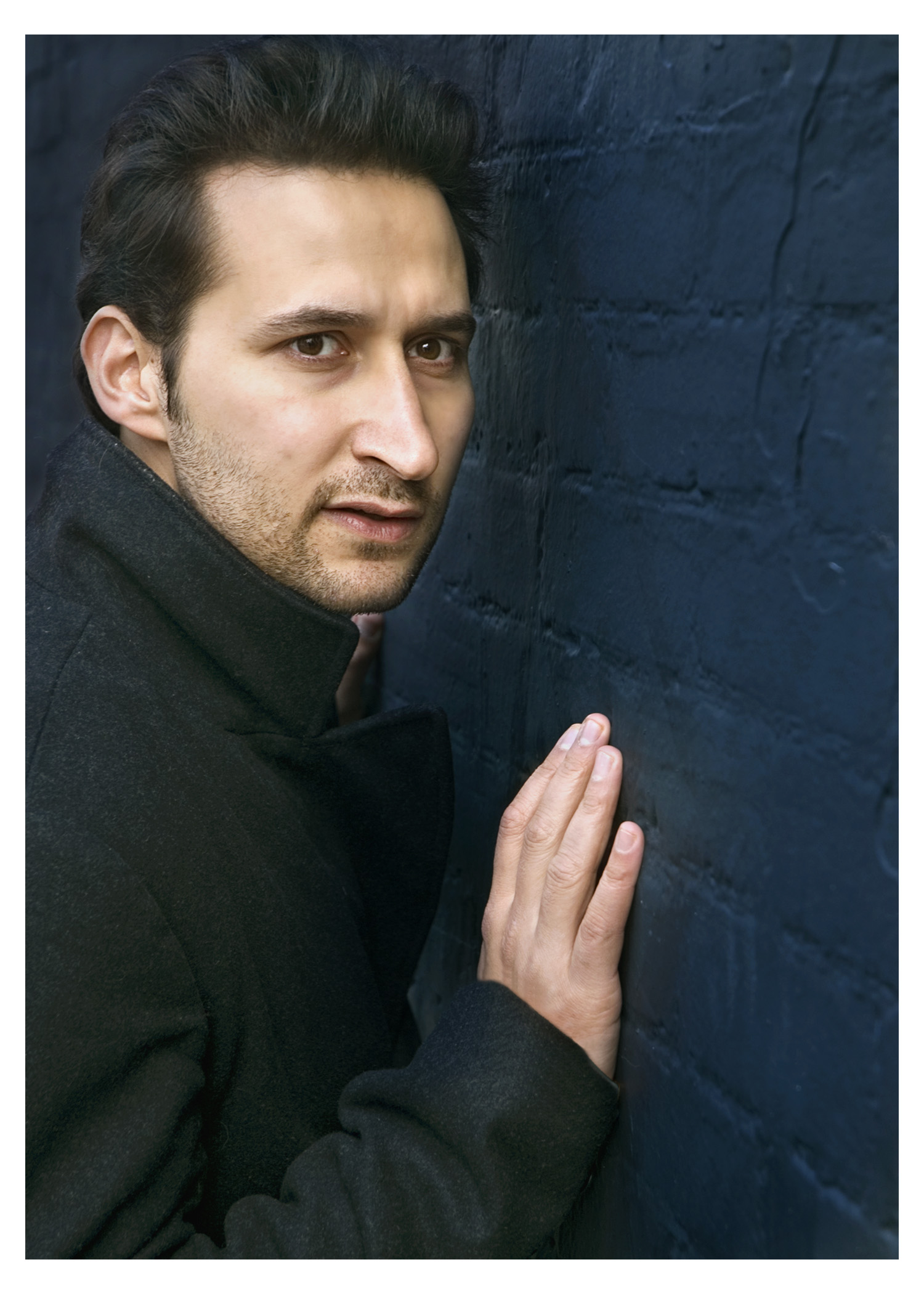
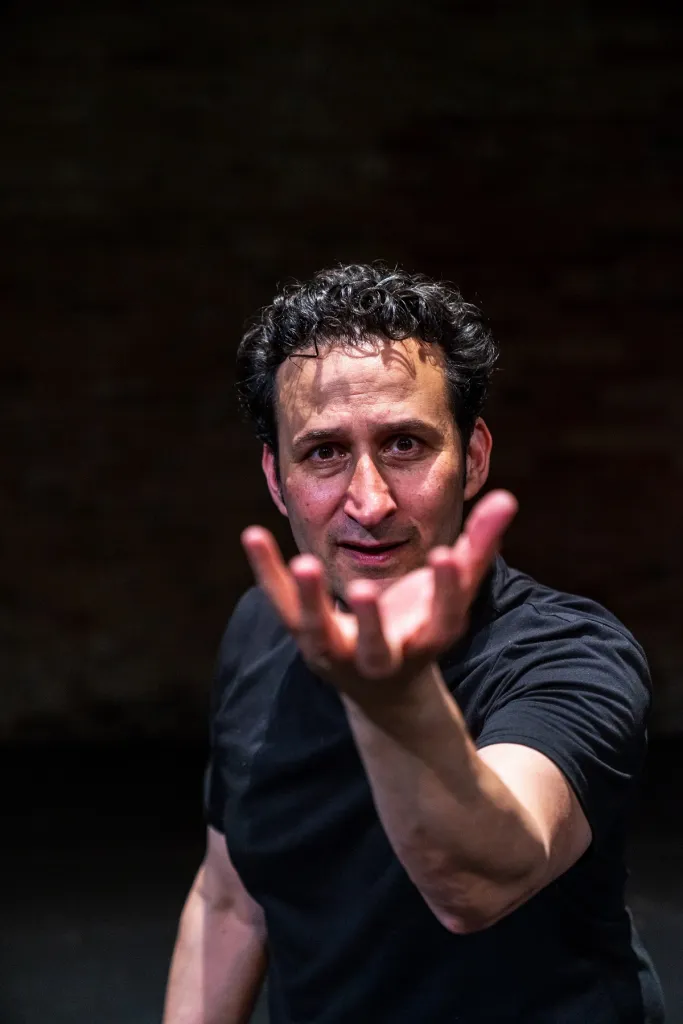
And as the world has continued to change, through the pandemic, and all the various political administrations carving up the world Hamlet continues to resonate with the audiences, and to be culturally and politically relevant in a way that many other plays are not. Bringing Hamlet (solo) back to Toronto, back to Theatre Passe Muraille, is also a way for Bhaneja to give back to the theatre, and to support the Andy McKim Endowment Fund. “Andy McKim gave me my first break at the Tarragon [Theatre] Spring Arts Fair right out of theatre school,” he says, “with Eda Holmes, Severn Thompson and myself, we had a collective creation called Standing Female Nude that we produced ourselves with a company called the Storm Collective that we did at Factory Studio, but Andy had kind of helped us workshop it there. The very first version I did of Life, Death, and the Blues was at the Tarragon Spring Arts Fair in the spring of 2000. Andy had helped me with that, and then I started doing it as part of the Buzz Festival at Passe Muraille, and then Andy basically single handedly booked a tour of Life, Death, and the Blues across Canada before it was even finished being written, so I’m hugely indebted to Andy.” That is part of what made it so important for Bhaneja to do these three performances with all the proceeds going to the endowment fund. The reason that the endowment fund is so important is that such a small fraction of the budget at Theatre Passe Muraille is there to make the theatre, not just developing the new work, but to create all the theatre they do there. Most of the money in the budget is keeping the building running and open, and keeping the staff there. “When [Andy] left he wanted to have a fund that no one could mess with where the interest of it would be used only for supporting new work/ emerging artists… that was his retirement wish- to create this fund, and that’s something I really want to support- not just because Andy’s been so important to me, but because he’s been associated with some really important shows, and he’s been a real community builder- and his ultimate query- or challenge- is a universal problem. If you have a building you’re basically paying for your building and your staff- what about all the young people who want to make theatre, and there’s no money for them to make anything?”
“You’ve got to make your own opportunity,” Bhaneja says of theatre makers, referring to both the way it was 20 years ago, and the way it remains today. “If there’s anything I think Hamlet (solo) shows is that I’ve always believed that an investment in your own creative practice is never a waste, because you’re doing the thing you love to do when maybe no one else is letting you do it, but also that you’re able to do it in a mindful way, and if luck is on your side you are going to create something that pays dividends for years like this has for me. I lost money for a long time, and then I stopped losing money because I did it long enough… I’ve done a lot on my own terms, partially out of necessity, but when I look back I’m glad that the stuff that I put my time into have been my own things that really mattered to me. Life, Death, and the Blues, Disgraced, Hamlet (solo), my band [Raoul and the Big Time], they’re the things that really mean a lot to me, and are kind of the expressions of who I am in a different way.” Bhaneja has also been adjacent to enough of Hollywood through the film and television roles he’s had (recently playing Commander Kelrec in Star Trek: Starfleet Academy) to really have a clear understanding of how the American Hollywood system works. “We have to remember as Canadians that that’s not our culture.” He cites the practical difficulties of working in a country where you aren’t a citizen. “It’s hard for us to really be in their culture because it’s theirs.” He cites a conversation he had with Star Trek cast member Holly Hunter when he realized that she was cast in Raising Arizona (1987) while she was roommates with Frances McDormand, who was dating Joel Coen at the time, and how of course it’s about talent and work ethic, but it’s also about proximity to the creative hub in Hollywood and New York that Canadian actors are most often only adjacent to. He says now it is the time, politically and culturally, for Canadians to stop looking outside the country and to shine their focus on people like Andy McKim, “a really important person in our culture,” He continues, “That was a cultural moment that happened that [Holly] was very lucky to be in, but also she belonged there like most of us would never belong, and [she, McDormand, and Coen] are associated with Hollywood and Broadway and Steppenwolf, and we have to at least acknowledge that, even though it’s smaller and not as word famous, we have our own stuff here and it does matter. I think we’ve been very seduced by the other culture, and overwhelmed by the other culture, and it seems even harder now to think that a younger generation will give a crap about any of our own stuff because they’re so overwhelmed in the digital age with all this sort of cultural propaganda- all this stuff that isn’t about where we’re from- but at the same time part of our mission is to not just be like ‘elbows up’- what more tangible things can we share or describe about our great people, and our great companies, and our great history, and legacy, and really how in a lifetime it’s come from almost nothing [truly Canadian in the theatre] to what it is now? How would an 18 year old who hasn’t spent a lot of time reading history books understand this stuff?”
The reason for hope, though, came from his own son, sitting in a Grade 12 English class in Toronto, where they were learning about The Farm Show (1972). “They’re talking about a play that was in Clinton, Ontario where a group of actors went and interviewed farmers and put on a show [based on those conversations]. Now, this is a deep thing for me because Michael Healey and I are the people who organized the 25th Anniversary of The Farm Show on the farm in Clinton where it happened. I was at Blyth at the time, and Michael Healey was workshopping [his play about the creation of The Farm Show] The Drawer Boy, in which I was playing Miles Potter, directed by Miles Potter. And in the acknowledgment pages of this play that my son texts to me [from school]- my name is there. And I realize that they’re now studying The Drawer Boy… I don’t know if that’s in every English class in Ontario, but it’s in someone’s curriculum. This is important because now kids in Grade 12 English are going to know that David Fox, Paul Thompson, Anne Anglin, Janet Amos, Ted Johns, Fina MacDonnell, they’re going to know that they went and did this thing. In fact, you could say [The Farm Show] was the beginning of a whole [type] of Canadian storytelling. Like Margaret Atwood’s first book. This is the same. That’s a reminder of how important those people are, because look what’s it’s done. In my own tiny way to be supporting Andy McKim’s Endowment Fund- and Andy says that one of the reasons he is in the theatre in Toronto is because of Paul Thompson- and then years later he becomes the Artistic Director of [Paul Thompson’s theatre] Passe Muraille. Those people are these anchors to so much of our scene, that if there’s any way to celebrate them, acknowledge them, and someone like Andy who’s always acknowledging the people who came before him, I hope I do that. Despite the onslaught of everything going in the other direction, when [Canadian students] are studying The Drawer Boy and The Farm Show in English class, it’s a small victory.”
Hamlet (solo) plays at the Theatre Passe Muraille Backspace (16 Ryerson Avenue, Toronto) for three nights only with all proceeds going to the Andy McKim Endowment Fund. Performances are November 6th, 7th, and 8th at 7:30pm. Tickets for this fundraiser are $102.50 (including tax & processing fees). Tickets available: General Admission, or McKim Emerging Creators Ticket to pay it forward to an emerging TPM artist. Each ticket purchase includes a $30 tax-deductible donation. They are available online here, by calling the Box Office at 416-504-7529, or in person at 16 Ryerson Avenue, Toronto.
The performance runs 2 hours and 10 minutes, including a 15 minute intermission. You can find out more about Accessibility Protocols and Content Warnings at this website.
Canadian Theatre Criticism is an essential part of a healthy and thriving theatre community. It helps theatre companies find new audiences for their shows, deepens audiences’ engagement with local artists and the work being created in their communities, and it is one of the best ways to preserve a snapshot of an ephemeral art form for future generations of theatre lovers. TWISI relies on support from its Subscribers, folks like you who care about the survival of local and independent arts coverage. Please consider becoming a Subscriber today, or click here for more information. Thank you so much for supporting TWISI.