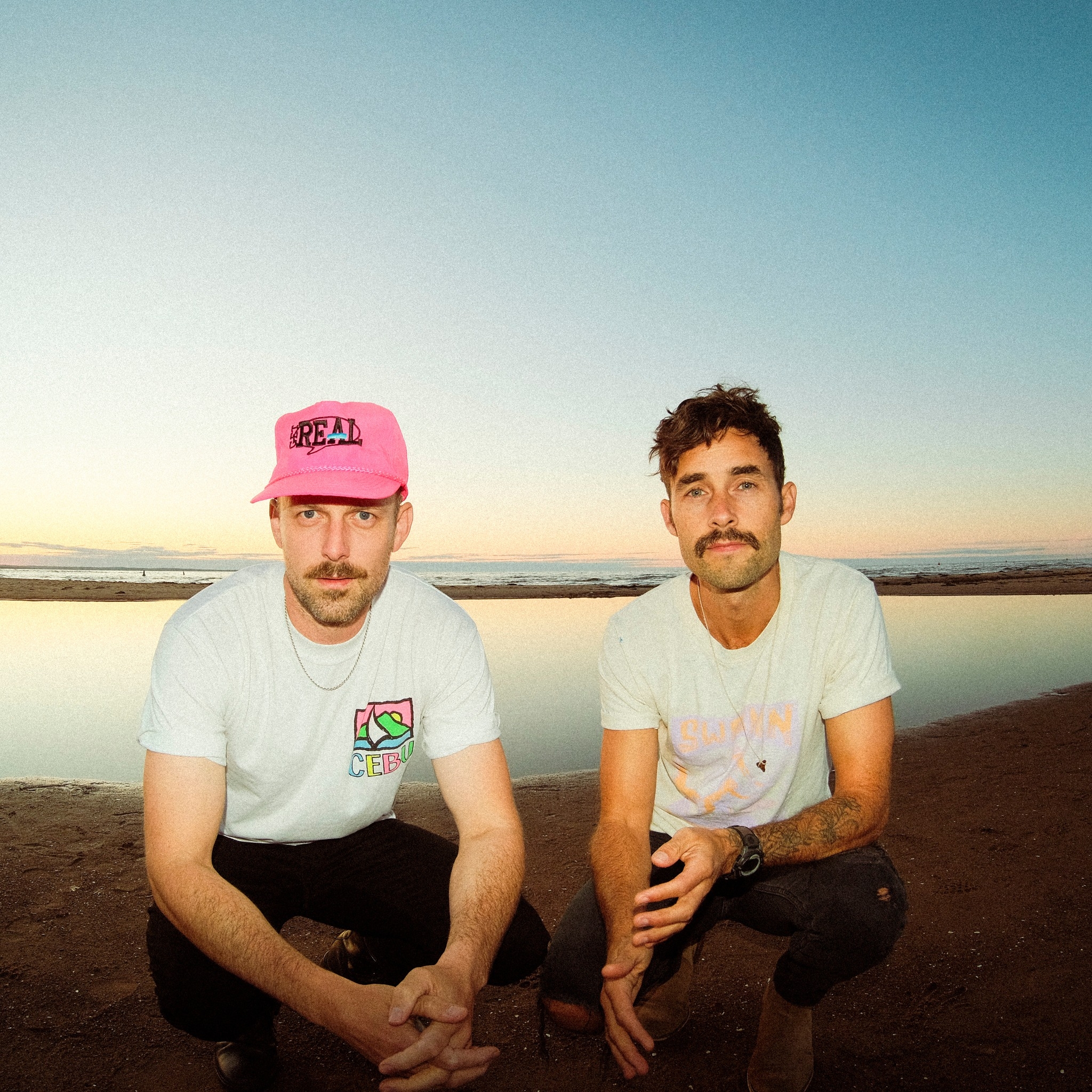
Jake Charron and Tim Chaisson: The East Pointers
I went out to see the East Pointers’ concert with Symphony Nova Scotia last night at the Rebecca Cohn Auditorium in Halifax, and it absolutely filled my heart with so much joy, but also a fair amount of lonesome wistfulness as well. This was the first time I had seen Tim Chaisson and Jake Charron play live since the their beloved cousin/best friend/bandmate Koady Chaisson passed away January 6, 2022. He was just 37. It was also the first time I’d seen them play since my mom passed away nearly two years ago, and my first time hearing their music in arrangement with a symphony orchestra; so it was emotional for me all around.
The first song that they played, in fact, “Stronger Than You Know,” written by Koady and Tim Chaisson, Jake Charron and Colin MacDonald (from The Trews), was one I listened to on heavy rotation in the weeks and months right after I lost my mom so suddenly. The song is on House of Dreams (2022) and was written about a literal snowstorm that had battered Koady’s house, which is in a small hamlet in Eastern PEI, right on the ocean. The chorus works on two levels, both literally and metaphorically, which is why it resonated with me so much during the darkest days of my life: “Big waves and murky waters/snow beaten sons and daughters/hold on a little longer/you’re stronger than you know.”
As a Haligonian who has grown up sort of envious of the rich music and Gàidhlig/Acadian culture in Cape Breton I was fascinated to find out about the Rollo Bay Fiddle Festival and Joe Pete Chaisson (Tim and Koady’s grandfather), who co-founded the festival with Bishop Faber MacDonald in Rollo Bay, just outside of Souris, Prince Edward Island, in 1976. My grandmother was born and raised in Souris River; my grandfather was born and raised in Little Harbour, and all my maternal ancestors settled in various hamlets throughout Kings County, in Eastern Prince Edward Island. Even though the East Pointers’ music is contemporary folk, for sure, listening to the tunes that rely more heavily on Tim’s fiddle and Koady’s banjo especially, I suddenly felt like I was listening to a musical tradition that I myself was connected to: a bridge of sorts to the world of my ancestors. I had this sense of belonging to something really magical and special, which I think can hit differently for someone like me who is a generation removed from Eastern Prince Edward Island. My grandparents had had difficult childhoods there and they wanted to give their children opportunities in Halifax that they had never had, but in doing so, I think they inadvertently cut them (and me by proxy) off from certain aspects of our culture and heritage. What amazes me, though, is that I still feel the music resonate so deeply in my bones and my heart.
When my grandmother was ninety years old I found an album called The Prince Edward Island Style of Fiddling: Fiddlers of Eastern Prince Edward Island. I played a few tunes for her, and she said that none of them stuck out to her specifically, but they all sounded familiar and like home. What amazes me is that, not having had her childhood there, the music sounds familiar and like home to me too somehow.
What Tim and Koady Chaisson and Jake Charron have done with The East Pointers is really bring this influence of the traditional folk music into the 21st Century in ways that will connect with younger folks, and thus, continuing to not just keep the music alive in the eastern end of the island, but they have toured their music around the world (especially in Australia)- sharing their unique traditions and their culture, in the same way that the Rankins, Natalie and Ashley MacIsaac, and numerous other artists have done over the last three decades with Cape Breton’s musical culture.
Koady’s banjo is so distinctive in the music that was created when he was alive; I found the way that the music was orchestrated and arranged, by Rebecca Pellett, Claude LaPalme, and Christopher Palmer, for this Symphony show, created something entirely unique, but that it still captured so much of the heart and the essence of the music from the albums. In fact, there were many times where I felt very much like Koady was there. Tim has a very unique voice, as well; it’s both beautiful in how smooth and melodious it is, with a pop star quality, but it is distinctive in that you would never mistake it for anyone else’s, and the way he clips his lyrics sometimes gives it a chill effortless vibe, that I think roots it on the island.
In fact, that is so much of Chaisson and Charron’s charm onstage: how effortless every instrument they play looks, the way they banter and improvise with one another in a way that feels much more like two brothers kidding around. Even in a more austere venue like the Rebecca Cohn, Chaisson and Charron make the audience feel like they’re invited into a kitchen or around the bonfire, and everyone is welcome to get up and dance or sing along.
As a writer I tend to gravitate more to the lyrics of songs, and I love the storytelling nature of The East Pointers’ catalogue. “Two Weeks,” for example, written by all three East Pointers and Gordie Sampson, so beautifully captures the experience of someone heading West, likely to Alberta, for work on a “two weeks on, two weeks off” schedule, and finding it difficult to acclimatize healthily to that lifestyle, and also maintaining their relationships back home. This is such a profoundly relatable experience for East Coasters, especially us older Millennials and Gen Xers. “Blowing black gold money I shoulda sent home/Two more days and I’m East Coast bound/I’ll be praying she’s there/when the wheels touch down/maybe there’s a job home that’ll keep me this time” captures so much of the nuance of that experience.
Many of the songs are based on very personal experience, as “Two Weeks” was inspired by Koady’s own experience working away, “I Saw Your Ghost” captures an experience that Koady’s young nephew had after a very serious accident left him in a coma, and the more recent “Anniversary,” which was released this year as a single, celebrates Koady’s sobriety anniversary, an event that actually led to the formation of the band back in 2014.
One of my favourite songs, “John Wallace,” on What We Leave Behind (2017) is about a real shipwreck that occurred near St. Margaret’s (potentially at or near Naufrage and Shipwreck Point Lighthouse), in the summer of 1834 when a ship called the John Wallace, from Quebec, ran aground, and everyone aboard died of a cholera epidemic on the ship, except one man who swam ashore hoping to be saved. As the smallest province Prince Edward Island’s history tends to exist on the margins of mainstream Canadian history, and Eastern Island history is marginalized within PEI as well. My grandmother would point out to me while I was watching Road to Avonlea as a child, that the Protestant childhood Montgomery depicts in Cavendish wasn’t at all her own experience, even a generation later, as a Catholic girl in Souris. In this way, this story being remembered and memorialized in an East Pointers songs feels both novel and significant. It also has taken on a more contemporary relevancy now in a “post”-pandemic world.
If you have never heard an East Pointers song before, I suggest starting with “Wintergreen,” from their album Yours to Break (2019), which is beautifully hopeful- acknowledging how difficult it is to be a person in a world that can be very scary, but expressing an unflappable belief in a loved one’s ability to overcome “the darkness of some of these days” and thrive. I listened to this song a lot during Covid because I find it a really easy way to boost my spirits, and it makes me want to dance and sing along.
I love when the Symphony Nova Scotia’s Maritime Fusion shows mix folk musicians with symphony musicians because, of course, historically there has been such a stark divide, culturally, between the two. It’s always fun to watch conductor Martin MacDonald, himself from Cape Breton, bopping along as he works, and bringing these two worlds together to create something really unique and captivating. The symphony also played two pieces rooted in Halifax: “Pier 21 Overture” by Christopher Palmer, and “Tall Ships from Halifax Harbour” by Elizabeth Raum, which, again, centre our East Coast stories, and showcases all the various creative ways that we can tell these stories and pass them along to future generations. Even though my grandfather died when I was five, I still feel like I know he would be one of The East Pointers’ biggest fans because of their ability to share the stories, both historical and contemporary, communal and personal, of Prince Edward Island, and to cement them more firmly in the Canadian cultural consciousness. Every time I see their shows I feel like I bring my grandparents along with me, and now I bring my mama along too.
The shows are also just really fun, and that jovial spirit is captured especially well in their two newest singles “Misty Morning” and “Maritime Moonshine.” Check ’em out.
The East Pointers have one more sold out show tonight at the Rebecca Cohn with Symphony Nova Scotia. For more information about upcoming Symphony Nova Scotia shows click here. Check out The East Pointers’ own Festival Goolaholla coming up on the Rollo Bay Fiddle Grounds near Souris, Prince Edward Island September 26th and 27th, check out the Rollo Bay Fiddle Festival, coming up first July 18-20th, also, as you may have guessed, on those same grounds outside Souris. You can find The East Pointers’ albums wherever you get your music. They are headed to the UK in May, Ontario in June and July, Belgium in August, and then at the Larlee Creek Hullabaloo in Perth-Andover, New Brunswick in August. Check out their website for more information and a full list of upcoming show dates.
Incoming search terms:
- https://www twisitheatreblog com/?p=5558