
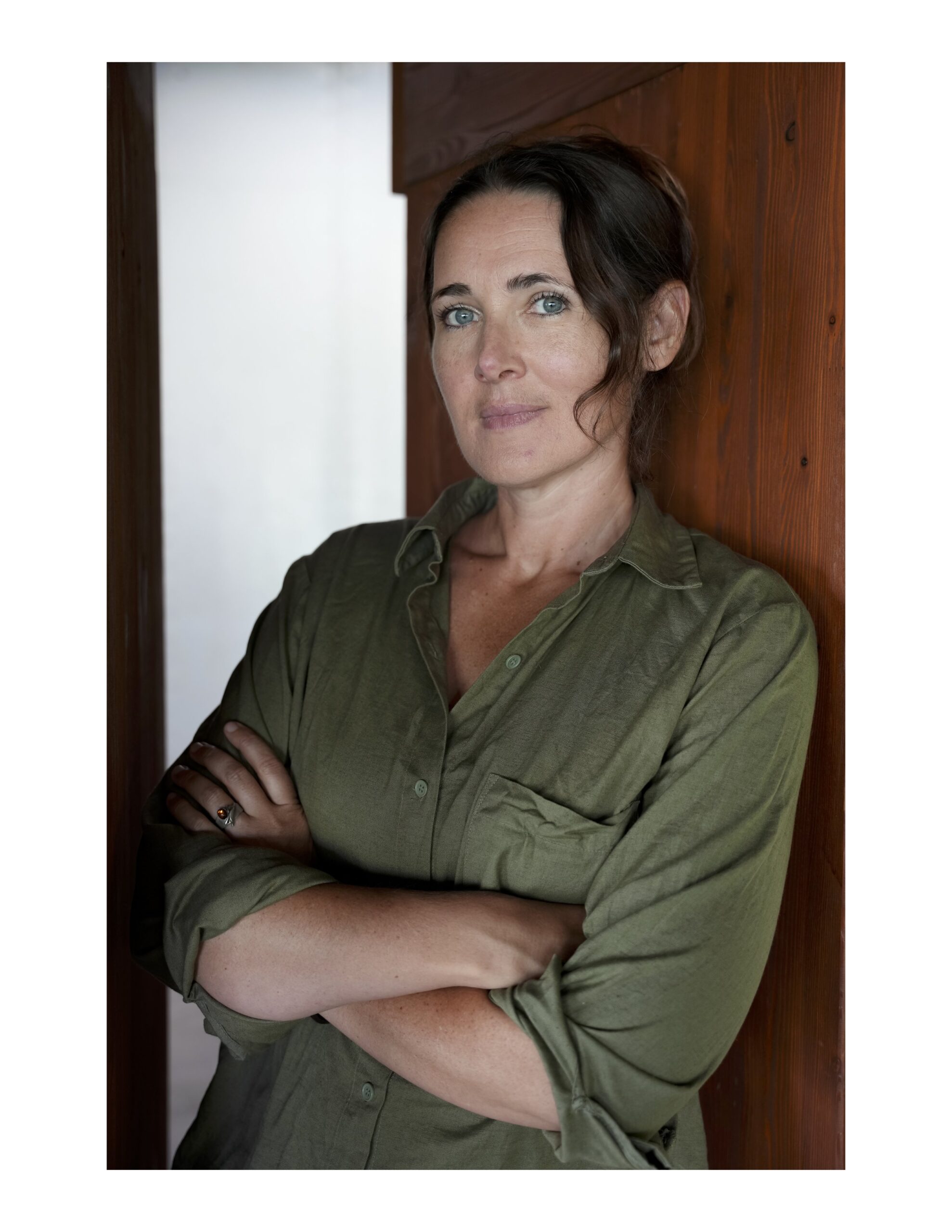
Forging a life in the theatre while being based in Nova Scotia can be a challenge. Some Nova Scotian theatre artists spend many months touring the world with the shows they have created here. Others seek to find sustainable ways to dedicate their lives to performing in shows for the local audiences here. Many Nova Scotians have left the province and have created successful careers in larger cities like Toronto and Montréal or at the Stratford and Shaw Festivals in Ontario. For Alexis Milligan she has found a way to live in Nova Scotia while commuting, every other week, to work at the Shaw Festival in Niagara-on-the-Lake, Ontario. Her experiences at the Shaw have profoundly shaped her career and the myriad of jobs she has in the theatre, but it also allows her to work with local theatre companies, like Festival Antigonish, where she will be doing Movement and Puppetry Direction for their upcoming production of The Secret Garden of An Sìthean.
I had the chance to chat with Milligan via zoom while she was scooting between rehearsal halls at the Shaw Festival, where she also works as a Movement Director, and hosts their brand new podcast Let’s Get This Shaw On the Road.
Milligan started out as a dancer citing her “roots in performance” as being her time with the Young Company at Halifax Dance and as part of the performing ensemble for Coastal Dance. At this time in the 1990s there were crossover opportunities for the students in the Halifax Dance Young Company to perform with the students at Neptune Theatre School. “I would dance with Rhys Bevan-John,” she says, “because I’m tall and he’s tall…. Zach Fraser was there, Sean Robertson was there, Marla McLean was there, [Kirstin Howell] was there. There was a whole culture of us who were all the same age coming through these Young Companies, and we were really pushing the envelope of youth performing arts in Halifax, and there was a lot of support for that at that time. I count myself very lucky because I feel like there was a richness of arts education that was happening when I was coming through.”
Things have come full circle for Milligan and Marla McLean, who hails from Dartmouth, as McLean is one of the guests on the fifth episode of Let’s Get This Shaw on the Road. McLean, who has been at the Shaw Festival for a stunning nineteen seasons, joins her real-life husband Graeme Somerville chatting with Milligan about their upcoming play Dear Liar by Jerome Kilty, which they have brought to life together. I definitely recommend checking this episode out. McLean and Somerville both speak so eloquently and with so much thoughtfulness about Shaw, the continued immediacy and relevance of his work, and how this production, in which Somerville actually plays Shaw, came to be.
As an older teenager Milligan then met Susan Stackhouse during her one year at Dalhousie University, while taking Theatre 1800 (the performance class) as an elective. She was ‘aging out’ of her years dancing in The Nutcracker, doing a lot of choreography, but also dealing with a knee injury. She was seriously considering a career in archaeology. Susan Stackhouse encouraged her to audition for theatre schools outside of Nova Scotia.
Even though she had been primarily a dancer Milligan was also deeply connected to the theatre community in Halifax through her mother, Dianne Milligan, who had worked at Neptune Theatre, been involved in John Dunsworth’s Pier One Theatre (1971), Halifax’s first alternative theatre, and through her role as Executive Director of Dance Nova Scotia Dianne had worked closely with those at the Nova Scotia Drama League, which became Theatre Nova Scotia when it merged with Nova Scotia Professional Theatre Alliance in 2001. “I used to do a lot of photocopying for them when I was ten years old,” Milligan says. Through her mother Milligan met such pillars of the Nova Scotian theatre community as Chris Shore, Joanne Miller, Mary Ellen MacLean, Christian Murray, Sherry Lee Hunter, Walter Borden, and Richard Donat.
It seemed natural, then, with the encouragement from Susan Stackhouse, for Milligan to audition for theatre schools, and she ended up going to George Brown Theatre School in Toronto where she spent a month at the British American Drama Academy, which “changed [her] idea of what theatre could be.” She returned to Nova Scotia after graduating from George Brown and got a job working on When Dinosaurs Dined By Moonlight, a Mermaid Theatre touring production with a story by Sheree Fitch. The dinosaurs were “gorgeous hand-painted silks” by Holly Carr. “It was incredible, just a magic show,” she says. She did seven international tours with Mermaid over the next five years and eventually became a board member and then the Chair of Theatre Nova Scotia.
Originally Milligan had a stronger connection to the Stratford Festival because her mother’s best friend, Costume Designer Bonnie Deakin, was there doing wigs and costumes, and her husband, Ian, was a prolific actor there. But during her years at George Brown she would also go to the Shaw Festival every year to see plays. She was excited to see performances by iconic Canadian performers like Jim Mezon, Kelli Fox, Patrick Galligan, and Fiona Reid. At that time Stratford wasn’t yet doing their “epic musicals” and the more contemporary late 19th and early 20th Century plays that were so “immersive” at the Shaw really blew Milligan away. In particular, a production of Luigi Pirandello’s Six Characters in Search of an Author (1921) really ‘changed [her] life.’ “I was like ‘this is stunning,’ it was eerie, it was powerful.”
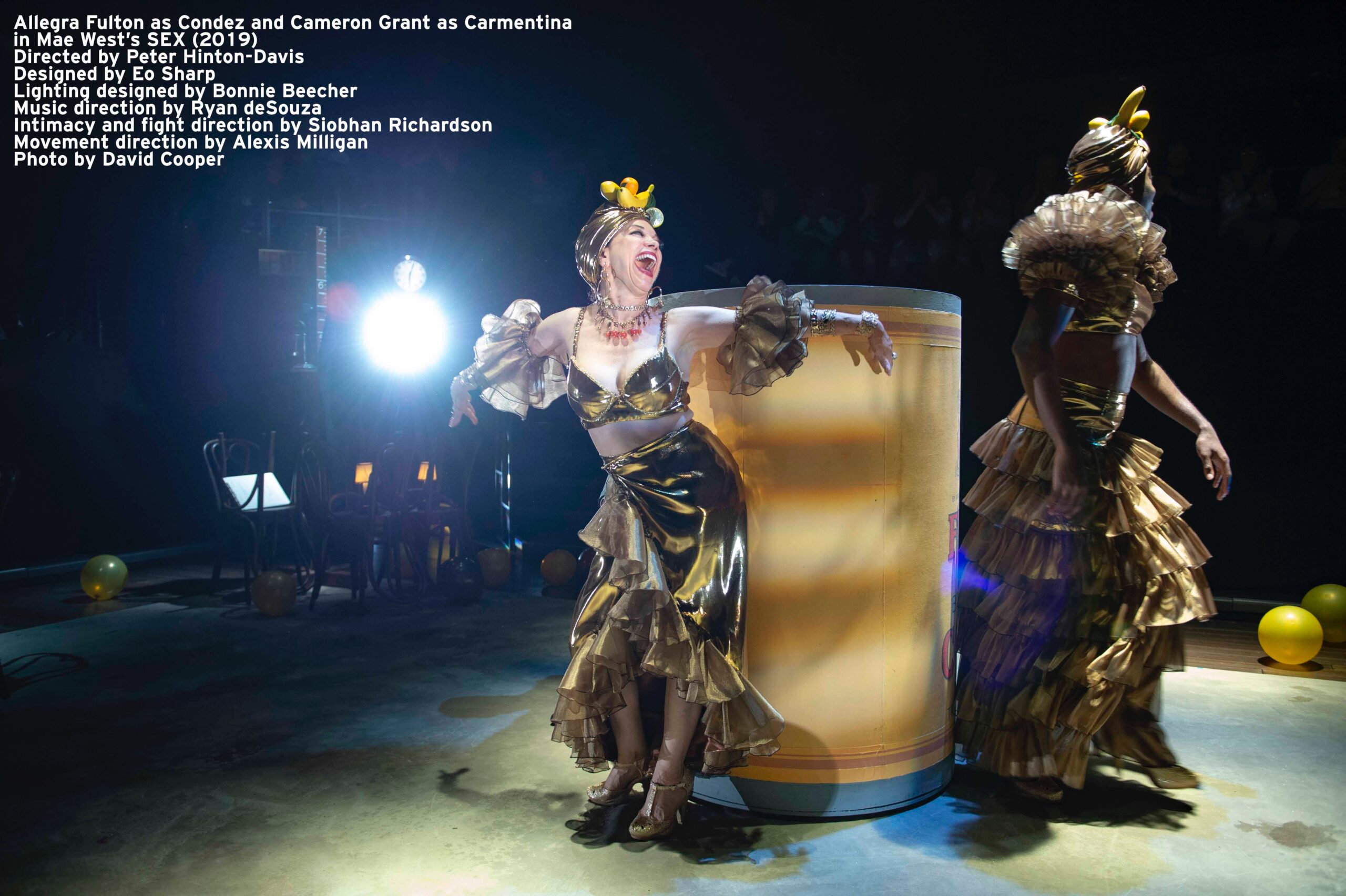
She did her apprenticeship as a movement coach at Stratford, but really found herself gravitating more and more towards the Shaw Festival, which is smaller and thus has the ability to be a little less rigid in its practices. She likens the Shaw Festival to the Millennium Falcon, saying that in comparison with Stratford’s ‘Death Star’, “we are the Jedi Rebellion.”
The Shaw Festival, like Stratford, is “one of the last remaining repertory companies in all of North America.” Neptune Theatre, Milligan notes, was also once a “rep theatre,” where a company of actors would be hired for an entire season and perform in a different array of the plays that were presented that year. “We have thirteen productions that we do between February and December [at the Shaw],” says Milligan, “[and actors and creative teams work on] two or three plays in a season. On the day we are speaking together Milligan is in technical rehearsal for May I Have the Pleasure, a show she has created about social dancing, in the afternoon, and then she also has a technical rehearsal for Gnit by Will Eno, for which she is the Movement Director. “In the span of a day I’m in rehearsal for two different shows.” This is the same for many others who are on the Creative Teams there; they often bounce between two different rehearsal halls.
The Shaw Festival was founded in 1962 by Brian Doherty and Calvin Rand, and originally only produced the works of Irish playwright (critic and social activist) George Bernard Shaw. His most famous play is arguably Pygmalion (1913), which is the basis for the musical My Fair Lady. Under Artistic Directors Christopher Newton and Jackie Maxwell the Shaw Festival has expanded its scope to include works that were written or are set within Shaw’s long lifetime (1856-1950) and, as Milligan says, exemplify his spirit. “He was a very political mover and shaker and an incredible writer.” she says, “His essays are extraordinary, very current to our time. He’s written some of the most powerful female characters that we have in the classic canon. There’s definitely always a debate, there’s always these amazing characters that are set up to have two perspectives. It’s not whether one is ‘right’, it’s just there is this debate, there is this dissent- the struggle between points of view of how we all think we should be living in this world, and nothings has changed,” she adds with a big hearty laugh.
“We really focus on [the questions of] ‘what are these stories? What’s our engagement?’ And beyond that we really have taken on the mission to be a centre for human connection- to be a place where people can connect with people. [Over the last] nine years or so we have really taken on the responsibility that theatre brings people together and, now more than ever, we need to be together. It’s a place where we really are focusing on creativity, human connection, learning, lifelong learning… we really focus on professional development, and that learning doesn’t stop…. We have some of Canada’s top performers coming to class every week, and booking coaching sessions- even though they’re performing in shows and are in rehearsals.”
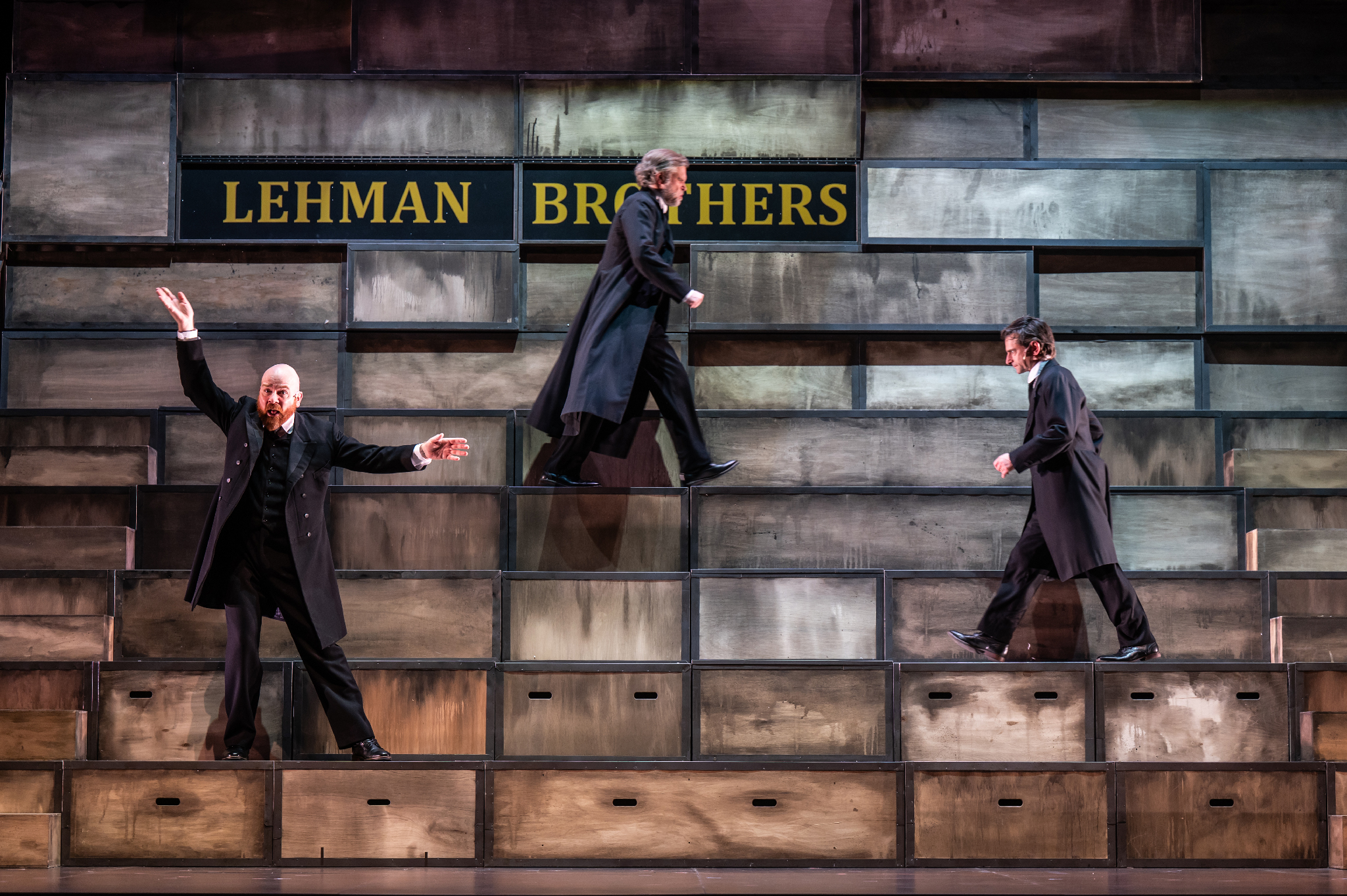
Directed by Philip Akin. Set Design by Camellia Koo
Costume Design by Dana Osborne. Lighting Design by Steve Lucas
It is rare in Canada for companies to have resident Movement Directors, or even for Movement Directors to be hired for productions at all, due to budget restraints. However, it is much more common in Europe and in the UK. When plays and musicals have significant amounts of dancing in them there will usually be a choreographer working on the show, but when plays still have a great deal of movement associated with them, or highly specialized movement, but no choreography in the traditional sense, that can fall within the realm of a Movement Director. Milligan says that she is often involved in discussions about the shows that she works on from the very first meetings- especially if the set and costume decisions are going to impact the ways in which the actors will have to move. She did Movement Direction for Philip Akin’s production of The Lehman Trilogy at Canadian Stage, which ran last November and into December, because Akin needed to know how the physicality of three actors playing multiple characters would be able to move around Camellia Koo’s set. “I won’t be at every design meeting,” says Milligan, “but I will be a part of the initial meetings, then I’ll go away and do some research, I’ll get brought into another design meeting a bit later when there’s models or images and things to look at, and to talk about where the bodies might move in space, what the relationship to that set might be, what we could get out of it. Then it’s also the costumes, in terms of, [if] you want to have this level of physicality, we can’t have puffed sleeves, or the puffed sleeves have to be constructed in a way that [won’t restrict the way the actors use their arms]… or there’s very specific design elements that’s going to actually elevate a physical storytelling to this creative process. What’s that going to add to the storytelling of the play?”
The second part of the Movement Director’s job is working with the actors directly. “I may work with people [in the show that I’m the Movement Director for], so I’ll be there doing the warm up with them, we’ll talk about very specific physicality for that show, for those characters, working on transitions, and keeping the continuity of the physical storytelling in the air and the space. Then also, here at the Shaw Festival, I also get pulled into other shows.” She mentions that she is working specifically with Sochi Fried, who plays Susan in Wait Until Dark, and with Virgilia Griffith, who plays Angel Allen in Blues for an Alabama Sky just specifically on the physicality of their characters. “I love that because my day could involve a design meeting with a creative team for the show I’m actually going to do the movement direction for, and coaching sessions with people in plays I’m not actually working on, but working with them on character work or just physical body work, or like they’re holding tension and their neck is getting sore- okay, great, we’ll do some release work there- and then I might go into tech rehearsal for something else. So my day is like running around like a chicken with my head cut off, but that’s the kind of fun that you get [here]. It’s ridiculous but I love it.”
Another new aspect of her job is hosting the Shaw Festival podcast Let’s Get This Shaw on the Road. Artistic Director Tim Carroll (often called TC) came up with the podcast idea because, since the Festival is located in Niagara-on-the-Lake, most theatre patrons drive to the productions from other places in Ontario and in the United States, particularly from New York and Ohio. Niagara-on-the-Lake is right on the border with New York State, divided by a very narrow stretch of Lake Ontario. “We were thinking about how we [could] start the show before [patrons] get here. One thing that is sort of our vibe here at the Shaw Festival is we really love to nerd out about the theatre. So, this is all about pulling back the curtain and getting into the nitty gritty of why we do this [work], and how we do this [work]. We sort of thought ‘what if we were the road trip?’ We are what you listen to in the car on the drive to see the show. So the show has kind of already started for you, your Shaw experience has already started.”
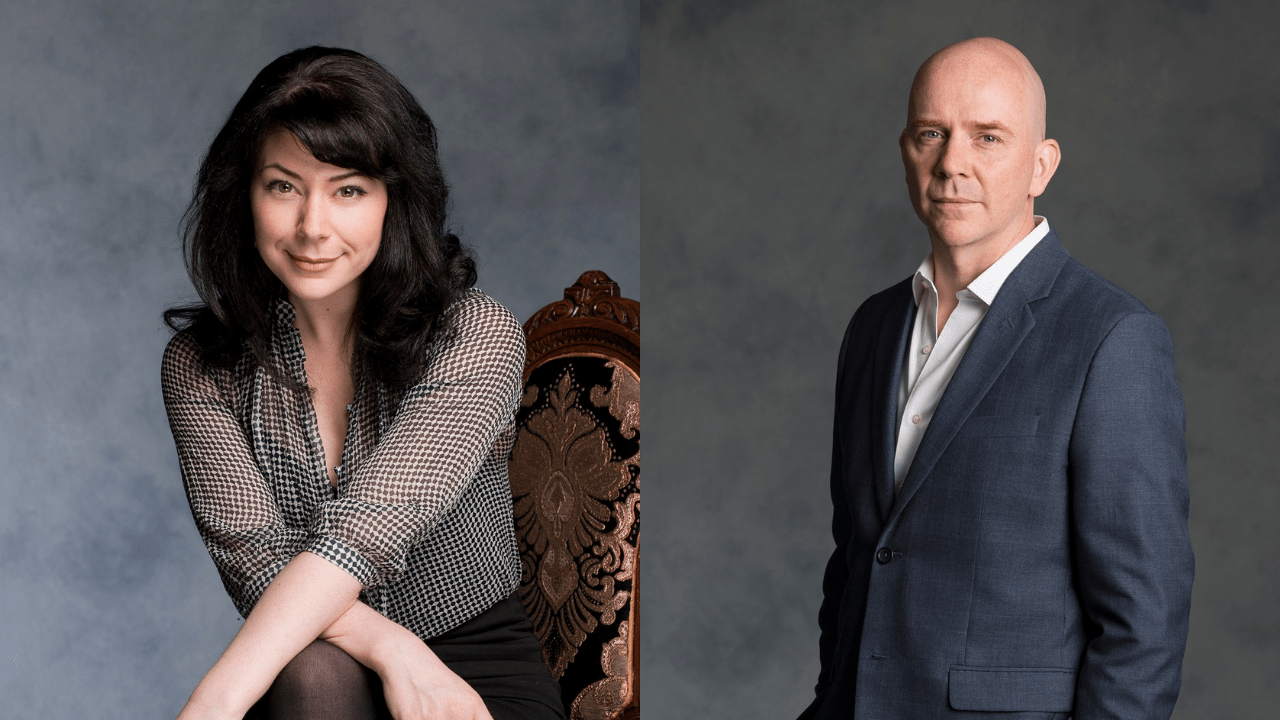
Kelly Wong, an actor and one of the Shaw Festival’s ‘Embedded Artists’ (a cohort who are hired full-time who also support some of the festival’s administrative and fundraising work) produces the podcast, as he is “very knowledgable in the digital sphere,” and Carroll asked Milligan to host because of her experience co-hosting the Finding Creativity podcast, which she just wrapped up, with Ian Sherwood. “I loved doing a podcast,” says Milligan, “it’s just my favourite thing.” There will be a podcast episode dedicated to each production this season where Milligan interviews two people involved with the show- either members of the Creative Team or performers. “It comes out every Thursday and it’s getting inside of why: what draws us to this work? What is coming out of doing this play? What is it about working together with this other person? What’s that working relationship? What’s something to watch for? That’s my favourite part of the interview, at the end where it’s like, if I’m coming down to the Shaw, what’s my little Easter egg? What’s my little inside scoop? And everyone’s had the best answers. So it becomes intriguing. It becomes enticing.” Milligan says that even though she is talking to some colleagues that she has known and has worked with over years she is learning new things about them in asking them about how they got into theatre in the first place and what drew them to audition for the Shaw Festival. She hopes that hearing these stories will also be inspiring and reassuring for young actors just starting out, as they are reminded that even the most established actors in our community were once just starting out too. Indeed, of the four episodes of the podcast I have heard so far, there has been more than one actor who has spoken of “crashing” at their first audition at the festival, which means not actually having a set audition time, or not being formally asked to come in to be seen, but showing up in the hopes that there will be time for you to go in and audition for the artistic panel anyway. McLean tells an especially harrowing story of how she ended up going from being in the Mirvish Production of Mamma Mia to eventually finding her roundabout way to the Shaw stage.
“It’s a really beautiful opportunity to get to know the people that I’ve been working with in a really unique new way,” says Milligan.
She relishes having the opportunity to work with the artists employed at the Shaw, and to work in an environment where the actors are excited to try out new ideas and to say yes to playing around with different ways of doing things. “I get [on an airplane every other week] because I work with people who make my work better,” she says, “I’m on a constant learning curve here, and it’s been extraordinary…. This is where I’m being fed, and this is where I feel like I can really contribute something to help something grow. And that’s kind of amazing.”
Gnit by Will Eno and directed by Tim Carroll opens June 19th, 2025 at the Jackie Maxwell Studio Theatre (10 Queen’s Parade, Niagara-on-the-Lake, Ontario) and runs until October 4th. Tickets are available here.
May I Have the Pleasure created by Alexis Milligan opens June 18th, 2025 and runs until September 26th at the Spiegeltent (10 Queen’s Parade, Niagara-on-the-Lake, Ontario). Tickets are available here.
Dear Liar by Jerome Kilty, co-created by Marla McLean and Graeme Somerville, is on now and runs until September 27th, 2025 at the Spiegeltent (10 Queen’s Parade, Niagara-on-the-Lake, Ontario). Tickets are available here.
There are an array of other shows on at the Shaw Festival running all summer and into the Fall, including The Lion, The Witch, and the Wardrobe, Anything Goes, and Shaw’s Major Barbara. For more information visit this website, for more information about Accessibility at the Shaw click here. Listen to Let’s Get This Shaw On the Road wherever you get your podcasts.
Incoming search terms:
- https://www twisitheatreblog com/?p=5643