Photo by Selina Asgar
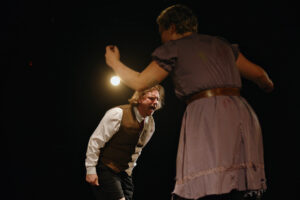
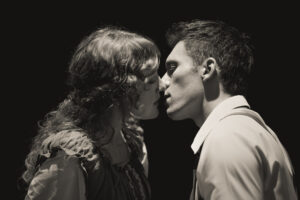
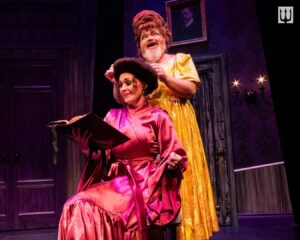
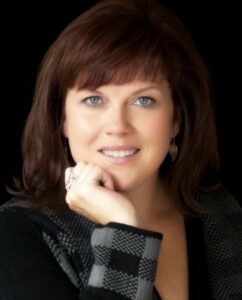
Renowned Canadian theatre director Alisa Palmer has directed a production of Ann-Marie MacDonald’s famed play Good Night Desdemona (Good Morning Juliet), which is playing at Perchance Theatre in Conception Harbour in Newfoundland just until August 30th, 2025. I had a lovely conversation with Palmer via Zoom about what brought her to Newfoundland and how this play, which MacDonald wrote in 1988, keeps getting more and more relevant as the years go by.
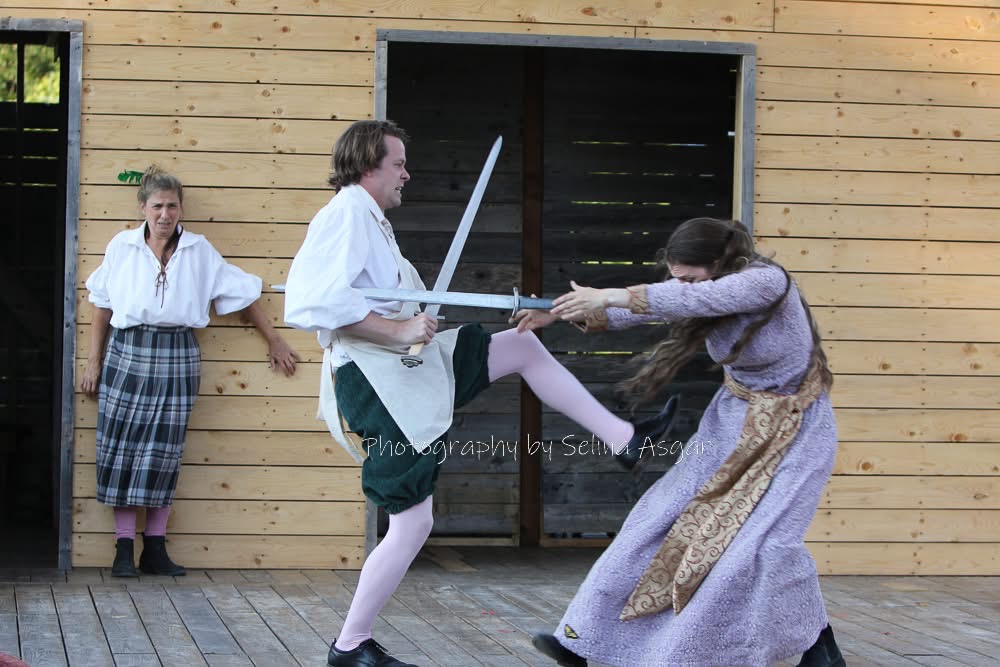
The play centres on Constance Ledbelly, an academic who is working on her thesis (in green ink on foolscap) at Queen’s University, when she has an unpleasant revelation about the professor that she has been working with which leads her, sort of like Alice in Wonderland, through a kind of looking glass into the world of her thesis- which is two of William Shakespeare’s most studied plays- Othello and Romeo and Juliet. Her quest is to save Desdemona and Juliet from their tragic fates. “It’s a joyful and surprising romp of self discovery,” says Palmer, “when you’re going through the dark night of your soul and the worst happens- if you’re lucky something will crack open in your imagination and you’ll encounter aspects of yourself that are absolutely resilient and creative and imaginative, and parts of you will drag you out into the next chapter of your life through the things that you love, through the things that you’re passionate about, things that matter most to you in your life.” For Constance, what she loves and what she’s so passionate about is Shakespeare, and so Palmer says, “you get to experience all the fun stuff about Shakespeare- sword fights, and flirting, and dancing, and jokes, and action, without any of the boring stuff.” She laughs. She says that “many people have experienced impenetrable Shakespeare, but this is a love letter to Shakespeare. Ann-Marie made a discovery when she was writing it that I think a lot of us encounter, which is, you think Shakespeare is one thing, but then when you really engage with the writer, you discover there’s an awful lot of gifts and talent and brilliant ideas, and joy in the plays, but we don’t always get to experience that. [In] this adventure for Constance, this sort of hapless, unfortunate academic, who loves Shakespeare, [Ann-Marie] is writing with so much love and respect for [him].” She notes that when MacDonald flips the narratives and the characters from Romeo and Juliet and Othello upside down, in a sense, “that makes it a really beautiful adventure. All of [Ann-Marie’s] plays are like that, she never tries to one up somebody or undermine or make fun of it, she brings people together and brings people forward together with this kind of sense of humanity that is also really fun, and not sanctimonious and not sentimental, just fun, and sharp, and witty, and great sword fights.”
When I was re-reading the play recently I was struck by how eerily contemporary it is, and how loudly it speaks to this particular moment in time. Professor Claude Night, Constance’s superior at Queens, for example, is engaged in an inappropriate relationship with both Constance and another younger student, really highlighting the sort of normalized power dynamics within academia in 1988. MacDonald satirizes both in a comedic way, but it is still possible to see this aspect of the piece through a #MeToo lens. Constance is also a bit of a conspiracy theorist, as she has fallen down the Gustav Manuscript rabbit hole, searching for proof that the source material for both Romeo and Juliet and Othello were actually lost comedies that each had a Wise Fool who saved the heroines from their grisly fates. “We meet [Constance] at a vulnerable time,” says Palmer, “and she’s susceptible [to this kind of thinking].” But, here the conspiracy leads her to opening up a whole new world of understanding where she really gets to test her theories, and, to her credit, she is willing to keep an open mind, and she really relishes the opportunity to wonder, to explore, and to keep learning. Palmer notes that MacDonald only made one small rewrite for this production and it involves Ramona, Professor Night’s protégée, telling Constance, “Coors Beer is part of the rightwing infrastructure that has brought this hemisphere to its knees.” Palmer says, “Coors is still a horrible brand in a lot of ways, but she updated it because [the brand] is now connected to [the Heritage Foundations’ Project 2025]. Every time the show gets [produced], all you have to do is update how Coors is connected to nefarious organizations.”
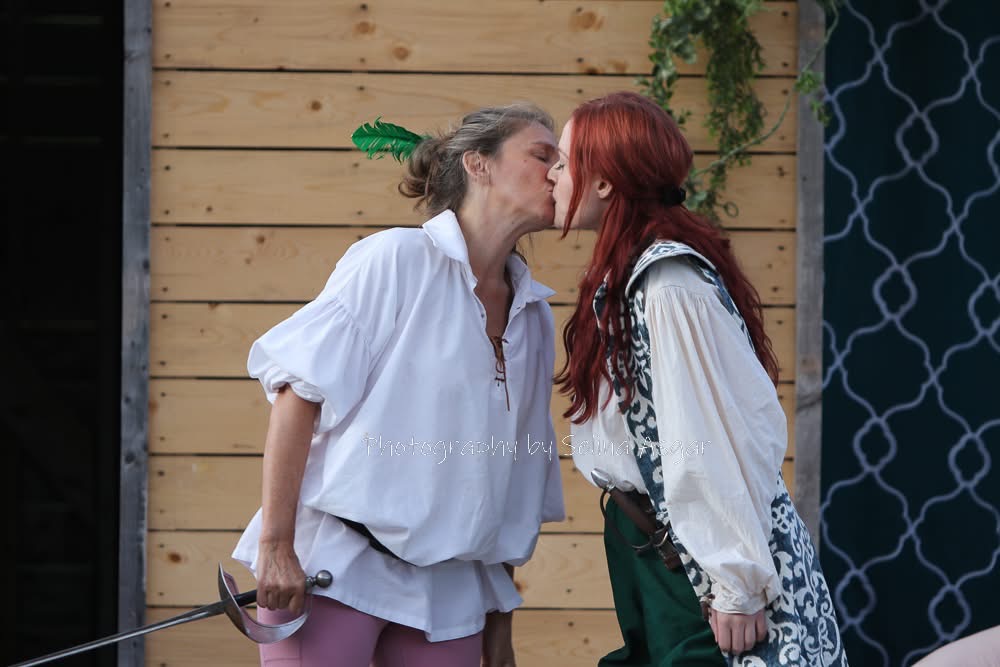
Palmer agrees that there seems to be a “collecting of attention” on the play recently. She notes that it is coming up on its 40th Anniversary in 2028. “I think people are looking at it in this social time where things that we may have taken for granted, we can’t take for granted anymore- the rights of Queer, trans, lesbian, gay, non-binary [folks]- all of that’s being questioned, especially south of the border, and elsewhere. I think it’s drawing people’s attention to stories that we thought spoke to another era, and they’re speaking to us again. I think there’ll be another wave of curiosity [about this work]. I think there’s also people who are wanting to celebrate the legacy of these kinds of stories- queer stories. There are very few lesbian-centred stories that don’t end in something bad happening to the lesbian. I think there are also people wanting to celebrate that these stories have been around- they’re part of our legacy, they’re part of our history, people don’t have to reinvent the wheel; the more we know about our history the more we can lean on that and grow from there together and fight the good fight together without feeling like we’re always starting at the starting gate over and over again.”
Palmer, who is from Fredericton, says that “there’s something that [she] really [cherishes] about storytelling on the East Coast,” and that during recent trips to both Newfoundland and Cape Breton she really enjoyed visiting many of the different theatres in both places.

As far as this production is concerned, Palmer first met Danielle Irvine, the Artistic Director of Perchance Theatre, at the National Theatre School of Canada, where Irvine was teaching, and Palmer was the Artistic Director of the English Section of the school. Palmer first came to Perchance last year, in part because “Danielle is an incredible educator, a lovely director, and Perchance had hired a lot of the recent grads from NTS, and she was providing a real opportunity for them to launch into the industry in Canada, which is many Shakespeare companies in the summertime, and it’s sometimes the first sort of professional leg up for actors.” She said that when she saw the theatre she thought, “oh my gosh, wouldn’t it be amazing to try and do Goodnight Desdemona there because… [the theatre] is built like a small Globe Theatre, like the original Shakespearean stage. There’s a ring of seats in a semicircle around sort of a thrust stage, and it’s open air, and it has a back section, so you have wonderful entrances and exits, so you’ve got the pit, you’ve got the stage, and you’ve got a balcony- classic. So, it was really exciting to think of how to do it there.” Irvine was very familiar with the play and keen to do it, but the first challenge was considering how to stage a show in the open air that often relies so heavily on blackouts.
Palmer describes the role of blackouts as a way to “make people disappear. There’s a blackout and we go to the next place, the lights come up, and things have changed… How do you create a theatrical language that does the magic that lighting, set and costume design do?” Yet, she says that when she came together with her team of actors, once they were getting into the story and their characters, “the theatrical style starts to emerge from offers that they’re making, from understanding the space, understanding what their relationship is with the audience, physically… so when I say it was easy [to find an alternative to the blackouts], what I mean is through a lot of hard work from really smart actors, and a designer who was really creative, and a production manager, there was a group of people trying to tackle this first disappearance of Constance and we all threw in suggestions and came up with something that was based on the premise that a magician uses- which is to sort of obstruct and distract. So we created a major distraction that took people’s eyes away from what was really happening… and it happens quickly, robustly, with lots of actors, dynamism, sound, and some props, and before you know it, it’s over and something’s happened… it’s part of the magic of collaboration.” She notes that once she figured out how to make Constance disappear the first time, the rest of the magic in the show came more easily.
This is the third time that Palmer has directed a full production of Goodnight Desdemona (Good Morning Juliet), but she has had other interesting encounters with the play, including one time in Japan where she was giving a speech, in English, about MacDonald’s work, and a group of Japanese actors performed excerpts of the play in Japanese. “They transpositioned the classical Shakespeare style that the Othello and Romeo and Juliet world are usually presented in… into a sort of samurai style. So it was a classical Japanese style. I would follow along and the laughs are, of course, in exactly the same place. It was beautiful and quite stunning to see.” Her first encounter with the play was when she came to Toronto from Montréal and saw a workshop production of it, with Tanja Jacobs as Constance. This was before she met MacDonald, but she says that even at that time in the Toronto theatre community MacDonald was already a “quite a celebrity,” and that there was buzz around the play, since it was her first foray into playwriting.
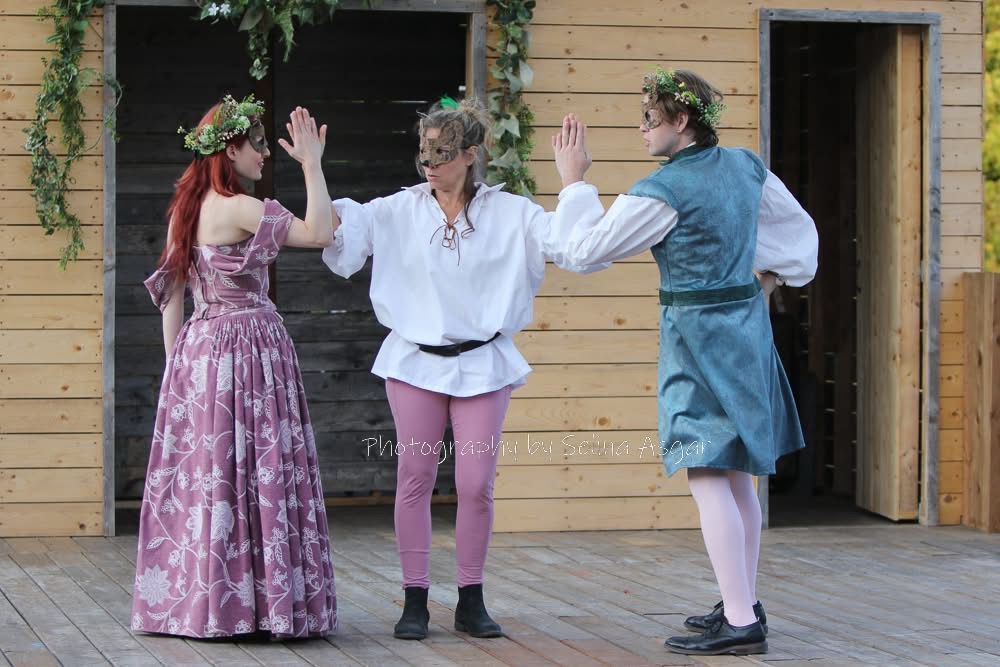
Palmer directed the play for the first time at Alberta Theatre Projects in Calgary and that was when she met Judith Bowden, who has “become a really significant design partner in [her] career.” In 2001 she directed the play at the Bluma Appel Theatre for Canadian Stage and MacDonald played the role of Constance. Cara Pifko played Juliet, Alison Sealy-Smith played Desdemona, Juan Chioran played Othello, and Andrew Velásquez played Romeo and the Chorus. Palmer says that as someone in her 30s she was the first “pre-menopausal” female director to direct a show at the Bluma. “It was such a boy’s club,” she says. All the other women who had directed there had been over 50 years old, showcasing clearly how much longer it had taken for women to be “established” enough in their careers to be “entrusted” with doing work on that particular stage in Toronto. One special moment Palmer recalls from that time is the cast going to a pub together to watch Ann-Marie MacDonald’s interview with Oprah Winfrey about her novel, Fall On Your Knees (1996) being chosen for Oprah’s Book Club, which Palmer characterizes as “surreal.”
The cast that she has assembled at Perchance Theatre is largely made up of Newfoundland-based artists, with one “import,” Palmer explains, “One of the things that Perchance tries to do is bring in people sometimes from outside the province, so that there’s crossover, so everybody expands their skill base.” Diane Flacks, who audiences here in Halifax will remember from the stage version of Fall On Your Knees, is playing Constance at Perchance. “She’s such a talented comedian, talented actor, beautiful actor… she’s never played the role before, so it was a real thrill to figure that out with her.” Other members of the cast are Zoe Cleland as Juliet, Aiden Flynn as Othello, Andrew Halliday as Romeo, and Una Hill-McMullin as Desdemona. Palmer brought Anita Nittoly aboard as Fight, Movement, and Intimacy Director. “She’s a beautiful teacher,” says Palmer. Tucker Ellis, who Palmer describes as “a craftsman artisan” created the designs and helped with the props, Jordan Vincer is the production manager, Jodee Richardson did the sound design and composition, and Sophia Molnar is the stage manager. “I mention Sohia because… stage mangers are always the genie in the bottle- they’re magic- and if you’re doing outdoor theatre, where there are weather conditions, like in Newfoundland, you can have all the weather, not to mention the added complication of having to manage [the wildfire situation]… we were gifted a spectacular, talented stage manger.” While Newfoundland’s devastating Kingston fire did not directly affect Perchance Theatre, with their proximity to the northeastern shore of Conception Bay they did cancel a few performances both due to deteriorating air quality and also to reduce the amount of traffic on the roads to help the first responders. As the situation in Newfoundland has, thankfully, improved, the remaining shows are expected to go ahead as planned.
Palmer says that one of the things that makes a career in the arts meaningful is “to be able to do work you love and work with people you love,” and that it is a real privilege as an artist to be able to choose your own projects. “I feel very lucky and I have incredible respect for Danielle, and when I went to [Perchance] and visited a year ago, the kind of excitement around the work that’s being done there [was] really inspiring. There’s a lot of community involvement. They’re doing theatre because they love the stories, the stories are important to them.” She says of the unique theatre space at Perchance that “being in connection with the audience, with the sky, with nature, the configuration of the theatre that they’ve constructed so carefully, that made everything feel extra dynamic and extra fun. Having people physically close to you, and sword fights that move all around you, is so beautiful. I thought: ‘this theatre actually is magic. It’s like a magic circle.’”
Goodnight Desdemona (Good Morning Juliet), written by Ann-Marie MacDonald and directed by Alisa Palmer, plays at Perchance Theatre (75 Corporal Jamie Murphy Memorial Drive, Conception Harbour, Newfoundland) until August 30th, in repertory with The Flying Doctor, Every Brilliant Thing, and Tempting Providence. There are performances of Goodnight Desdemona on August 27th at 6:00pm, August 28th at 1:00pm, and August 30th at 6:00pm. Tickets range in price from $15.00 for those under 15, to $40.00 with rates for artists, seniors, and students as well. They are available at this website, or by calling the Box Office at 709.771.2930. Perchance Theatre has accessible seating and accessible washrooms. They also have certain Relaxed Performances and certain shows have ASL Interpretation. If you have any questions about accessibility, please call the theatre at 709.771.2930.
Incoming search terms:
- https://www twisitheatreblog com/?p=5965