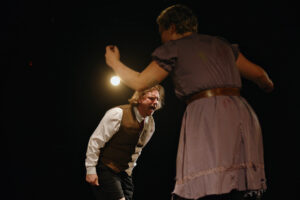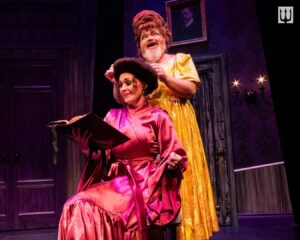
It is almost time for Halifax Fringe to take over a whole array of venues across the downtown of the city, including Neptune Theatre, and the Bus Stop Theatre in the North End from September 3rd to September 13th, 2026. The festival has a new Festival Director, Jake Planinc, and a new Managing Director, Blaze Fraser, and a Marketing Director, James MacLean, who you may have already seen on social media spreading the word about all the great theatre shows to come. I sat down with Jake Planinc at Trident Booksellers & Cafe, one of the most dangerous places for me to go in the city because I love buying books, to chat about what is new and exciting this year at the Fringe. I also chatted with a wide array of both visiting and local artists via Zoom who have shows coming up in the festival to give you all a sense of just some of the fun that is to come this year.
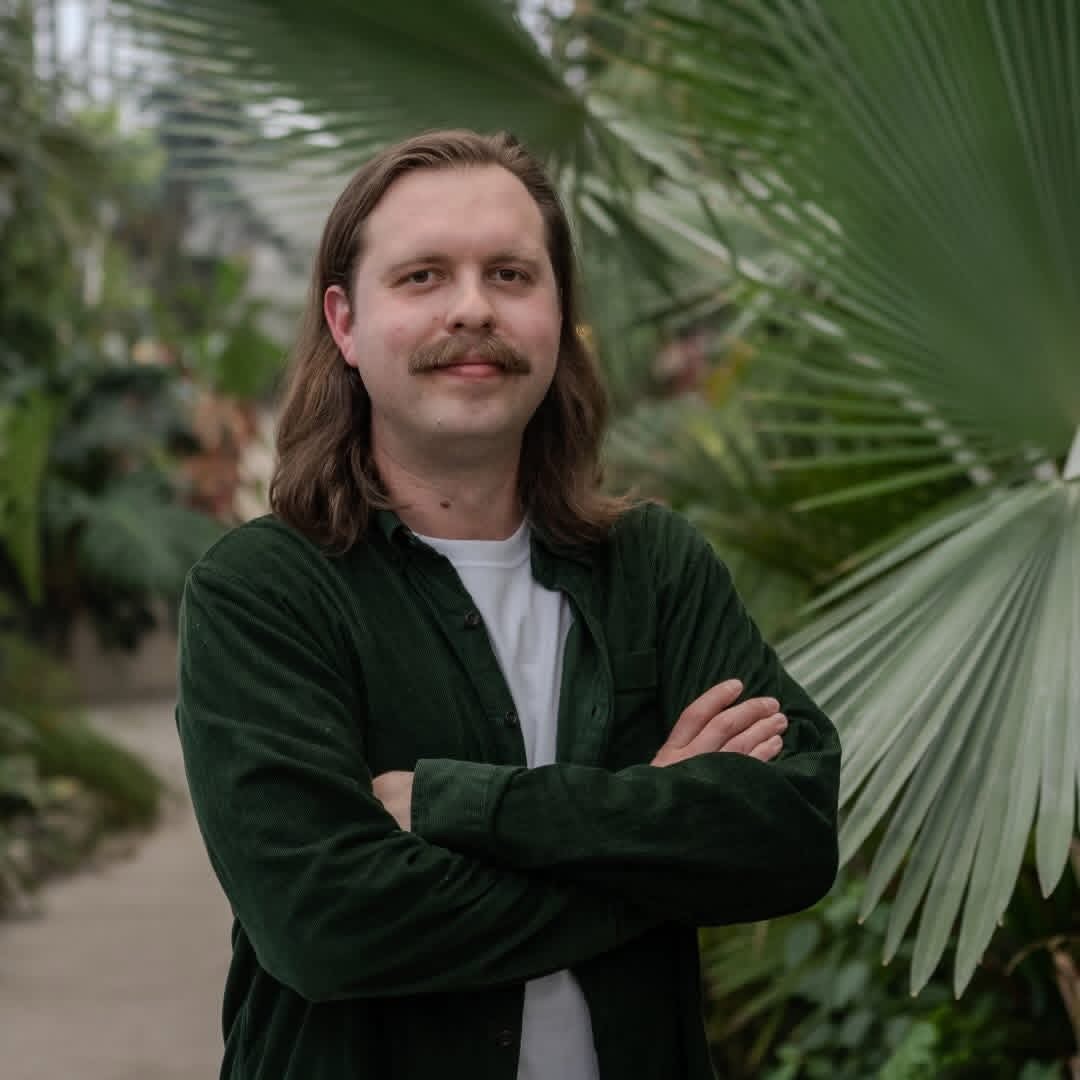
Becoming Festival Director is a full circle moment for Jake Planinc whose first Fringe experience was here when he brought his production of Saltwater Moon by David French to the old TNS Living Room space. “My favourite professor [at Mount Allison University] Glen Nichols [told me], ‘you have to do a Fringe, that’s the first thing you should do once you get out of school.’ It’s very true. A lot of young Dal students graduate, or they’re in their third or fourth year, and they do Fringe shows. A lot of strong work comes from [them].” Saltwater Moon was Planinc’s first experience getting the rights for a play, rehearsing on his own outside of school, “guerrilla style,” he says. “We were rehearsing on the front steps of people’s houses.” They came here from Sackville, New Brunswick and stayed with friends, and they met a lot of new people in the theatre community here, and they “sweated through some really chaotic performances, but it was really important for my growth and development.”
“One of the vital things about the fringe in the theatre ecosystem in Nova Scotia is that it gives a lot of people their first chances to do things on their own. Blaze and I are both really driven to support artists, and we want to uplift them, and give them the means to really execute their artistic vision to the best of their ability.”
There are more Fringe shows coming to us from elsewhere in the country, and internationally, this year. Planinc says that this has been an intentional effort to try to especially encourage more artists to choose to bring their shows here from the Edmonton Fringe Festival, Canada’s largest, which ends just a few weeks before ours starts. Although he hopes to attract all Fringe artists to see Halifax as a “strong touring destination.” He has also encouraged more local artists to choose to make use of the Fringe’s Bring Your Own Venue (BYOV) program, as that means that you don’t need to win the Fringe lottery to secure a place in the festival. “We have fourteen [BYOV shows] this year up from four last year,” he says. “I offered Atlantic Canadian, mostly Nova Scotian and New Brunswick artists, the opportunity that if they didn’t get into the lottery they could flip to a BYOV. We also massively reduced the BYOV registration fee to encourage people to think about doing [it].” He says that the Villains Theatre, “Fringe legends in this city,” are doing the BYOV this year, while also supporting a number of other people’s Fringe shows, as they are always very generous about doing. “Even though they didn’t get into the lottery they’re still doing work, and I’m sure they’ll still have a huge draw [for audiences].” Planinc says that his love of “transforming unorthodox spaces to make theatre” in his work with his theatre company Matchstick Theatre, both in the Fringe and outside of it too, has made him an avid proponent of the BYOV idea, and that he sees it as a way for the Halifax Fringe to continue to grow. “We have these really amazing official venues, but there’s so much potential, like [the way things work at] Nocturne, for Fringe to spread into all these new spaces.”
There is free family programming at the Halifax Central Library on Sunday September 6th and Sunday September 13th for Kids Fringe, which is coordinated by Lily Falk and Franziska Glen of Gale Force Theatre. It’s from 1:00pm to 5pm on both those days, there’s no registration needed, you can just walk up and go in. “You can come and go as you please, it’s going to be big and loud and full of kids,” Planinc says.
For the adults there is a new late night cabaret. All the Fringe shows now end at 10:30pm at every official venue, and then at 11:00pm on September 3rd and 4th and 10th and 11th there’s a Late Night Cabaret, which runs for two hours at Stardust Bar and Kitchen, which is on Barrington Street. It’s also free. “You can hang out there, have a drink, talk about what you’ve seen, meet the other artists, it’s… an idea that comes to us from the Edmonton Fringe Festival. They do the same thing, and we’ve had lots of feedback from touring artists that they want a place to go when the shows are done to meet other artists.” They will be emceed by a different local artist each night- former Festival Director Sara Graham will be there one night, star of last year’s hit Dead Man Walking Daniel Nwobi will be there another night, Hello City’s Liam Fair will be there one night. There will also be a DJ spinning some tunes. “The sort of centrepiece of those events are that there are four long form Fringe samples [each night]. We have our Fringe sampler every year- this year it’s September 2nd at 8:00pm at Neptune’s Scotiabank Stage, but this is a juiced up sampler where each of the four Fringe performances are ten to fifteen minutes long, instead of the one minute pitch each show gets on the 2nd. “It’s a great way to hang out with people and meet the artists, but also see what’s on offer at the Fringe.”
There are also discounted five and ten show passes that audience members can buy. The five show passes are $65.00 taxes in, and the ten show passes are $125.00 taxes in. “They allow you to see as many fringe shows as you possibly can. The artists still get 100% of the ticket proceeds ($10 per show is how it works out). Planinc says that they’re trying to make it financially easier for audiences to take risks on shows that they either wouldn’t normally go see, or on shows from out of town by artists who they may be unfamiliar with. “If you’re going to go see three shows, you can get a five show pass for the same price, so you might as well go see five shows.” For folks who want to see upwards of ten shows, there’s no cap on them, you can buy as many as you’d like. “We’ve tried to build our schedule in such a way that you can go to one venue and see four shows in a row, but you can also very easily get from one venue to another. Neptune, the Art Gallery of Nova Scotia, DanSpace, and Stardust are basically within a five minute walk of each other, and the Bus Stop is about 15-20 minutes north of there.
Audiences this year can also leave their own reviews on this platform, “We really encourage people to do that as it’s a nice way for the artist to get a little bit of buzz going.”
In the interest of buzz here are some short profiles on just a few of the shows that are coming to the Halifax Fringe this year:
The Fabulist by Rachel Rubin-Ladutke. The Sanctuary Arts Centre (100 Ochterloney Street, Dartmouth). Opens September 5th at 3:00pm and closes September 9th at 7:00pm. Buy Tickets Here.
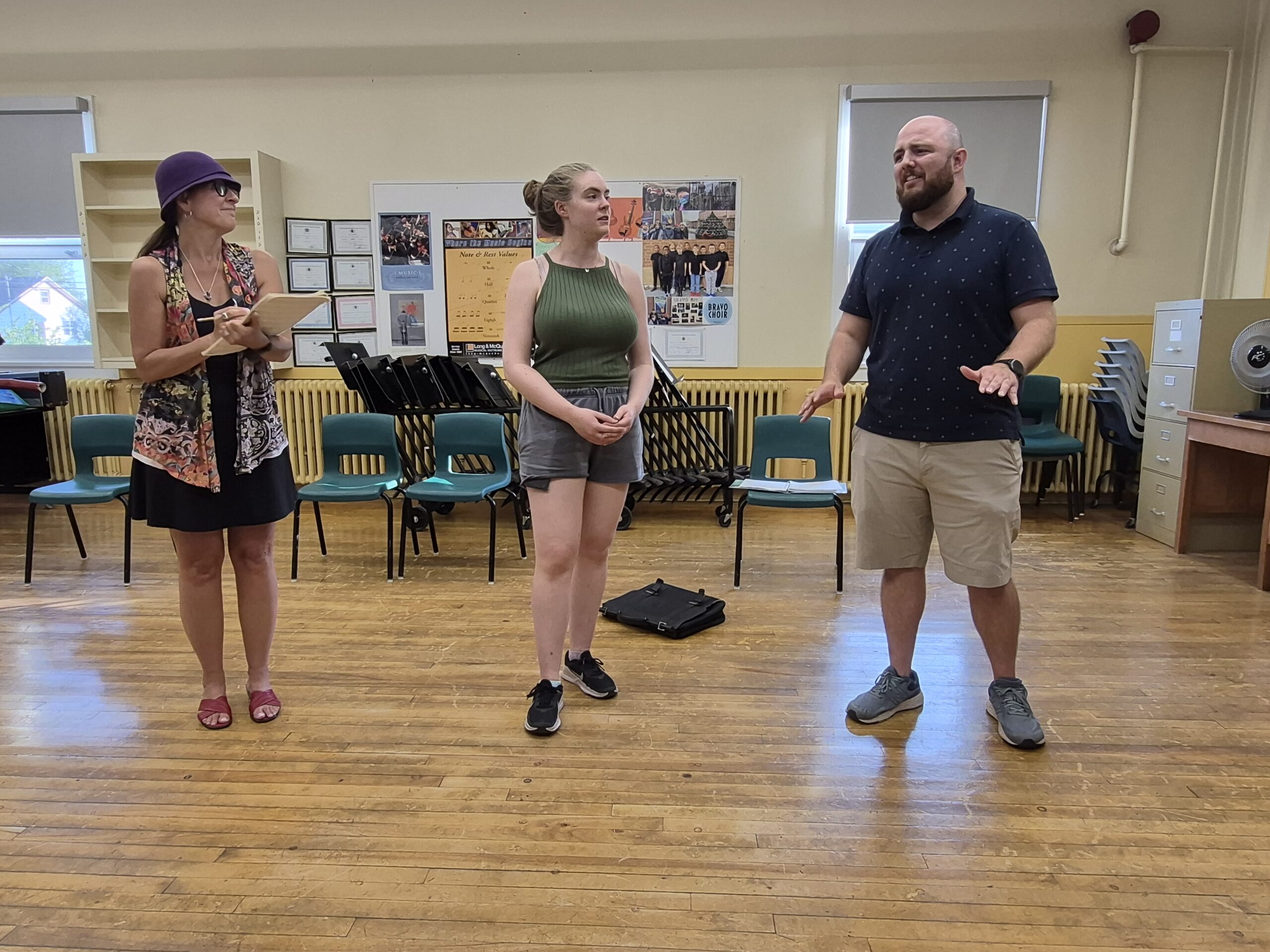
Rachel Rubin-Ladutke is a playwright, director, and teacher who moved to Nova Scotia last summer from the United States. In her search for some Canadian themes to write about while working here she came across the story of Helen Creighton finding the song “Farewell to Nova Scotia” in Andrew MacLean’s Backyard History book. “I’ve written a number of historical pieces, and I was like, ‘oh, there’s something to chew on [here].’” She says that she wasn’t sure what direction the play would take, even as she was researching Creighton’s life and work, but that it has ended up tracing her life over a thirty year span, from when she went to collect songs from Enos Hartlan in Hartlan’s Point, Nova Scotia in 1928 to her book Bluenose Ghosts being published in 1957. The play centres on how when she started out looking for folksongs to preserve and archive the folk stories became just as important. “I think she was as shocked as anybody when she put out Bluenose Ghosts because up until then she had done articles, she’d done CBC shows, she did put out the Lunenburg Folklore book early in the decade, but that was different. When she finally sat down and wrote out all these ghost stories and came to terms with some of her own feelings about the supernatural she was as surprised as anybody to find that at the age of sixty she had a bestseller for the first time… [the book] has never been out of print, which is quite an accomplishment for a book that is 70 years old.”
The play also explores Creighton’s personal relationships with those that she was working with in the folklore world at the time, including a British woman named Doreen Senior, who ended up having a falling out with her over the way one of the books they worked on together was published.
Rubin-Ladutke started her career writing and directing in New York for her own theatre company “because I didn’t know what a crazy idea that was,” and then she took a break to get married and raise her children, but during the Covid pandemic she started reading plays online with her friends, and she offered her friends one of her own plays to read, and “it just kind of jump-started me. I went back and tackled another play that I had never been able to crack. By the end of that summer, I had a viable draft of that play, which was crazy, and now that play is a trilogy. I’ve also written another full length play, and I’ve written The Fabulist. I’ve written a lot of historical stuff, and a lot of regional-based stuff around New England. I was living in New Jersey and grew up in New York, but I’m a wannabe New Englander, so Nova Scotia is the perfect place for us because I feel like it’s the New England of Canada. We love it here.”
This is her first time taking part in a Fringe Festival. The play incorporates some music, and there is a story from Bluenose Ghosts that has been adapted into a short film within the play. “While the actor who’s telling the story is doing his monologue, and Helen is listening to him, we’re screening the film. I’ve never done anything like that before.” She has gotten help for the play from her new neighbours. One of them designed their poster, and he is doing their sound, and then another is modifying a jacket that is being worn in the play. “People have been coming out of the woodwork for this,” she says. She also got a grant from the Helen Creighton Folklore Society. “I got to speak to a couple of [people there] who knew Helen, and they lent me a vintage microphone. I was like, ‘where the hell are we going to get a vintage microphone? Do you guys have any ideas?’ They’re like, ‘you could borrow ours.’ I feel so blessed. I know it’s because of Helen, but it’s kismet, you know?”
Polarity by Ashley Whitehead. Bus Stop Theatre (2203 Gottingen Street, Halifax). Opens September 3rd at 6:30pm and closes on September 13th at 3:30pm. Buy Tickets Here.
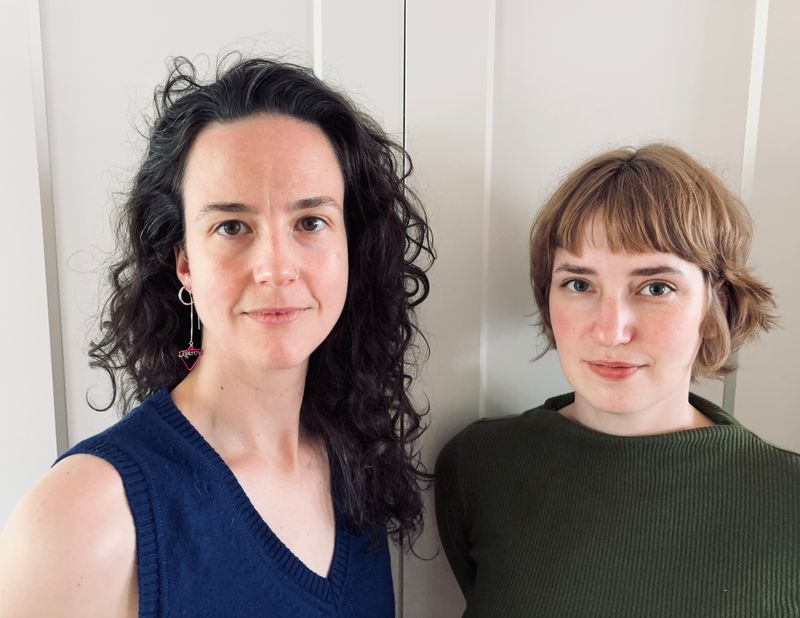
I chatted with Polarity’s creator and performer Ashley Whitehead and Sarah Thompson, the outside eye of the piece. Whitehead is a former professional contemporary dancer who has been doing clown now for the last eleven years. Outside of the theatre they teach sexual health workshops. Thompson is a zine maker and expressive arts therapist who also trained in clown with the same teacher as Whitehead, David MacMurray Smith. Thompson’s background as a theatre kid also includes improv and stand up comedy. They are both based in Vancouver, British Columbia.
As a dancer Whitehead says that they were a tall, awkward kid who was not necessarily a good dancer, but they were persistent, and they loved it, which they think helped inform their segue into clown. “There’s something about being embodied and expressing something that’s always helped me process life, which has not always felt processable,” they say. “I’m comfortable being awkward now, and you can play it, which is great.”
“[Sarah and I] talk a lot about themes [together]; we talk a lot about intention. It’s a lot of getting on your feet, trying something out, fleshing out what it might look like, and then writing and drawing too,” says Whitehead of their creation process. Thompson uses the word “emergent,” saying that the process of creating the work often shows up somehow in the finished product. “The show comes from a lot of material that I thought I didn’t like about myself,” says Whitehead, “or things that I had trouble dealing with, and then personifying that, and extending it to the point where you’re like, ‘this is hilarious. I do this all the time to people. This is funny. I know how to play this. This is going to be cathartic for me, and hopefully for others.’”
The result is a a playful, kid friendly comedic clown show, with entirely voluntary audience participation. The tag line is “a stellar clown show about connection and perspective,” and Whitehead plays a “notable star,” and by star they mean a celestial body in the cosmos. “[The star] really is dealing with its own life crisis, its own transition, and part of it is poking fun at humans, but also poking fun at this celestial being that thinks that they know everything, and thinks that they know where they’re going and everything is assured, and ultimately [they] get foiled, just like everybody does.”
The show has developed through a number of different iterations- at one point they played a tree, and then they were thinking a lot about their own experience of feeling lost, “and I was like, ‘what’s the thing that never gets lost?’… so it became a play of how to be lost as something that typically never gets lost…. And it’s just delightful to also play. I don’t think I present as someone typically very confident or gregarious, but to play someone who’s very like, ‘I’m beautiful…’ to play an alternate version of yourself…” “It’s fun to take up a lot of space and celebrate yourself,” adds Thompson.
Whitehead has lot of prior experience touring with Fringe shows. “In the clown world it’s often really useful to develop your work with an audience.” In the past they have toured to Ottawa, Edmonton, Winnipeg, and Vancouver Fringe. “I really like fringes. I think that they’re more and more important because they’re un-curated. They’re aiming to make the ticket prices accessible, theatre accessible, [so] people can make theatre. And each city is so different too. It’s really neat to go and see the culture of a little pocket where they’re all there to enjoy something together.” They say that they notice that in Winnipeg and Edmonton its part of the culture of the city that folks attend the Fringe, and the festival benefits from the warm summer weather. “I like Fringe Festivals for the community, the vibe, the coming together, the people working on something- sometimes it’s new, sometimes it’s seasoned,” they say. They note that they applied to both Yukon Fringe and Halifax Fringe because they want to make sure the show they’re making “applies to as many people as possible.” “I think that requires getting out of your bubble. There’s also just something about this show where I [wanted] to go to the edges of land. That’s something that felt relative to what we were building. So, I’m really excited to go somewhere new, to meet all new people, see what you all like, see what you pull from. I think to be immersed in something, it’s really exciting.”
Apples! As Told By An Expert by August Van Meekeren. Grafton Street Dinner Theatre (1741 Grafton Street, Halifax). Opens September 3rd at 3:30pm and Closes September 10th at 9:30pm. Buy Tickets Here.
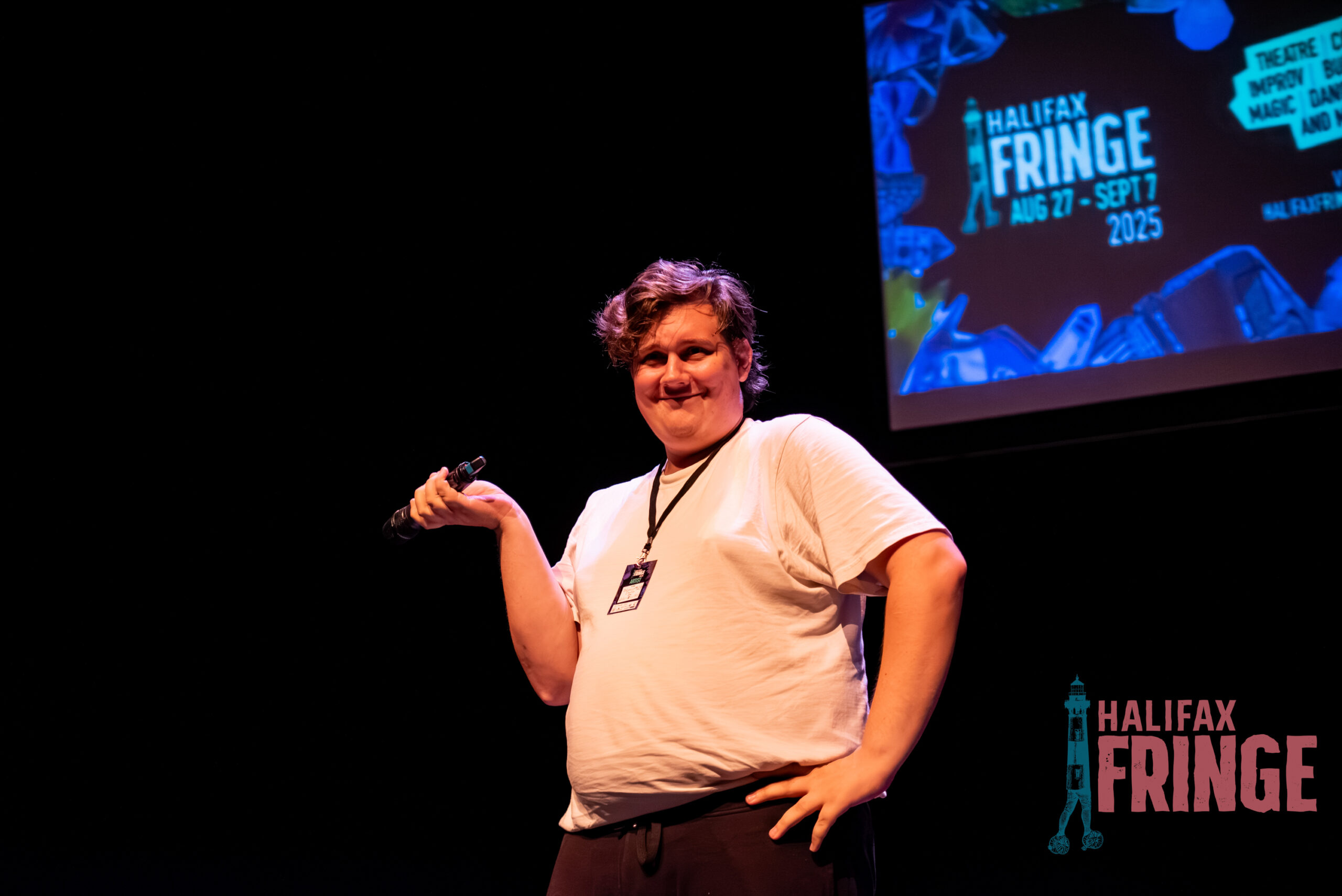
August Van Meekeren has made a big splash at the Halifax Fringe with their play Dedicated to You, The Wonderful Audience (2024) and Did You Just Kill This Man (2025), as well as performing in Lawson Hannaford’s hit play Something Missing, also in 2024. This year Van Meekeren is bringing us Apples! As Told By An Expert. “[It’s] kind of a facetious title cause I’m not super much of an expert in the scientific sense, it’s more just that I grew up on an apple farm, and that my whole life has been around apples.” It’s a stand up/ storytelling theatre hybrid show. “I have a few apples with me [on stage] to spread the gospel, as it were.” The character that they play is also named August, and the stories that they are telling come from their own experiences, but they have been honed and crafted in more of a theatrical way. “I’m very interested in the concept of [standup], this is a bit more of a person to person style of comedy where you’re just like, ‘Here’s me, I’m going to tell some jokes. I hope you like them.’ But this particular piece is also about my fears in comedy. I’m very scared and nervous about doing it. So, I added a lot of that anxiety to the character. The character is telling stories about Nova Scotian Dutch farmers, and then getting anxious that they’re not actually that funny, and then having to navigate the balance between it being funny and it being real.”
They say that working within a theatre framework also insulates them a bit against hecklers, in that if they talk directly to the audience like a character might in a play, it’s less likely that someone will decide to try to careen the show off script. They say that one of their biggest stand up influences is Gianmarco Soresi who they saw perform once in New York. “I like his style where he’s kind of nonstop with the jokes, but they always have a little twist to them… [and] the character he plays onstage is different from himself. Taylor Tomlinson is a fun one,” they add, “she’s always got some really great insights into real life. I also watch some older standup, like George Carlin.”
They say that most of the show is them telling stories, but there’s about five minutes where there is a meta theatrical lens placed on the piece, and a secondary character is introduced who challenges August on why they’re doing stand up and not theatre, and what is the difference, and exploring the difference between lying to the audience and creating a fictional story for them. “I’m really interested in how stand ups do that. They take real experiences and then they accentuate the things that are the funniest about it. I’ve done that with my own stories, but then I also call myself out through this other character.”
Van Meekeren was born in Amsterdam and they moved to Canada when they were a preschooler. Their grandfather arrived in Nova Scotia earlier, after the Second World War, and he bought a small acre of land in the Annapolis Valley for a farm, and then their father as an adult ended up being sent back to Holland for work at IBM, and then they all came back to Canada, first to Ottawa, and then back to Nova Scotia where their dad ended up taking over the apple farm. “All my experiences from six years old I was on that farm helping out, doing work in the barn, picking out in the field, whatever we needed to do, me and my siblings. My family puts a lot of onus on Dutch culture.” There’s also a large Dutch cultural presence in the Annapolis Valley. There’s six farms in a row where the families are all Dutch. Their farm grows jonagold, McIntosh, Cortland, and Gravenstein apples, and they are also a packaging plant, so they have contracts with a lot of other farms all over the world and they package their apples and send them where they want them to go. This gives them access to apples like granny smiths, which only grow in tropical climates. They also have their own variety of apple that is unique just to their farm which is called Pazazz. “My job when I was 15-16 years old was to be standing in grocery stores holding Pazazz apples and being like, ‘do you want to try this?’”
“One of the things I wanted to do with this show, and there’s a few lines at the beginning of the show about this, is just getting people rethinking about how they interact with produce and fruit, because it’s so integral to the Nova Scotian community. Agriculture is a huge part of the Nova Scotian economy, Nova Scotian culture, everything. And I do feel like it’s sort of falling behind.” They say that folks have misconceptions about the food that they buy and eat as well, about the organic labels, for example, or whether fruit has been genetically modified. They say also that people want to support their local farms. “We have so much local produce at any store you go to, you just have to check- to look at the back of the bag to see where this farm is and who you’re getting it from. I just want people to know more about what they consume, and I’m hoping that this show will teach a little bit, and also help inspire better confidence in what your local food growers are doing, because they’re doing great work.” They say you can also find ads for an array of different local farms in their programme. “I just want people to know who they’re getting their food from, and that it’s okay to try something new. You might like it.”
Van Meekeren is rarely involved in just one Fringe show and this year they are technically involved in five. They are producing The Defenestration of Prague, Jake Wilke’s play. “That’s a fun show that he wrote in Český Krumlov about a historical event that happened there where an invading force was tossed out the windows of the main Capitol building because they were not welcome. He’s written this kind of Shakespearean formatted play, a five act structure, and it’s full of comedy, and it’s got so many historical references in there that I will not expect a lot of people to understand, but it’s packed with comedy for the historic nerd. So, if you like history, and are at all interested in people getting what’s coming to them, this is a good show.” They’ve also been doing production duties for Dan Bray’s play The Jackson Elementary Grade 6 Drama Club Presents: Blood & Snow: The Donner Party’s Fatal Foray Into the Sierra Nevada Wilderness, and Kevin Hartford’s play Peak Twins directed by Tara Thorne, both of which are produced by the Villains Theatre. “I’ve been postering for them around town, and doing some behind the scenes work for them.” Van Meekeren will be performing in Carrison, the story of Harrison Ford and Carrie Fisher’s love affair during the making of Star Wars. “I’m going to be playing George Lucas. I’ve got the hair for it. So, I’m very excited for that.” That show is written by Jarod Monk. “I’m involved with a lot of things, but it’s because I’m so passionate that these are all great shows that I just couldn’t help it. I had to. I think the Fringe is such a great experience where you’ve got so many people with these amazing artistic talents and great creative expression. It’s so compact in such a short period of time, but it’s completely full of amazing new work…. I love to see what people are trying to do with all their different shows. I think my favourite is always the show that’s trying to do something in an area where maybe [historically the theatre] hasn’t been the most welcome to it.” They give the example of Olivier Blais’ play Copyright from last year, which was entirely in French, with English surtitles. They say that folks were at first anxious about going to see a theatre piece in a language they didn’t speak, or didn’t speak fluently, but folks soon realized that there was no language barrier at all to excellent writing and compelling performances. “You also get a sneak peek at people who are going to be big in the industry soon,” they say, citing Jessie Walker as an example. “Anyone who has a Fringe show is somebody who is passionate and excited, and they’re not going to stop [creating] just because the Fringe Festival is over. They’re going to keep going, and they’re going to do amazing stuff. Jessie got the Emerging Artist Award at the Merritt’s and they’re doing shows in Toronto now. These are the stepping stones that people require to become industry standards. It’s exciting to see people having those opportunities to go further with their work.”
Lou Reed’s Magic and Loss: An Interactive Show About Grief and Death by Jamey Piedalue and Elisa Gay Harley. Neptune Theatre’s Windsor Studio (1593 Argyle Street, Halifax) Opens September 8 at 5:00pm and Closes September 13th at 2:00pm. Buy Tickets Here.
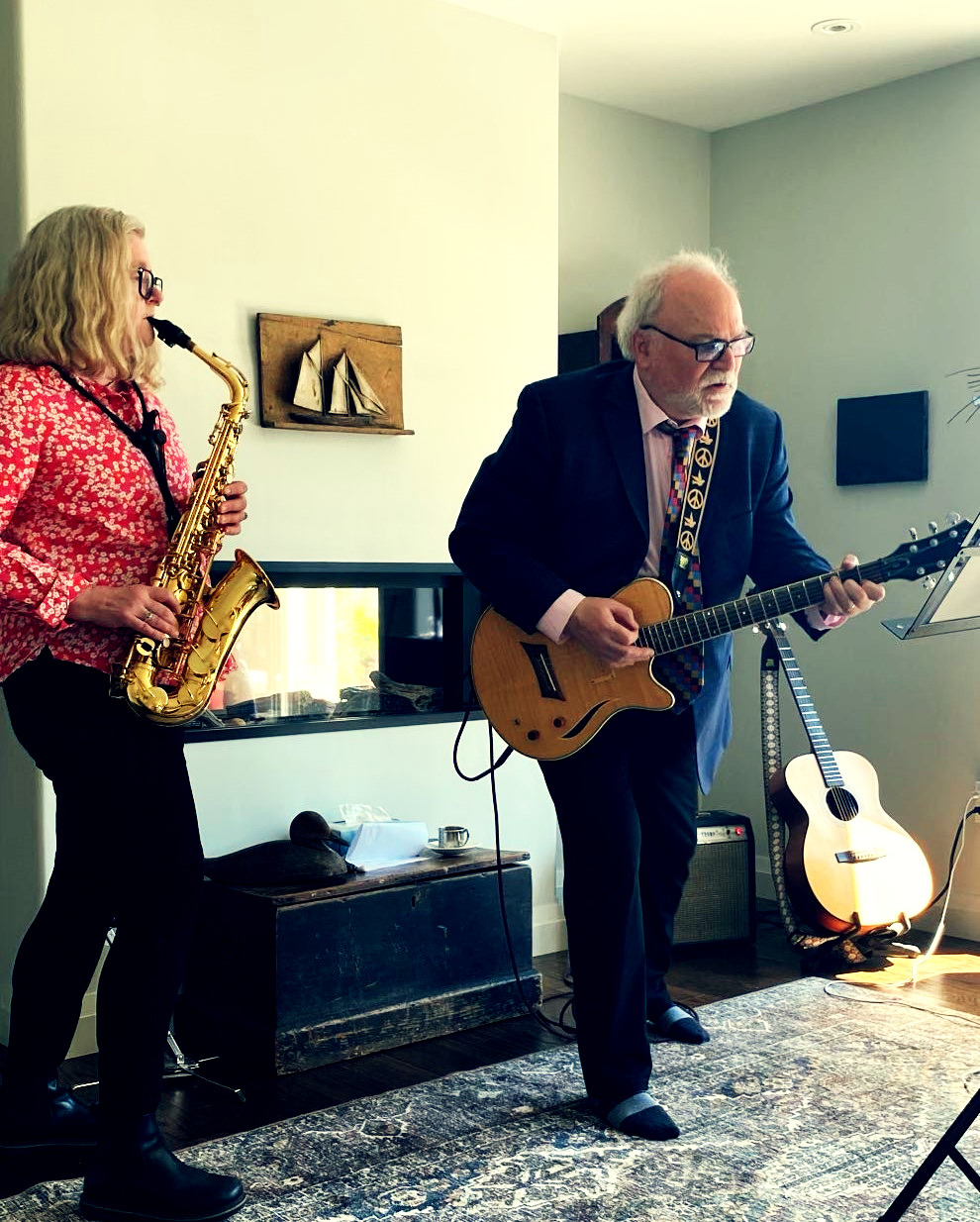
Jamey Piedalue staged managed some Halifax Fringe shows twenty five years ago, but has not been back to the Fringe until now. He has worked in mental health for his whole career, joking that his crisis intervention skills were transferrable to working backstage in the theatre when he was in his forties. Music has always been an important part of his and Harley’s lives. They have known each other since they were roommates after university 40 years ago, and they started playing music together then. “Five years ago we got together, and we’ve been playing so much music ever since,” he says, mentioning that they’ve moved to Musquodoboit Harbour where they have met an “unbelievable” music community. They’ve been playing a lot of open mics and kitchen parties there. Harley’s career has been in climate change policy, but she plays the saxophone, guitar, and the clarinet. She played in swing and jazz bands when she was younger, but now with Piedalue they have moved into “folk, alternative and punky stuff.” This year they took part in the Creative Music Workshop at the Jazz Festival. “That really fed into what we had already planned for this [Fringe] performance, which is kind of a combination of our music background, but also poetry and spoken word, so doing CMW really fuelled us,” she says. The Creative Music Workshop was founded by Jerry Granelli, who was the last surviving member of the Vince Guaraldi Trio, best known for composing the score to A Charlie Brown Christmas (1965), and Granelli ran the program in Halifax for 31 years before his death in 2021. Piedalue says that it was an unbelievable opportunity to work with Granelli and for the CMW to be open to musicians of all skill levels. It also help them connect with other folks who wanted to team up and play gigs with them, even much younger musicians, which has been a surprise. “It was just tremendously creatively democratic,” he says.
The crux of their Fringe show is the music from a 1992 album called Magic and Loss by American rock musician Lou Reed. “The album is basically about death and grieving,” Piedalue says, a bit of a “buzzkill” for a kitchen party, so they thought that they would bring their show to the Fringe. The album meant a lot to him when his father died. “He said it helped him get over the grief, and he would listen to it frequently, so just recently he played it for me because I never really heard it end to end,” says Harley, “and we listened to it around Christmastime, I think, and I was blown away by it. The poetry is gorgeous. You never hear people putting this kind of thing to music. I said, ‘I need to share this,’ so this is how this show kind of snowballed around it.” At the same time they were working with the Deanery Project, who had gotten a Healing Project Grant from the Portapique Massacre fund, so they worked on that community healing project. “This sort of steamrolled into a Fringe idea that we can take music and public grief and bring that together, and it is really meaningful to do things publicly, and honour the ritual of sharing these things,” she says.
Piedalue shares that he spent the last six months of his father’s life with him, and that growing up his classically educated father didn’t know his children the way parents typically know theirs today, and so his father at the end of his life started asking him about the music he was playing. He ended up showing him a video of Lou Reed performing with Luciano Pavarotti with a symphony in Italy, which was a “merge of punk rock… [or] ragged rock meets opera.” After seeing it his father asked him, “How do you explain art being so imperfect?” And he didn’t have an answer, although now he posits that it has to be imperfect to be art. This video helped him connect with his father during this integral time in their lives. He adds that while workshopping the fringe show he has been mindful of creating an arc that provides for some levity so that audiences won’t leave the theatre “completely depressed.” “It’s a heavy show, but it’s not precious,” he says. Also their jazz backgrounds insure that each show will be a little bit different, and they have other collaborators who will be joining them. “I think that brings more energy to the music and to the meaning of it because we’re not just performing an arrangement,” says Harley.
“We’re having fun with music at this stage [of our lives], which seems like a gift somehow, you know?” says Piedalue. “Butterflies are starting, I must say, and you know, you think at some point in life, you’re 65 years old, that there won’t be butterflies [anymore], but it just doesn’t change. We’re pretty excited by it.”
Craig in Conversation With God written by Jessie Walker, produced by Around + Out Theatre Co. at the Bus Stop Theatre (2203 Gottingen Street, Halifax) opens September 3rd at 9:30pm and closes September 13th at 9:30pm. Buy Tickets Here.

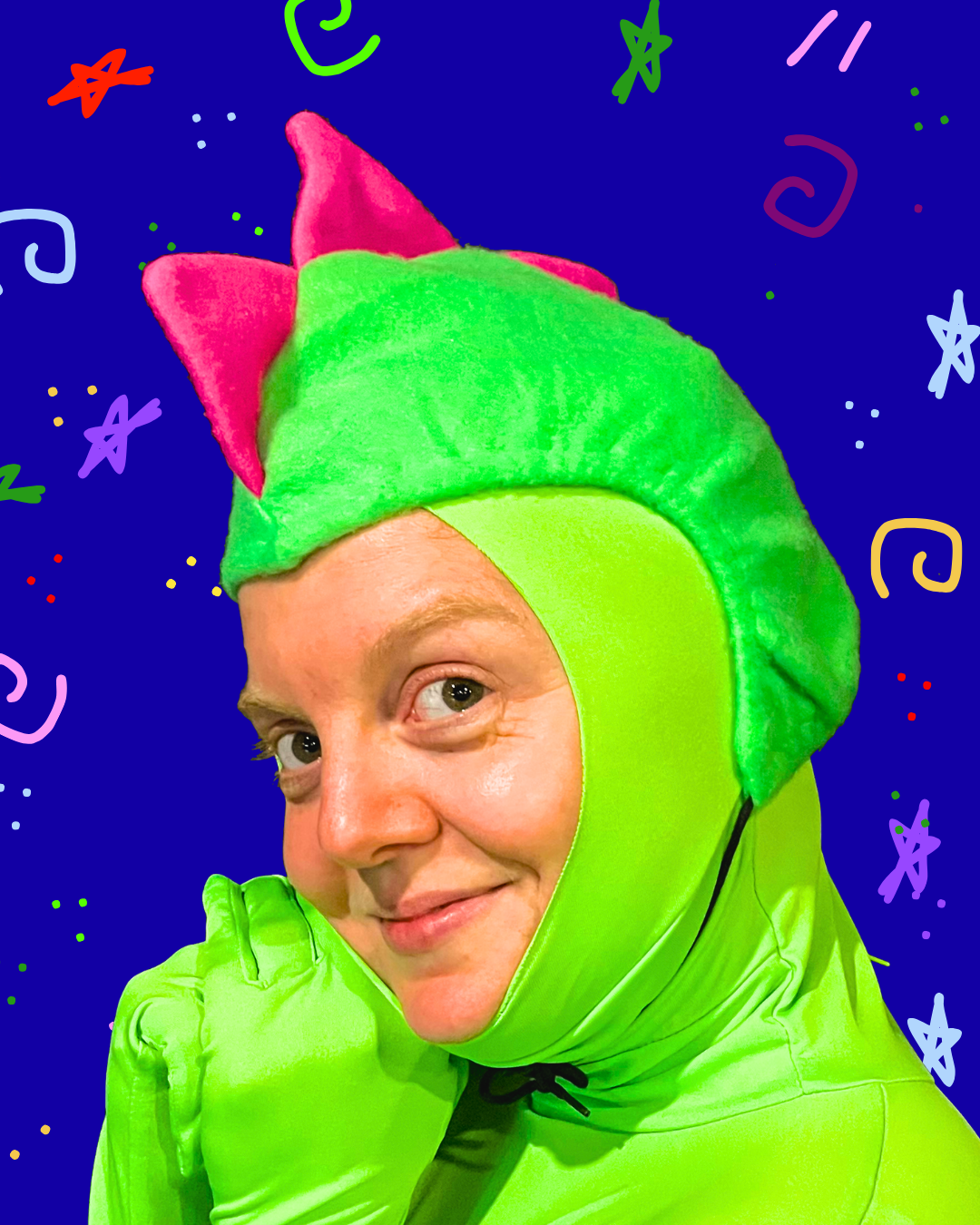
Jessie Walker has quickly become one of Halifax Fringe’s rising stars after writing and performing in hit shows Horse Girls (2024), Gwenyth Kills Her Husband (In a God Honouring Way) (2025), and The America Show (2023). They are not performing in this thirty minute piece that they wrote about Craig, the green dinosaur, who has “lived a pretty average green dinosaur life until one day God comes from above and says, ‘Hey Craig, I’m thinking about dropping a meteor on the Earth, but I’m weighing the pros and the cons. Could you please help me figure out what makes Earth worth saving?’” explains Walker. It stars fan favourite Leah Pritchard as Craig, and for each show there is a different Halifamous person playing God. “The last two years have been so much fun, and have been really rich and fulfilling, and our goal this year is that we [wanted to] give audiences something that’s sharp, funny, and short. We’re hoping this will just be a little nice little palate cleanser of the Fringe, so that if you’re looking for something short and sweet, you’re looking to laugh for 30 minutes, this is the show for you.”
This is only Leah Pritchard’s second time having a Fringe experience, after appearing in the Villains Show Night of the Bat, since she often is away working on summer shows. She would come back home and the Fringe would be underway and she would see the shows that were playing but hadn’t been able to take part. When she was in Night of the Bat she was also rehearsing at Neptune at the same time, which restricted her ability to see other shows, so this year she is excited to both get to perform and to get to be out “doing the Fringe crawl.” “I’m so jazzed up on it,” she says, “To be the most deeply unserious facets of this festival, and just to hang out at the Bus Stop. It’s like a Halifax actor dream.” It is also the second Fringe for production manager Gina Woodward because she has also been away often on summer contracts. “I haven’t really done Fringe since me and Jessie’s first Fringe in 2023 when we did The America Show.” She built all the props for Horse Girls, but she didn’t actually run the show. “I’m excited to actually run a show. It’s going to be a good little time. I keep laughing, so hopefully I don’t lose a gasket in the middle of the show,” all three heartily laugh. “Leah is very funny,” she says. “Leah is very funny,” Walker agrees.
“Fringe has been really wonderful and rewarding,” says Walker. “This will be our third season for the company… it’s been a real gift to us to see how Fringe audiences have engaged with the things we’ve been able to bring. We’re so thankful to everybody that’s come out the last few years to see our work, and to see all the work that’s happening at the Fringe, especially in a time like this. I think it’s more important than ever for folks to be engaging with Nova Scotian Theatre and Nova Scotian art, and we’re really excited about everything that’s coming to the Fringe this year, and to show off this green dinosaur.” Walker also says that they see the fact that it has been a “banner year” for Fringe submissions as a sign that artists here are rejecting the premier’s assertion that Nova Scotians deserve less art and culture in the current economy, and that they are rebelling by making more and more art. “Wait, are you saying that Craig is an allegory for destroying the powers that be?” asks Pritchard facetiously. “Fringe has provided us with this really crucial stepping stone to see how audiences respond to the work and how they engage with it,” Walker says and they note that it’s equally fulfilling to see audiences responding in expected or hoped for ways, and also realizing that they’re getting something different from the show than they may have intended. “As a playwright it’s such a rich opportunity to be able to be totally and completely free, because it’s uncensored, un-juried, it really gives you the opportunity to try your most ‘out there’ ideas… and it’s an excellent way to start honing a piece, or to workshop it before it has the next stage of its life.”
Woodward says that they saved one of their spots for God for an Emerging Halifax artist, and they held auditions for that early in the summer. “We have five highly famous theatre [artists], or just people from the community, and then we have one person who is an up and coming person,” she says. “Emerging God,” says Walker. “It was really exciting through that audition process as well just to see the scope of emerging talent that’s coming into the Halifax theatre scene, as well as how many young artists there are who are excited to be involved in the community,” says Walker. “And [who] are staying [in Nova Scotia],” says Pritchard, “which is such an integral thing.”
Of Pritchard Walker says that she has brought out a cheekiness in Craig that they didn’t write into the character. “I love it… I feel like I wrote such a two dimensional character and Leah has brought this character to life in such a gorgeous way.”
There Is No Anger Like That Of A Woman by Grace Delamere. Neptune Theatre’s Windsor Studio (1593 Argyle Street, Halifax). Opens September 3rd at 8:00pm and closes September 12th at 6:30pm. Buy Tickets Here.
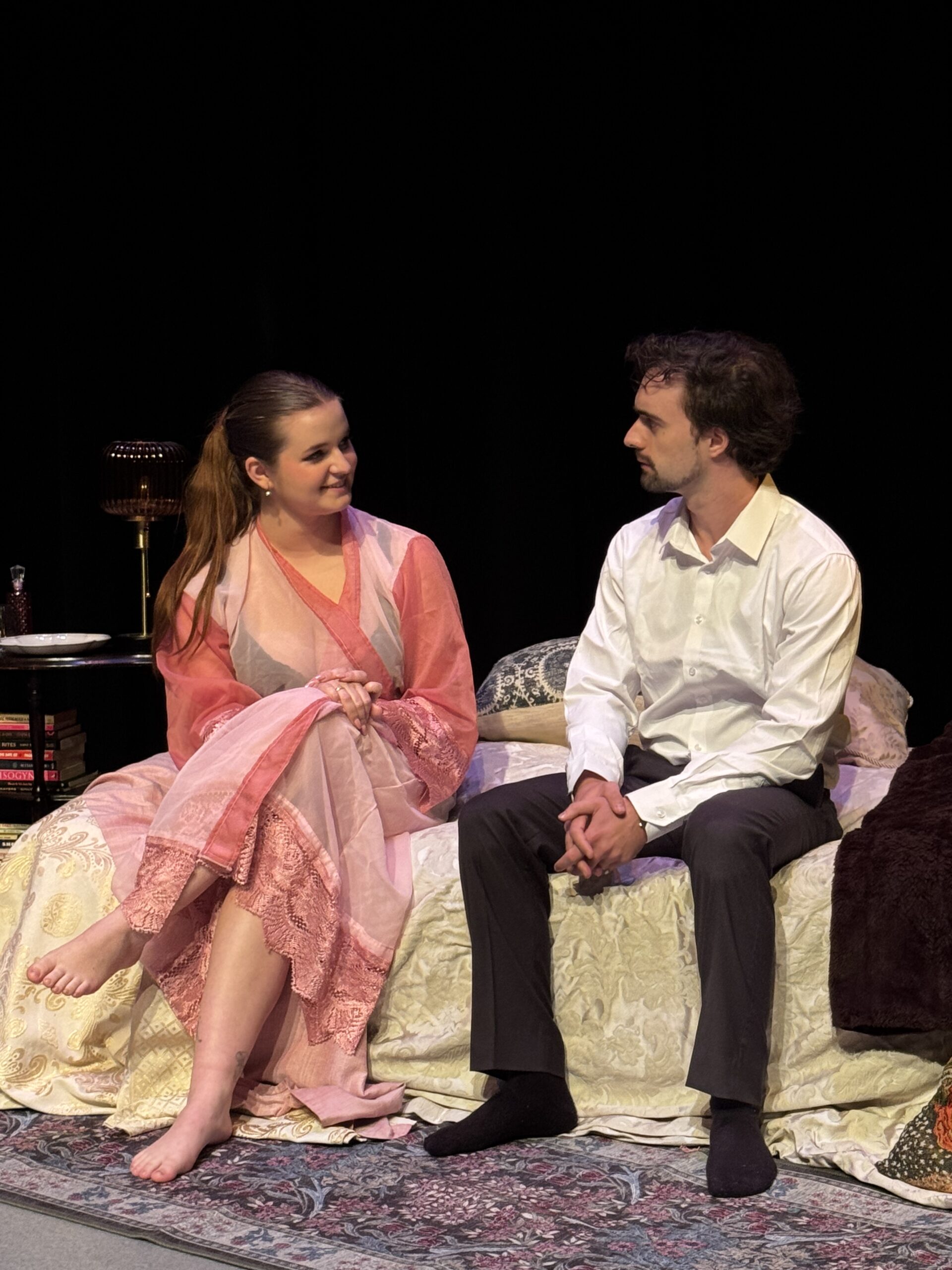
Grace Delamere is a recent graduate of Queen’s University where she studied theatre and music. She grew up doing school musicals, and while she was still at Queen’s she founded Of the Sea Productions in 2023, and through that company she produced a show in the Kingston Fringe in 2024, and There Is No Anger Like That Of A Woman is coming to Halifax from both the Kingston Fringe and the Hamilton Fringe. The show takes place in a brothel and has two characters: a sex worker and a banker. “He pays for an hour with her, and what ends up happening is that they end up having more of a debate conversation [where] they’re talking about a lot of things that you don’t really expect them to talk about. You learn about the two of them, and how they both perform in their jobs, but in different ways, and it’s a lot about the kind of history of misogyny, and how it’s still relevant today, and how religion can work its way into that.”
Delamere says that she wrote the play because she has always been focused on how female-presenting people are treated because of the way they look, and the judgements and biases that they encounter in society. She is also interested in the rights of sex workers and the decriminalization of sex work. “I’m very passionate about that,” she says. “I found that putting [the play] into a transactional setting, the story really amplified the idea of ‘what do men expect from women?,’ obviously on a very general basis, and how do they go about getting what they want from a woman?’” Delamere plays Eve in the play and Liam Armstrong plays Adam.
Delamere’s first dream as a child was to become an author, and they started writing plays in High School, and continued to write in University. “It’s funny because acting made me fall in love with theatre, but then I realized how important the writing aspect was to me.” This is her first time performing in a play that she’s written. “I think it was just something about how intimate it was to me, how important it was to me, and how intimate I felt with the script, that I really wanted to give it a shot.” She says that she had a conversation with director Meg Gibson saying that she wanted her brutal honesty that her being in the play was working. Delamere says that they really like Fringe because it attracts a new audience to the work. “That’s my favourite part, having people that I’ve never met, and that nobody in our team knows, talk to me after the show about what the show meant to them.” Delamere has a family connection to Halifax and says that they are “deeply obsessed with the East Coast,” and so they’re very excited to bring this piece to Halifax Fringe.
‘NÔRM(Ə)L by Ava Cranhill. Universalist Unitarian Church of Halifax (5500 Inglis Street) opens September 6th at 7:30pm and closes September 12th at 9:30pm. Buy Tickets Here.
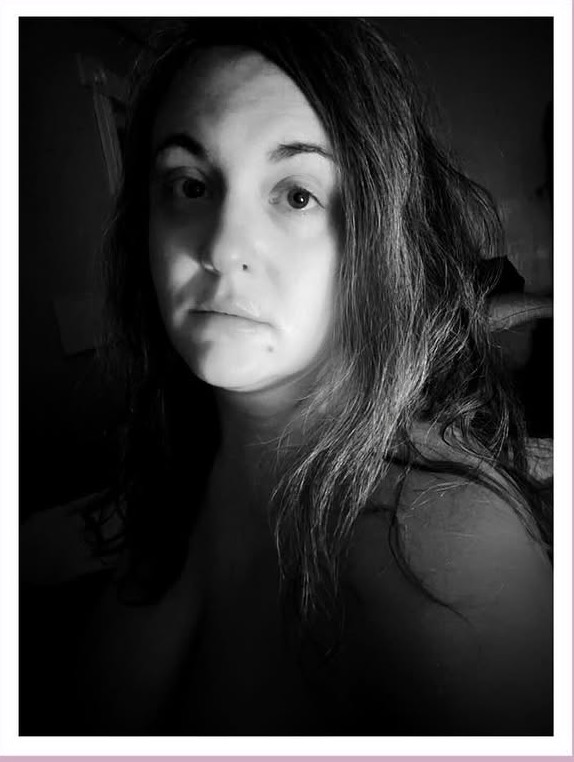
Ava Cranhill tells me that this show is about her own experience getting Long Covid, and falling through the societal cracks, going through the medical system, “which is shite,” she adds, and navigating [these] repercussions. “It started as a middle finger, like I just needed to scream,” she says of the journalling she was doing before this eighteen page poem took its shape. “It kind of grew its own life. It started from a place of despair, I think, just the frustration of not having any treatment, there’s no treatment for this disease, and doctors don’t understand it, and psychiatrists don’t think it’s real…. They ask that question, ‘when did you get radicalized?’ and for me it’s when I got a chronic illness that nobody could treat. And then the economic consequences of that, the societal consequences of that, when you’ve done nothing wrong except get sick.” She says that now she realizes that the system has been broken for a long time.
She is also asking questions in the piece about the definition of this word “normal,” and what does it mean for all of those whose experiences exist on the margins or completely outside of it? Cranhill explains to me that her experience of Long Covid is that it is “a dynamic illness,” so today as we are chatting on Zoom she is feeling much better than when she was writing the piece when she was mostly bedridden. “I go through these phases of it,” she explains, “it feels like a sort of remission, and I’m like, ‘I can do normal things!’ and then I’ll do just one thing [too many], and be right back [to feeling the full extent of the symptoms].” It’s very difficult, of course, having to live without being able to plan at all how you will feel one day to the next. She says that she thinks having the Fringe show to focus on has actually been helpful for her, and that she is just enjoying being able to bring the story to life, since that might not always be the case.
Cranhill says that the discrepancy between knowing that something in her body is terribly wrong and all her medical lab tests coming back “normal” has made her feel like she is going crazy. “I think I saw four cardiologists at one point because my heart was pounding, pounding, pounding, and they do their tests… [and they come back “normal”], [a] feeling of insanity comes over you…” She says that it’s not just her physical health that is always threatening to nosedive, but her mental health along with it.
“I think the voice of somebody who’s actually lived [Long Covid] coming out and saying okay, you can read opinions of doctors, you can read opinions of people who are peripherally involved, but the experience of someone who’s actually been through it, I think it cuts to the bone. I think that needs to be in the public awareness a lot more than it is… and living in isolation, loneliness, this disease kills people- people have died by suicide because of this disease. The best way I could describe it is how you know when you have a crappy phone, sometimes it only ever charges to 30%, and then you watch one video and it plummets to 3%, that’s what the disease is like just in human form. You go to the grocery store, and then you can’t do anything else.” She says that she will be on book for the performances at the Fringe, and that she would like to see a normalization for audience members in seeing actors with disabilities being accommodated as they’re performing onstage.
She also points out that the Covid pandemic was “a collective trauma.” “It fucked us up, it fucked the country up, it fucked the world up. People were not okay.” She says that it’s probably human nature for us to suppress those memories in order to be able to function in the present moment, but that we haven’t had the ability to collectively process our trauma, and that in the collective drive to get back to “normal” some people, our friends, family members, and neighbours, have become collateral damage and have been left behind.
“We had such an opportunity during the pandemic, when we all got a little humanized a bit more. [During lockdown] there were orchestras playing beautiful music on their screens… 37 little squares of people with cellos and violins playing this beautiful music. They’re all separate. The juxtaposition of it was enough to make you weep. It made our hearts sort of malleable and soft for a little while. And that was lovely…. I think there was a brief moment where we could have just looked around and asked, ‘are we doing everything correctly? Is this the way we want to frame our society? Are we equipped enough to deal with this? Should we beef up our health care and social security, and the safety nets to catch people?’ And instead of doing any of that we’ve just decided to go completely in the other direction and just pretend [the pandemic] never happened.”
“I’m really tired of people not understanding that a section of the population is essentially paying the price for everybody’s else’s freedom,” she says. The pandemic never really ended for her, and she thinks that more people should be talking about this, which is a conversation that she is hoping to start in this one woman show at the Fringe.
Halifax Fringe starts September 3rd and runs until the 13th. The Fringe Sampler is tonight, September 2nd, at 8:00pm at Neptune Theatre’s Scotiabank Studio Theatre. Make sure to grab a Fringe Guide or check it out online to make up your Must See Fringe Festival List. See ya at Fringe!
Canadian Theatre Criticism is an essential part of a healthy and thriving theatre community. It helps theatre companies find new audiences for their shows, deepens audiences’ engagement with local artists and the work being created in their communities, and it is one of the best ways to preserve a snapshot of an ephemeral art form for future generations of theatre lovers. TWISI relies on support from its Subscribers, folks like you who care about the survival of local and independent arts coverage. Please consider becoming a Subscriber today, or click here for more information. Thank you so much for supporting TWISI.