
I had a dramatic start to my Fringe today when the bus I was on got stuck in bridge traffic and I ended up having to walk at lightning speed to make it to the Art Gallery of Nova Scotia in time to catch my first show. That aside, I actually was able to see one show early this year- I caught Ava Cranhill’s play ‘NÔRM(Ə)L in a dress/tech rehearsal in the community room of an apartment building in the North End of the city, which was actually an ideal space for the show. The show will open officially September 6th at 7:30pm at the Universalist Unitarian Church of Halifax.
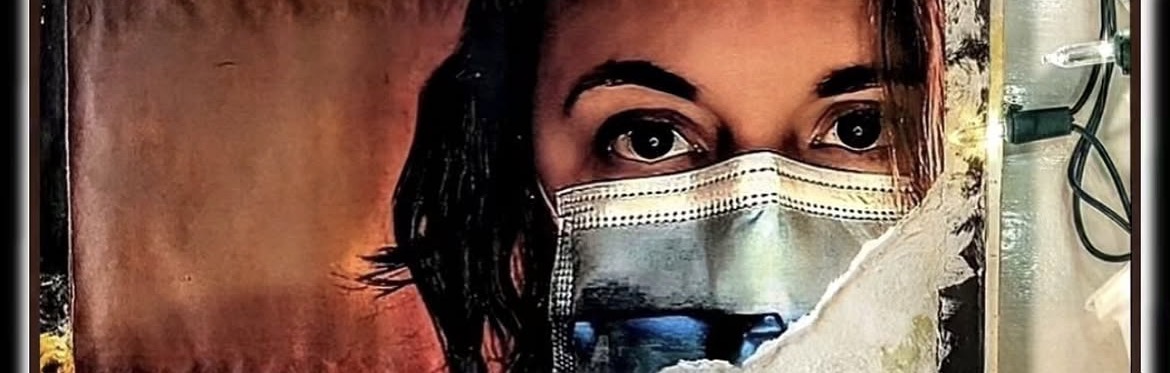
Ava Cranhill sits on a stool amid lamps without shades and sparkly Christmas lights. She holds the papers with her poem written on it and reads from it, and the gorgeous evocative language really immerses you in her experience of being diagnosed with Long Covid and all that it has stolen from her ever since. The piece is as much about the way that Cranhill is negotiating the telling of her story as it is about the story itself. You see her bursting with frustration in having her situation minimized by doctors, and strangers, and even people in her own life, and she speaks about the feelings of rage of being in this situation in the first place- both becoming sick, and then falling through both medical and societal cracks, and essentially losing everything, including the person she used to be. But she is aware that in order for audiences to connect with her she cannot come across as too bitter, too furious, to ready to blame folks for rushing back to work and school in person, for rejoicing in being able to go back into the grocery store without a mask on, for trying to pretend that the pandemic didn’t happen, when the pandemic is still very much a reality for her. Within the poem we see her trying to negotiate the balance, as exhausted and chronically ill as she is: how can she come across as endearing, and charming, relatable, and yes, even “normal,” so audiences won’t write what she’s communicating off as an inconvenient rare or extreme case, but instead think about where the limitations are in our community where real folks, our friends, our neighbours, are still being left behind.
I found this piece so engaging. My mom became chronically ill when I was about five, and things were very difficult for her as a single parent until I was about ten. She remained affected by her illness throughout her life, but it became more and more manageable over the years, and much easier for her to mask as “normal.” With that said, everything that Cranhill is saying in this work is very much putting into words feelings I’ve felt, certainly opinions that my mother held very passionately, but the way that Cranhill writes about her experience is so vividly unique, and extremely powerful. There are only two performances of this show- I really recommend that you go and hear this important work.
“I really recommend that you go and hear this important work” is going to be the theme of this batch of reviews.
TWISI Star Rating: ⭐️⭐️ ⭐️⭐️
Ava Cranhill’s ‘NÔRM(Ə)L plays at Universalist Unitarian Church of Halifax (5500 Inglis Street, Halifax) at the following times: September 6th at 7:30pm and September 12th at 9:30pm.

The first show that I saw on the real first day of Fringe was DaPoPo Theatre’s brand new musical revue So… What Else About Love, written and performed by GaRRy Williams, Amy Reitsma, and Kristi Anderson. If Benj Pasek and Justin Paul’s musical Edges was updated to today and mixed with Stephen Sondheim’s Merrily We Roll Along, that is the vibe I was getting from this musical. We are introduced to old friends Kelin, Carrie, and Phil who are reconnecting with one another, and we see a series of usually musical (but not always) vignettes about their relationships with each other, the contexts of their lives outside the friendship, and at least one flashback to their lives together when they were in their twenties. The songs and situations are, I feel, at least sometimes, quasi autobiographical, as anyone who is familiar with DaPoPo’s canon of work will likely know that the relationship between these three characters is very similar to the long-lasting friendship between Anderson, Reitsma, and Williams.
It’s Williams’ character Phil who really reminds me of that kind of drive to create that Franklin Shepard has in Merrily We Roll Along, although he seems to also have an inner Charley who keeps him from becoming self sabotaging like Frank. Carrie, on the other hand, logistically, needs to put her creative pursuits on the back burner much of the time because she is juggling the realities of parenting three dramatic and precocious children- one of whom, Olive, has the confidence of a God but refuses to be potty trained, and figuring out how to encourage her to meet certain imperative milestones without breaking her spirit is a full time job. Kelin is struggling after having been abandoned for a second time by her birth mother, and her and her partner are also having trouble conceiving a child of their own. Her feelings of grief over maybe never having a baby, or having anyone in her family who shares her genetics, is exacerbated in her friendship with Carrie, who doesn’t have a lot to share that isn’t about the day to day reality of raising children. Kristi Anderson gives a really heartbreaking monologue in the show that is really a show stopping moment. It’s a rarity in a musical for a monologue to be the show stopper, but Anderson’s performance in this piece was a real gut punch.
There are some really fun songs in this show. My favourite is one that Williams’ Phil sings, potentially called “Still Sick Over You,” a country and western song fit for Reba McEntire about an unfortunate and uncomfortable end to a relationship. Amy Reitsma as Carrie sings a song about the solace of having a few moments of peace and quiet to herself in the bathroom, and there are a few group songs that capture the absolute chaotic and terrifying cultural and political reality that we’re currently living through. David Reid accompanies the cast on the keyboard and gets pulled into the action at one point in a very unexpected way, which works really well.
At the moment the scenes are very much broken up into a series of vignettes, but I actually really liked the idea from the very beginning that they were three close friends reconnecting having been away from each other for awhile, and that they were at one of their homes, maybe even playing DaPoPo’s old drinking game. I think it would work really well for all these stories to emerge while they’re all together in this one space. Since the three characters are also performers there would be an opportunity as someone is narrating a story in song, all three might then jump up to act it out, or imagine themselves as the ghost at the funeral, or pretend to be the cringey dude at the bar. Then, for Anderson’s more somber moments of reflection, they could be soliloquies to the audience where her mind has floated elsewhere and she’s disengaged from Phil and Carrie. I think this would really help ground the show in this one moment, exploring how these relationships have evolved and are being challenged as Carrie, Phil, and Kelin grow older, but we can also see them being silly and still playing make believe together, and that that is what endures through everything else.
Amy Reitsma has a line about “pensions and psychopaths,” and this play really does run the gamut in its charming reflection on having to grow up, even when you really don’t want to.
TWISI Star Rating: ⭐️⭐️⭐️⭐️
DaPoPo Theatre’s So… What Else About Love plays at the Art Gallery of Nova Scotia (1728 Bedford Row, Halifax) at the following times: September 5th at 9:30pm, September 6th at 6:30pm, September 10th at 8:00pm, September 12th at 5:00pm, and September 13th at 2:00pm.
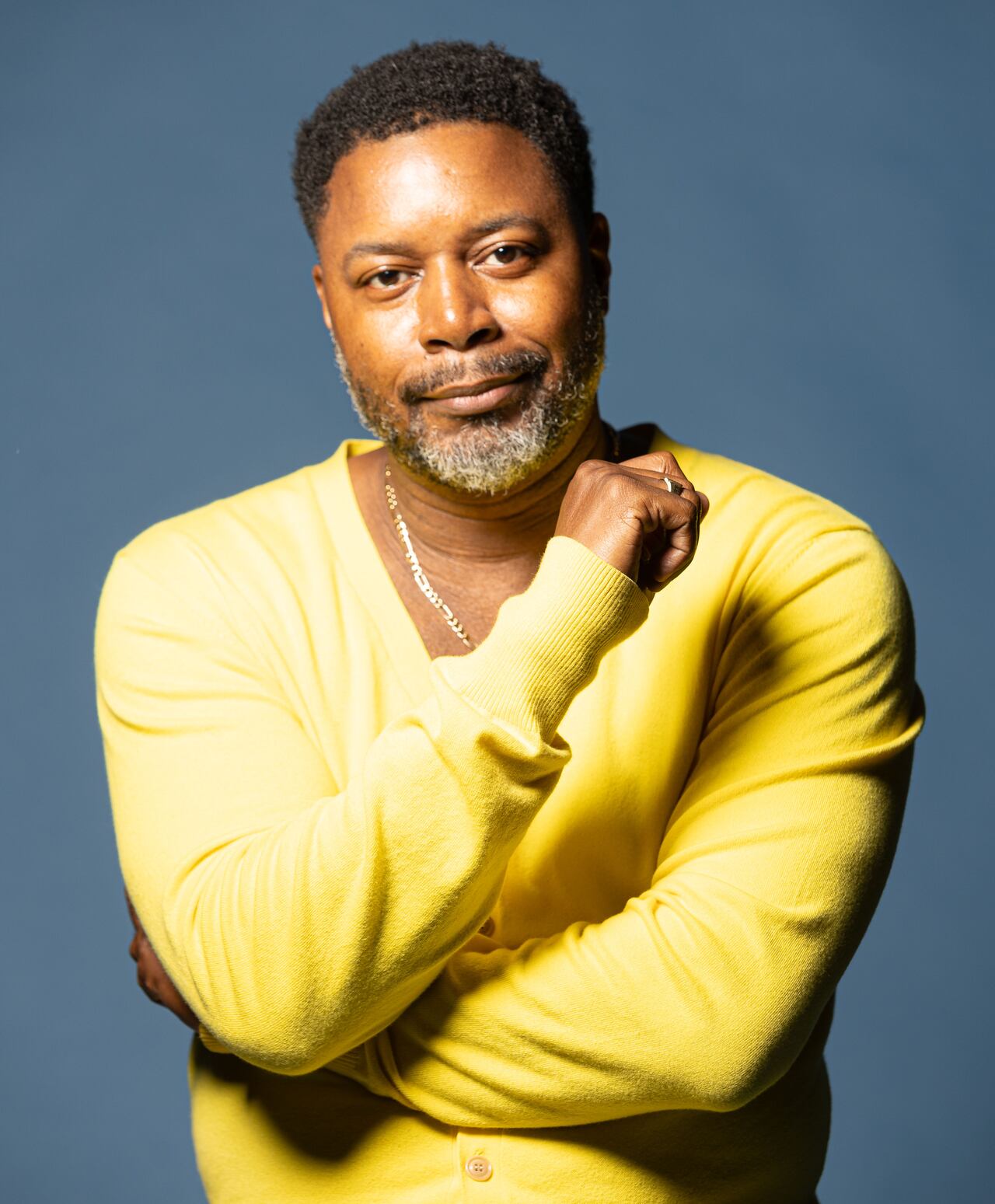
Dwayne Morgan’s A Life In 60 Minutes is a series of spoken word poems that emerge so organically out of his conversational storytelling about his life that it feels like one hour-long epic poem. This piece is absolutely incredible. It’s one of the best spoken word poetry performances I’ve ever seen. The first poem is performed with such an incredible rollicking speed that the line from Lin Manuel Miranda popped into my head about Alexander Hamilton, that he was writing like he was “running out of time.” I don’t think I blinked for sixty minutes.
Morgan tells us the story of growing up in Scarborough at a time when that could be a death sentence, and how his parents arrived in Toronto from Jamaica when they were 21 years old, and they experienced a massive cultural and identity shift that profoundly shaped their lives, and the life of their child. The piece explores the realities of being a Black man in Canada, of raising a Black daughter, and of growing older and caring for aging parents.
This piece takes a lot of the conversations that have been in the zeitgeist for the last ten years or so around Black Lives Matter, strong Black girls, immigrants, the particular struggles of inner city racialized neighbourhoods, the consequences of historic systemic racism that continue to reverberate today, misogyny, and misogynoir, and presents it in such a vivid, immediate, powerfully constructed way. I had never heard of “picture day,” a day when young Black boys in particular get their pictures taken in their Sunday best so their parents have a photo to give to the media in case they are killed by the police that cannot be misconstrued as insinuating that they are members of gangs or criminal organizations, because they know that the photo that is chosen will dictate how much empathy and compassion is given to their child in death. There is much to fill you with fury and heartbreak here.
Morgan also talks about learning how to love effusively, in a way that was not modelled by his parents when he was growing up, so that he could shower his daughter in love from birth and allow her to grow up feeling confident and safe in her relationship with her dad. The way that he goes into these unabashedly nuanced feminist poems, even though he’s definitely not saying anything countless women haven’t been saying for centuries before him, it’s still so wildly refreshing and novel to hear these words from a cisgender straight dad. I felt really seen in a lot that he was saying about gender, and I hope he felt really seen from the audience when he was sharing about his experiences surrounding race.
This is a real powerhouse show. Every line is so tightly constructed, and Morgan is such a charming and engaging performer, your heart keeps oscillating between wanting to cry and wanting to cheer, and it is the easiest thing in the world for you to connect directly to his heart during this Life in 60 Minutes.
TWISI Star Rating: ⭐️⭐️⭐️⭐️⭐️
Dwayne Morgan’s A Life in Sixty Minutes plays at the Art Gallery of Nova Scotia (1728 Bedford Row, Halifax) at the following times: September 4th at 5:00pm, September 5th at 3:30pm, September 6th at 2:00pm, September 8th at 8:00pm, September 9th at 5:00pm, September 11th at 8:00pm, September 12th at 9:30pm, and September 13th at 6:30pm.

I continued with this theme of gorgeous poetry and not to be missed important Fringe programming with Saf Haq’s Chronology of a Genocide. She stands in the middle of a busy set filled with a large Palestinian flag and many different signs that say, among other things, “Fuck War,” “Ceasefire Forever,” and “Palestine Will Be Free.” On the back wall is written 2023, and we see that she is able to count down the nearly three years of atrocities that have been committed against the Palestinians and their land by a modern war complex in Israel. She has each one of her poems on a different piece of paper, and each one is marked with a date. It feels like the poems are emerging directly from a news headline each day. In the show’s description in the Fringe programme Haq writes that this show is meant to “bear witness to the escalation of the genocide in Gaza,” and that’s exactly what it does. The poems are written from a wide array of perspectives and focuses. Most vividly and brutally, but also poignantly, capture a piece of the horror that has happened in Palestine, and continues to happen there, but some explore the responses here at home- how Dalhousie University deemed protests against the genocide as making the campus unsafe, how people have gone so far as to set themselves on fire to protest what is happening to the Palestinians, how medics and journalists, people who are supposed to receive at least some sort of semblance of protection, even during a World War, have been targeted and murdered along with everybody else. One poem is about our ability here to scroll by people asking us for help, how we can choose to engage or disengage from the comfort of a peaceful place depending on whether we feel like we have the mental or emotional capacity for empathy and compassion on any given day, when Gazans don’t get to choose to turn the horror off when their mental health has reached its limit. Another poem reminds us that even once Palestinians flee they are still targeted by anti-immigration sentiment- ICE in the United States, but the fear of being deported, shamefully, doesn’t stop at our border either.
Some of the poems are filled with imagery that is so horrifying that it is seared into my brain- a child carrying his dead little brother in a backpack, babies freezing to death, and this line, “the only thing that survived was the bread” about a bomb hitting a family’s home. As Omar El Akkad titles his book “One day, everyone will have always been against this” because how can you justify the systemic slaughtering of families?
The piece also chronicles the feelings of helplessness and rage that Haq, like so many, feel as someone living here in Canada and being ignored, gaslit, accused of being the perpetrators of violence and having her words deemed unsafe for others, whose comfort is prioritized. The complicity in this genocide extends for miles in every direction, and when we’re talking about kids carrying dead babies in bags it makes no rational sense why.
As she alludes to in one of her poems, I think for many of the Canadians who stand with the Palestinian people it’s in part due to the fact that we can see a connection between their history and ours. We here today could not stand up for the Mi’kmaq people in 1749, and we don’t have videos, and photos and daily newspaper headlines that chronicle that genocide, but we know that the goals for land development were identical and the consequences will be the same. We can’t go back in time, but we can do and be better now to put truth and reconciliation into action, to really make learning from history mean something. The room at the Art Gallery last night was full of warmhearted folks who were creating a wall of solidarity around Saf Haq as she read these difficult poems, and I hope this will be her experience through the Fringe. These families in Palestine need to be protected, and apparently it will take the whole world to fight for them against this immense ruthless power Benjamin Netanyahu has in Israel.
This show is a fundraiser. 100% of the proceeds are going to help families in Gaza. Please give generously if you are able.
TWISI Star Rating: ⭐️⭐️⭐️⭐️⭐️
Saf Haq’s Chronology of a Genocide plays at the Art Gallery of Nova Scotia (1728 Bedford Row, Halifax) at the following times: September 4th at 6:30pm, September 5th at 8:00pm, September 9th at 9:30pm, September 12th at 6:30pm, and September 13th at 3:30pm.

My evening at the Art Gallery ended with Métis playwright Colin Wolf’s play Lumber, which comes to us from Thumbs Up Good Work Theatre via the Calgary and Edmonton Fringe Festivals. We meet Jack Bennett, a young man with a chainsaw who has been working cutting down trees. He is good at this work and has a passion for it, but he is reckless in it, which causes him problems. When he gets fired from a job he got through his uncle’s connections it is compounded by also losing his housing situation, breaking up with his girlfriend, owing his uncle money, and a heavy grief hanging over him (compounded by guilt) centred on the death of his dog. Overwhelmed, he makes the rash decision to leave everything and head up to the Yukon to look for work. Once there he enters a sort of magical realm that slowly helps him to learn how to stop running from connection and hurt, and to begin to learn how to ask for help.
Jack is a fish out of water in the Yukon, as is creatively depicted by his bureaucratic dealings with two absurd puppets who keep sending him in circles, and the fact that folks he encounters can physically smell something off about him. He keeps seeing a mysterious figure in the woods, and he reflects on a relative of his who once came here during the gold rush, and then the family never heard from him again. At first Jack thinks this is a success story, but the longer he stays in the Yukon the more he feels drawn to thinking about it in another way. He is coaxed along by Claire, who comes from an old Yukon family, and who is wryly kind to him.
Colin Wolf plays all the characters in the play, mostly just changing the quality of his voice to distinguish between them, and this is enough. He plays Jack with ample amounts of charm, and the audience is really rooting for him to find his way. Nathan Howe directs the piece, and for how simple it can look to just have one actor on stage with a chainsaw, a large log, and some orange cases, there are a lot of nuanced movements that Wolf is making to really help to bring this world to life- whether that be driving in a car for hours, the logistics of felling the trees, the way that we see him going through all the steps involved in starting up the chainsaw, and creating the ambiance around the conversations between Jack and Claire. I loved the way the log was used, as there were certain moments where Wolf would kick it over and that loud thud when it fell was the one tree sound effect that was coming to us directly from the stage, and there is a connection between the weight of that log and the heaviness of Jack’s heart.
There was so much in Lumber that I’ve never (or rarely) seen before- a play set in the Yukon, an actor wielding a chainsaw, and a very clear and unique perspective on this industry of clearing trees, particularly dead ones, and seeing this through the lens of both being disengaged from yourself, your family, and your heritage, and then also finding ways to reengage. This is a unique and engaging story beautifully told.
TWISI Star Rating: ⭐️⭐️⭐️⭐️⭐️
Colin Wolf’s Lumber plays at the Art Gallery of Nova Scotia (1728 Bedford Row, Halifax) at the following times: September 4th at 8:00pm, September 5th at 6:30pm, September 6th at 3:30pm, September 8th at 5:00pm, September 9th at 8:00pm, September 10th at 9:30pm, September 11th at 5:00pm, and September 12th at 2:00pm.
Halifax Fringe runs from September 3rd to September 13th, 2026 in venues throughout the downtown and North End of Halifax. For more information and to make your Fringe schedule please visit this website. All official Fringe venues are wheelchair accessible and have all gender washrooms. Many shows have at least one mask mandatory performance. Grab a Fringe Guide at any of the venues for a handy way to follow along with all the events at the festival. See ya there!
A Note On TWISI Fringe Ratings:
I have never liked rating Fringe shows, or any shows, using the 5 Star system as I have done in the past, but they can be helpful for productions that are touring, or seeking funding for further opportunities for development, so with that in mind I will be giving out four, four and a half, and five star ratings this Fringe.
Incoming search terms:
- findud4
- https://www twisitheatreblog com/?p=6932