Alex Cuba Performs at Symphony Nova Scotia
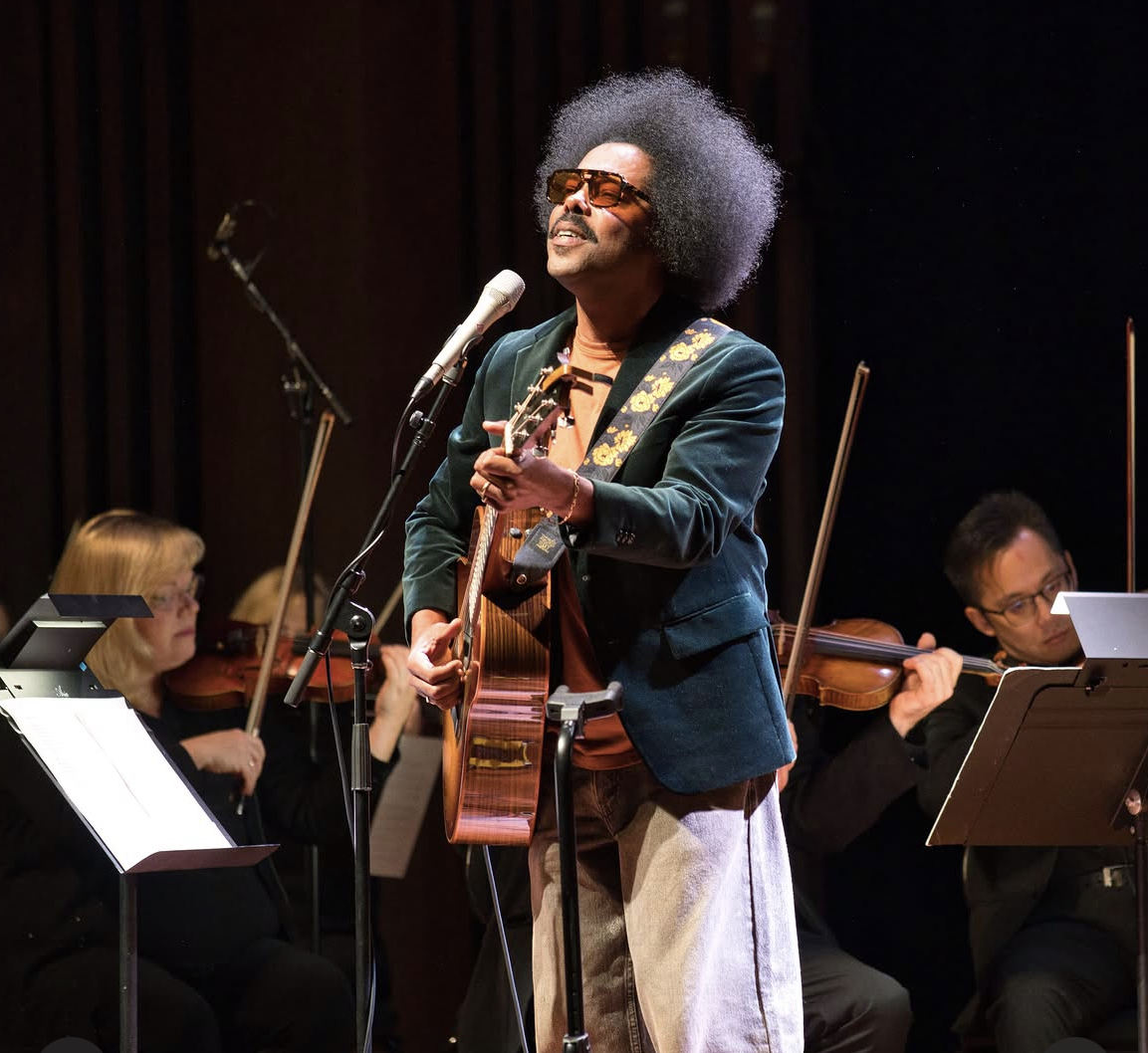
At the end of Alex Cuba’s A Night of Soulful Latin Grooves Fusion Concert with Symphony Nova Scotia on October 23rd Cuba said something empowering that I will take with me in theatres and concert halls well into the future. He told us that showing up right now to the Rebecca Cohn Auditorium to watch musicians play their music live in the context of tech bro would be overlords trying to push AI and anti-intellectualism on us is an act of rebellion. We, the rebels at the symphony, is not an image that I had ever conjured before, but I love it.
Alex Cuba was born and raised in Artemisa, Cuba, and there were a few Latinos in the crowd in Halifax, many of them seated around me, who greeted him with yells of, “Viva Cuba!” and who were able to sing along with all his Spanish songs. This elevated the experience for me as it brought a palpable celebratory ambiance to what can often be a more subdued room. Cuba, born Alexis Puentes, immigrated to British Columbia in 1999 after marrying a Canadian, and he now calls Smithers, BC home. He has had incredible success as a musician- winning two Juno Awards, 4 Latin Grammys, and a Grammy in 2022 for Best Latin Pop Album. As many have discussed before me, he is a bit of a marvel in the Canadian music landscape writing and singing songs primarily in Spanish, all the songs he sang here in Halifax were in Spanish, in a country where if kids are lucky like I was they may get three years of Spanish in High School, but otherwise the Hispanic population here is relatively small. We shouldn’t marvel over music’s ability to transcend language barriers and touch our hearts regardless; many of us here in Nova Scotia, including myself, grew up “singing along” with Scottish Gàidhlig songs that we didn’t understand either. Exactly the same thing happens with Cuba’s music too- the audience bops along in their chairs, and they hum or attempt to sing along. Music is a bridge that way.
Greg Burton conducted the orchestra for this fusion concert. They began the concert with “Ritual Fire Dance” from the ballet El amor brujo by Andalusian composer Manuel de Falla. I really enjoyed this piece a lot. Manuel de Falla (1876-1946) was born in Cádiz, Spain and started out playing the piano. By 1897 he had started composing when his family was living in Madrid, and in 1899 he was awarded the first prize in piano competition at his school. While in Madrid he became more interested in the music indigenous to Andalusia, especially the flamenco (caste condo), which became a strong influence in many of his works. He wrote his first one act opera of note, La vida breve in 1905, and he moved to Paris in 1907 where he hobnobbed with a wide array of illustrious composers including Maurice Ravel, Claude Debussy, and Igor Stravinsky. The ballet El amor brujo (1915) was composed back in Madrid, and the piece that we heard tells the story of using a ritual fire dance to drive ghosts out. Falla’s 1917 ballet The Magistrate and the Miller’s Wife had a set design and costumes by Pablo Picasso. Falla then moved to Granada, but he left Spain entirely in 1939 after Francisco Franco’s victory in the Spanish Civil War. He spent the last of his years in exile in Argentina.
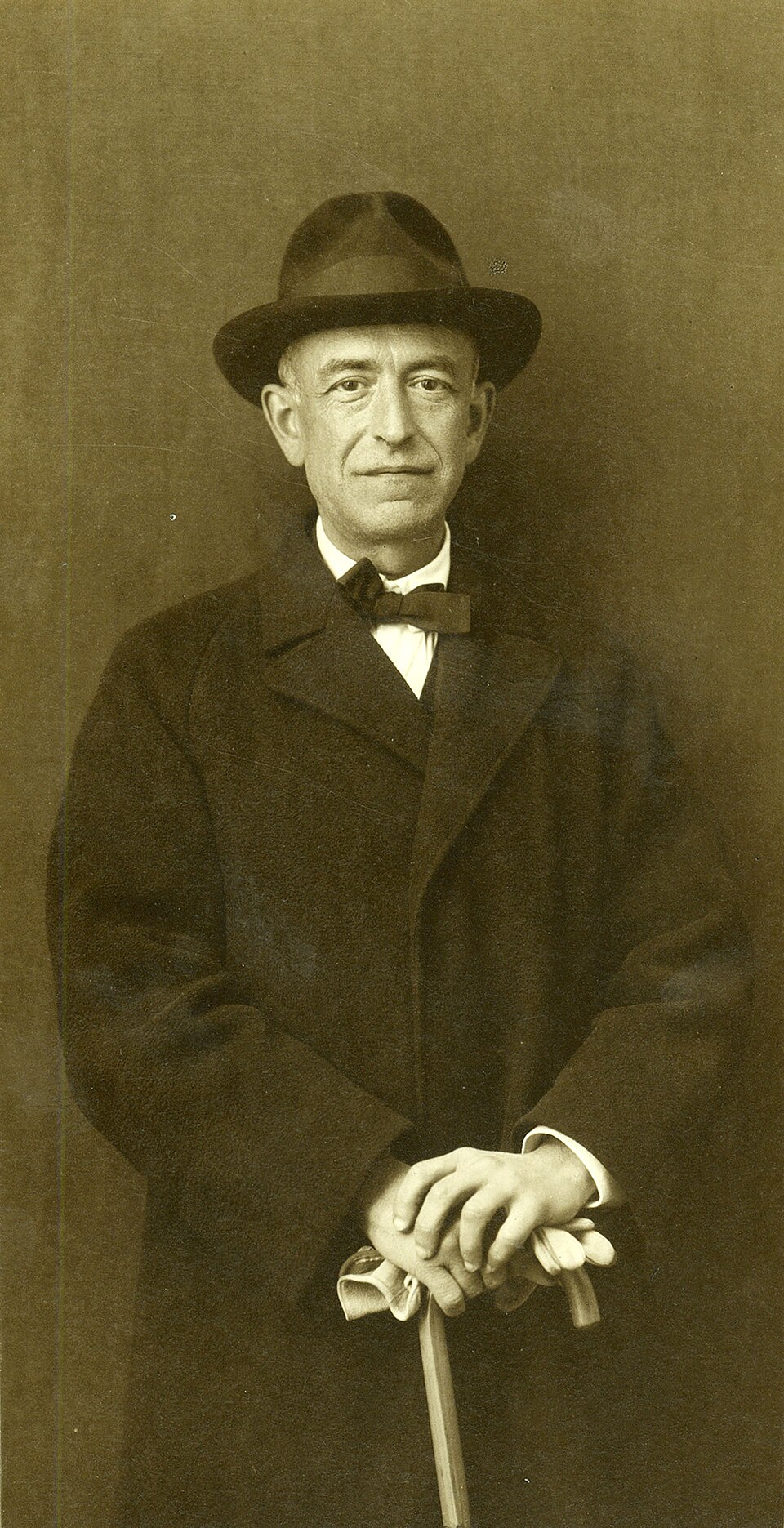
I was interested to read on Wikipedia that the piece “Ritual Fire Dance” is often associated with “Flight of the Bumblebee” as I also conjured imagery of bees as I heard the piece. It also, for some reason, really reminded me of the scene in Disney’s The Jungle Book (1967) where Shere Khan is prowling on the hunt for Mowgli- which is interesting given the importance of fire in that story as well.
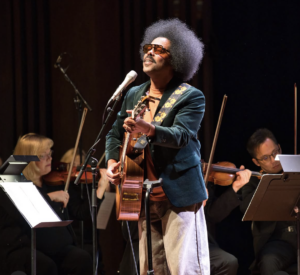
October 23rd was one of the first cold nights. I wore my winter coat to the Cohn and felt a bit like I was overreacting, but I came into the theatre with a bit of a chill in my body. It’s amazing too how the music from a warmer climate seems to be able to conjure the heart within it because within the first few songs watching Cuba in his sunglasses I felt like I had been transported on a mini vacation away from the impending winter. Cuba performed 16 of his songs for us accompanying himself on the guitar with the symphony providing gorgeous support. Most of the songs were arranged by Peter Hysen, except “En Mi Guitarra” and “Ahora,” which were arranged by Adrian Dolan. These were two of my favourite songs of the evening.
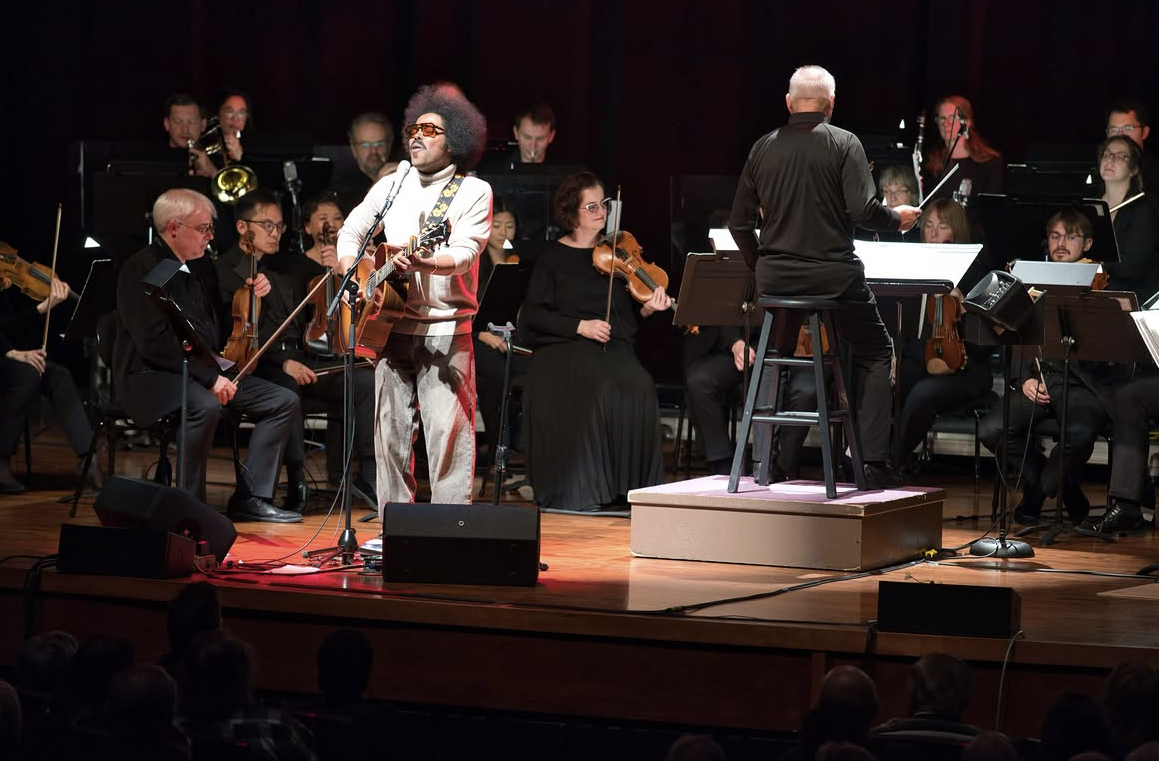
Alex Cuba has a gorgeous voice and a rockstar stage presence. At one point I wrote down in my notebook that his voice was so beautiful it made me want to cry. “Por Donde Vas” is so catchy; I couldn’t understand how everyone wasn’t dancing in their chairs. It’s definitely a song that folks can leave humming, even if they don’t know the words. He had us singing along with the repeated simple titular line “Si Pero No,” cracking jokes at us in his distinctively charming way, and doing the moonwalk, which further made the audience feel like we were an active participant in the evening. The genres that Cuba’s music span are broad- certainly he has classic pop songs, but the funk, soul, and jazz influences in a song like “Ruido En El Sistema” are strong. The guitar, at the beginning of “Solo Tu” sounds like something Jimmy Rankin might have written for one of his early Rankin Family folk songs. I think this is my favourite Cuba song- his voice is as smooth as butter- you just want to nestle into it. I found it interesting to watch the symphony players too because sometimes it wasn’t always immediately clear which instruments were making which sounds. There were a lot of instruments that are usually played with a bow that were instead being plucked, and that created a lot of very distinctive moments in the evening. This is a big part of what makes these fusion concerts so interesting.
In the second act Cuba sang “Vampiro,” which was apt for so close to Halloween. Obviously, all the of the songs are in Spanish and they represent a wide array of different Latino/Hispanic musical traditions and styles, and I was a bit surprised to be able to differentiate between styles that sounded more Latin American to me versus ones that sounded more like the music from Spain that we listened to sometimes in my High School Spanish class. The Symphony played “Danza del trigo” from Estancia by Alberto Ginastera at the beginning of the second act. You can see right away the parallels between the piece by Falla and this one. Ginastera was born April 11, 1916 in Buenos Aires to a Spanish father and Italian mother. He studied at the Williams Conservatory there, and went on to teach. He grouped his music into three periods “Objective Nationalism” (1934-1948), “Subjective Nationalism” (1948-1958), and “Neo-Expressionism” (1958-1983). “They vary in their use of traditional Argentine musical elements.” This ballet Estancia is from 1941 and comes from the Objective Nationalism Period, although it ended up not being performed until 1952. It was adapted from an epic Martin Fierro by José Hernàndez, also an Argentine, which tells the story of a boy living in the city who falls in love with the daughter of a rancher, and who must win her over with his dancing. This piece we heard is translated to “Wheat Dance,” and I did get a very pastoral feeling from it. It reminded me of being in an idyllic clearing in the woods, like you might see in a cartoon. While both pieces that the symphony played were dances from ballets the moods that they created were very different.
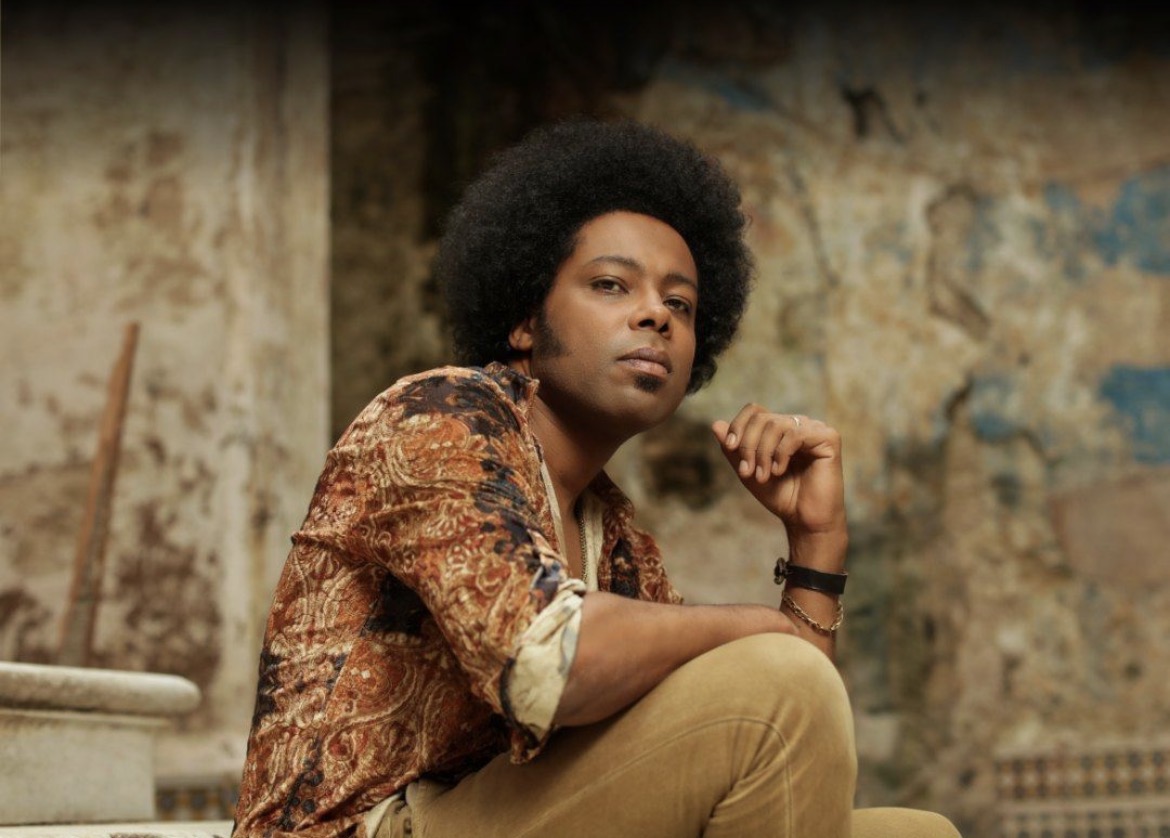
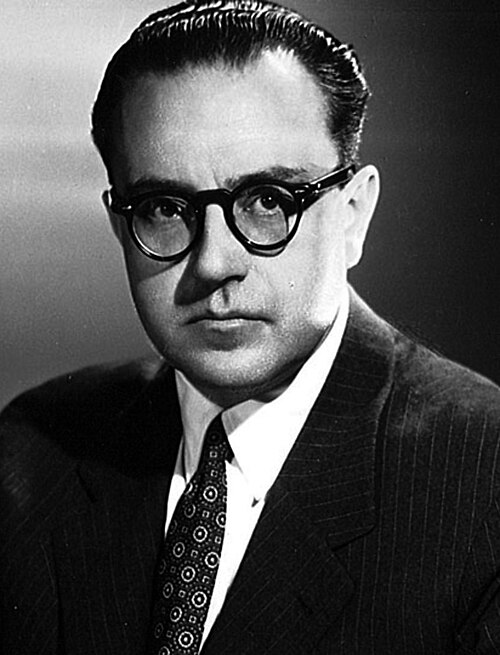
We were also treated to Cuba serenading a fan with the Spanish version of “Happy Birthday To You,” and oh my god, what a glow up.
We often associate being rebellious, being rebels, with the young- but I love to think of each person who attended Alex Cuba’s concert at the Cohn on the 23rd as being a rebel- someone who is choosing to come out and have an experience in the community, to support a room filled with talented musicians sharing the work they have collectively cultivated over decades. I would love to see this message reach the youth too- that choosing not to numb out on streaming platforms and social media but to engage with the artists in your hometown, in whatever way you can do so intentionally, is an act of rebellion against the billionaires and their political lackeys who want to keep you distracted, disengaged, apathetic, and reliant on artificial forms of “intelligence” so that you will give up your power to be creative, insightful, discerning and knowledgeable, grounded in your community, and participating in the decisions being made about what kind of present and future we want to have here. I will take Alex Cuba’s advice to be rebellious this way to heart, and carry it with me when I feel the pessimism pervade me.
I am very excited about the next fusion concert- Merry Murdoch Mysteries in Concert. “This holiday musical mystery features behind-the-scenes insights from award-winning composer Robert Carli, festive sing-alongs, and a live orchestral performance of the classic episode ‘Sugar Plum Murdoch’ on the big screen. Don’t miss this magical celebration for the whole family – where music meets mystery and Christmas spirit fills the hall.” “Sugar Plum Murdoch” is the long running Canadian historical fiction crime procedural’s most recent Christmas special, from 2025, directed by Katie Boland and written by Noelle Girard. Detective William Murdoch (Yannick Bisson) is hot on the trail of a diamond tiara thief, while Margaret Brackenreid (Arwen Humphreys) tries to convince Anna Pavlova to perform in a production of The Nutcracker for charity.
Performances are Friday November 27, 2026 at 7:30 pm and Saturday November 28, 2026 at 2:00 pm at the Rebecca Cohn Auditorium (6101 University Avenue, inside the Dalhousie Arts Centre). Tickets range in price from $36.50 to $90.50, with a range of price points in between, based on seating. Tickets are available online here, by calling the Box Office at 902.494.3820 or visiting in person at 6101 University Avenue. “The Arts Centre is wheelchair accessible, and there are a number of spaces designed to meet the needs of patrons in wheelchairs. These are located primarily along the back, right-hand side of the auditorium, close to the exits. When you purchase your tickets, just let the Box Office staff know that you’ll require a wheelchair seat for the performance. Please visit the Arts Centre website for more details.” For more Accessibility Information please visit this website.
Alex Cuba has shows coming up in the United States in February, but he has some Canadian dates starting in March, 2027 at the Mary Winspear Centre in Sidney, British Columbia. You can follow him for more information on Instagram, or on his website. His newest album is Índole (2025), his newest single is “Ya Me La Pela (Sonsito Revolucionario),” which was just released this past July, and there is more new music to come.
Canadian Arts Journalism is an essential part of a healthy and thriving arts community. It helps theatre companies and musicians find new audiences for their shows, deepens audiences’ engagement with local artists and the work being created in their communities, and it is one of the best ways to preserve a snapshot of an ephemeral art form for future generations. TWISI relies on support from its Subscribers, folks like you who care about the survival of local and independent arts coverage. Please consider becoming a Subscriber today, or click here for more information. Thank you so much for supporting TWISI.