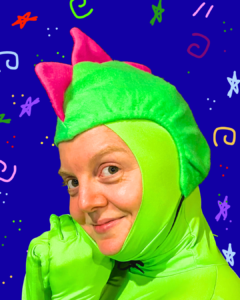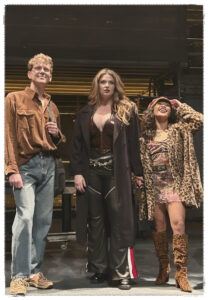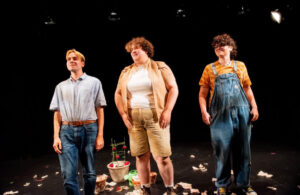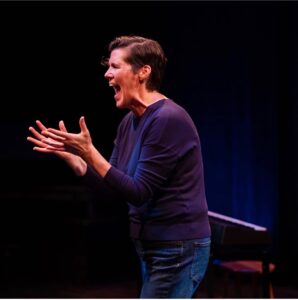
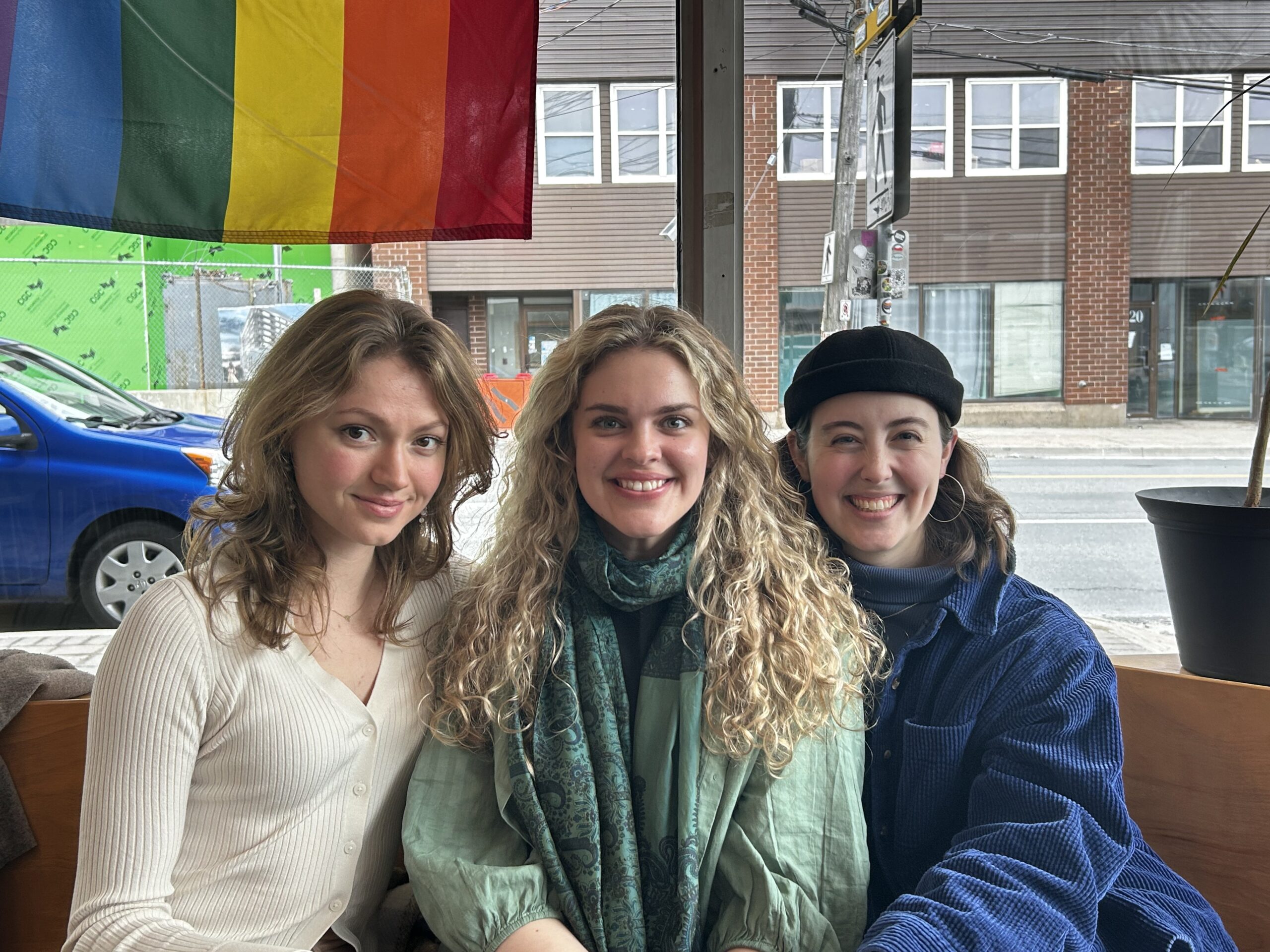
Ella MacDonald, Riley McGill, and Jessie Walker
Jessie Walker’s hilarious play Horse Girls, which was a huge hit at the Halifax Fringe last summer winning seven Audience Choice Awards, is coming to the Chester Playhouse this weekend as part of their double bill From The Fringe (along with Lawson Hansford’s Something Missing).
I absolutely loved Horse Girls when I saw it last summer; it was one of my all time favourite Fringe Shows, so I was excited to sit down and chat with Walker, and cast members Riley McGill and Ella MacDonald at Seven Bays Bouldering last weekend. I had the hot chocolate, and definitely recommend it.
McGill, MacDonald, and Walker met while at theatre school together, but, especially because they were in University at the height of the Covid-19 pandemic, they did not have a real opportunity for their friendship to really flourish while they were there. Working together on Horse Girls has really brought the three of them together in a really beautiful way. They now consider themselves to be “horsey besties.”
McGill is originally from Charlottetown and grew up in the church there singing in the choir, doing pageants and then school musicals and summer camps, and when she was sixteen she got her first job working at the Confederation Centre. When she started at Dalhousie University she originally wasn’t planning on doing an Acting Degree, and a couple of months into her Sustainability Degree she wanted to drop out. “My mom encouraged me to take theatre as an elective,” she says, “and [Assistant Acting Professor] Matt Walker suggested that I should audition for the program, and I did, and then I got in and it changed the direction of everything.”
Ella MacDonald’s parents are also performers and she initially resisted following in their footsteps, citing financial concerns, despite the fact that she’d had a financially stable upbringing. “When I was a little baby they’d bring me and put me to sleep in a guitar case. I was just on the road with them. I used to joke I was raised by clowns.” She says that when her parents would perform as part of an ensemble the cast would become her babysitters backstage. She started her academic career in the Foundation Year at King’s College, and then realized that she was “only reading the plays and doing extra classes to fit extra theatre classes into [a] psych degree.”
Jessie Walker is originally from the ‘Great State of Maine,’ where she was raised by a father who worked for the state and a mother who worked as a professor of Communication Sciences and Disorders for the University of Maine. “So I grew up very familiar with my voice and my body as an instrument, but not in an artistic way, in a very sort of medical anatomical way.” She did school plays, and started singing, and was headed toward becoming a classical singer, but then some ‘physical trauma’ in her nose led to her pivoting toward the theatre. At fifteen she got a job working at Opera House Arts in Stonington, Maine, the regional theatre there, playing all the minor Shakespeare roles, and learning from the actors who came from New York to have a “peaceful summer in Maine. It was incredible,” she says. These actors were also working in multifaceted aspects of the industry: some were playwrights, some arts administrators, and this stayed with young Jessie as well. “I will never not be grateful for Opera House Arts in Stonington, Maine; [it] created my future.”
After a brief stint at Syracuse University Walker pivoted again and ended up here in Halifax, a place recommended to her by her mother who had come here to visit and stayed in the Dalhousie dorms. “I was extremely traumatized from my time at the [highly competitive] conservatory. I was like ‘this is going to be awful.’ I went in very afraid and very on guard and Matt [Walker] and Susan [Stackhouse], from the moment I met them, [they] greeted me with so much kindness and so much love that I knew I was going to be safe. And I knew I was going to be allowed to make the kind of stuff I wanted to create and that no one was going to bug me about it or tell me I was wrong.”
Walker is a Bluenoser now, and Horse Girls is very much a Fountain School of the Performing Arts success story.
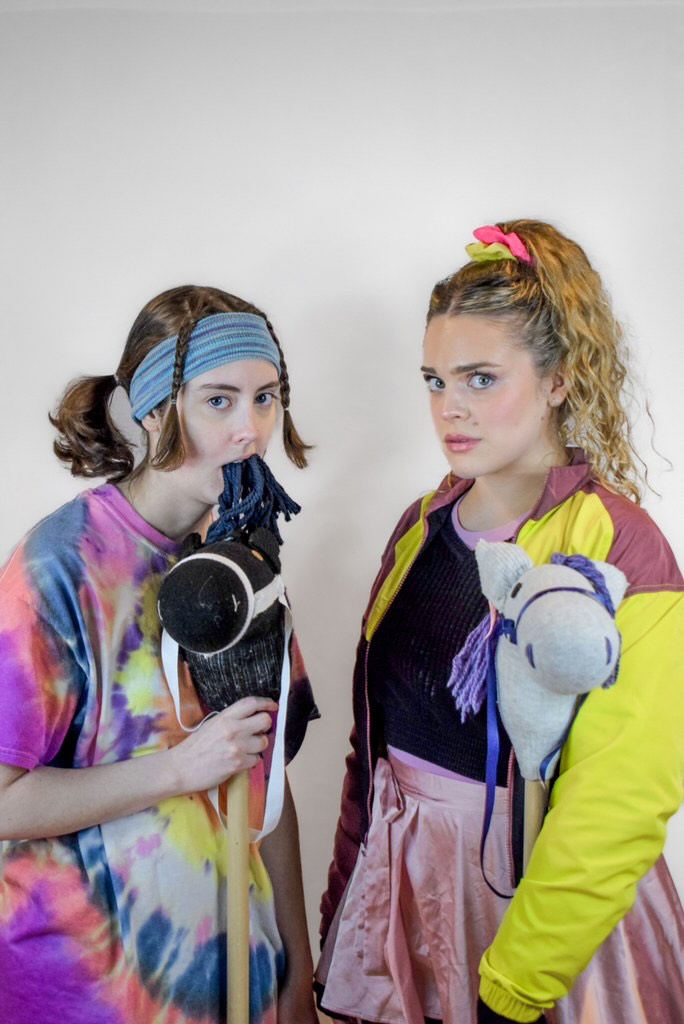
Horse Girls tells the story of Missy and Bridget, two young folks who are vying to win the Atlantic Hobbyhorse Association Provincial Grand Prix. Walker says that she got the first seed of the idea for the play when a lot of hobby horsing videos kept popping up in her Instagram feed. It struck her as such an “oddly specific and cool thing that people are so passionate about. I was thinking to myself… hobby horsing is a pretty transferable medium. You don’t have to have an actual horse. It’s not particularly bulky. Wouldn’t this be fascinating onstage?”
When the Toronto Fringe’s 24 Hour Playwriting Contest came around Walker was taking part and she received several words that she would need to incorporate into her script, including ‘promises, pasta, playground, and pavement.’ “I was going through this saved folder of all these theatre things that I’d saved, being like, ‘that could be interesting,’ and I saw a hobby horsing video, and I went, ‘Oh My God. When you’re hobby horsing you have to make horsey promises.’ That was the first thing that came to my mind… so then Missy and Bridget just kind of emerged.” 24 hours, she notes, is a very fast writing process, but after that day she had a script that she was excited about.
She brought the script to Luciana Silvestre Fernandes and asked if she would be interested in directing the piece for Halifax Fringe. She then approached both McGill and MacDonald and asked them if they would be interested in playing Bridget and Anja respectively.
McGill says that when she started reading the script by Page 5 she was all in. While MacDonald, McGill, and Walker were all at the Fountain School at the same time, they are each separated by one year like rungs on a ladder, with MacDonald graduating first, and Walker most recently. “When I heard that Ella was also on board,” says McGill, “I was giddy. I was so excited.” “I felt like Jessie wrote it for me,” MacDonald says of Anja, the Finnish newcomer who comes in and turns Missy and Bridget’s hobby horsing world upside-down. Walker confirms that the part was written with MacDonald in mind. “Even the first draft,” says MacDonald, “it was all really effectively written. It was all there. How tall she is, or how horny the other girls are for her, how poised she is, how polite she is… so on one of the first days of rehearsal I brought in this ridiculous pair of heels because I thought, ‘how funny would it be if she would do [her hobby horsing routine] in heels.’ Because I thought that would be something that she did. So I just brought them and everyone let me do it.”
“It was perfect,” says Walker. “They are also the loudest shoes I own. I wanted her to be towering over the other girls,” MacDonald adds.
MacDonald also worked diligently on the International Database of English Accents on Anja’s Finnish accent.
Walker says that as she wrote these two characters it became apparent that she was writing them for McGill and MacDonald. “I had wanted so desperately to work with both of them. Since we had been at different stages of Dal we hadn’t had the opportunity to work all together. It had been a dream of mine. So I think it worked out well that those were the images that started forming in my brain. And then I was so lucky that they both said yes.”
McGill says that Walker is very collaborative as a playwright, saying that they had the freedom to talk through aspects of the script that they had questions about, or ask if they could try something different. “It was honestly one of my favourite parts of the development was watching how the script changed in those early Fringe rehearsals because either Ella or Riley would come in and say, ‘I’m not sure my character would say something like this,’ says Walker, “And I was like, ‘Yes! How would your character say it? Tell me. I want to know!’”
MacDonald also speaks about the collaborative nature of the puppetry and figuring out how to make everything work with her aforementioned high heeled shoes. “Having it all sort of in draft at the beginning and having Logan Robins and Jessie take my requests and offers was a godsend, and really what you hope for in a collaborative process. And also working with Luciana to be like, ‘how can we make [Anja] look as impressive as possible and as effortless as possible? Luciana has so much expertise in that specific type of choreography. Every silly offer I brought to her, she managed to just also enhance it.”
McGill characterizes her character, Bridget, as “so sure of herself that she’s not sure of herself,” saying that she is “so self-aware that she’s not. She’s in the stage of life where she’s starting to feel everything, but not knowing what that means yet. But she’s feeling it all.” She cites a Margaret Atwood quote from The Robber Bride (1993), “You are a woman with a man inside watching a woman. You are your own voyeur.” “I think that she’s just so concerned about what everyone else thinks about her. But also being able to play a teen, a queer character as a queer person, because this is the first time I, as a queer person, have been able to play a queer character, that is very special to me, especially because I see so much of young me who wasn’t out in Bridget… Luciana said for Bridget and Missy, everything is the most important thing you’ve ever done. And it’s so true, for Bridget especially, everything has so much weight to it. It’s so fun to tap into that.”
“There also is also something within queerness where you can be attracted to people who are performing what it is to be a woman for men so successfully. And that’s part of this, you know? It’s, like, it’s also gender envy,” says MacDonald, going back to the Atwood quote.
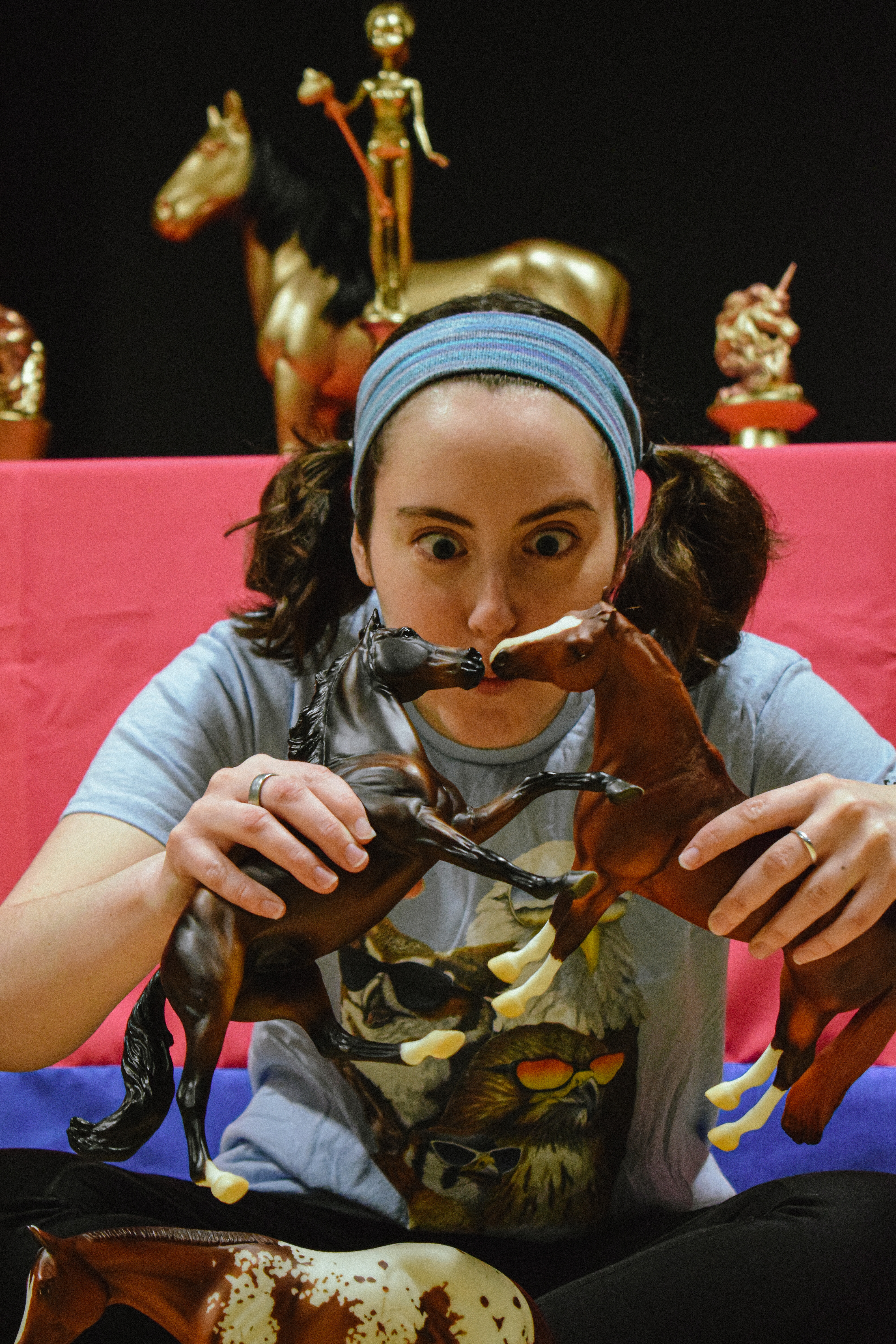
Walker says that as a neurodivergent queer person, she wrote Missy very specifically for herself as a neurodivergent queer character. “So much of Missy’s character comes from these internal monologues that I was having with myself when I was a teenager. It was a lot of ‘you have to win at all costs, everything has to be a certain way, and if it isn’t this way, it’s wrong.’ It’s a lot of those thoughts about desire, and sexuality, and yearning, and all these multifaceted things wrapped up in a bowl of ‘I am so passionate about something and I want to win.’” She cites her own experience with Speech and Debate in High School as her inspiration. “I loved it more than anything, and was so determined to always be the best. But I think for me in playing Missy, what I really wanted to tap into is what a queer femme character looks like when they’re allowed to unmask, and when they’re allowed to just be, particularly at a really vulnerable stage of life where you’re getting judged so consistently by society and by your peers, and by yourself. There is this constant pressure on teenage girls to be all these things, and I wanted to give this character the freedom to free herself from all of these pressures.
And so, I think for me, that’s been, in building Missy, and building her from a place of: what if she genuinely kind of doesn’t care what anybody thinks about her? And not in a performative way, in a genuine, honest, free way. And I think everything’s kind of built off of that. And I wanted to have a character who stims on stage. Missy has stims. I wanted a character who was stimming on stage. I wanted a character who, you know, takes things literally, and isn’t always great with sarcasm, and doesn’t really understand non-direct instructions. I think, for me, it was really important to show that on stage, to show it honestly, and to show that those characters can still be desirable, and can still have people who are attracted to them, and can still be attracted to people. I think that was really critical for me, because I feel like we don’t often see neurodivergent characters portrayed in a way where they are still desirable, and wanted, and loved. She’s so passionate about hobby-horsing, and about Finland, and it’s her special interest, and she is obsessed with it. Building this character has been a really profound joy as an actor… it’s been really beautiful.”
Walker goes on to tell me that she has been “high masking” for her entire life, and she and MacDonald discuss how, perhaps, Missy is less successful at masking than Walker was, but at the Hobby Horsing Grand Prix this doesn’t matter as much for Missy as it does at school and in other scenarios with her peers. Walker also speaks about how important it was to her that Missy was able to openly own her sexuality, in a way that she didn’t feel she was allowed to do when she was fourteen or fifteen years old. “In my brain Missy was ‘what if I had been allowed to explore [my sexuality]? What if I had been allowed to unmask and just kind of engage in who I actually was? What would that have looked like for me?”
While obviously many aspects of the play are very personal for Walker she hopes that the play will both resonate with teenagers as a play that is both fun and enjoyable, and also that is the kind of play for everyone that folks can bring their non-theatregoing friend along to, and that they will both have a good time. Considering the impetus for Horse Girls came from Instagram reels Walker elaborates saying, “My big question is: how can we write and create and make art that doesn’t push away things like social media and modern culture, but finds a way to embrace it and involve it and make it our own?”
MacDonald stresses the importance of entertaining the audience saying Horse Girls is “funny, it’s physical, it’s goofy, it’s ridiculous, it’s emotional. It’s still incredibly nourishing, and it’s very high quality. It’s an effective text. There’s not a dull moment, right? We don’t waste [the audience’s] time. It’s compact, but it’s tight. It’s clean. It’s sharp. It’s very well constructed, but it’s entertaining. I think if we look at the Fringe success we can see how much audiences value, especially if they’re not people who typically attend theatre, which might be a bit more cerebral, that audiences want to be entertained with their deposit on a night out.”
McGill tells me about a moment in a recent rehearsal where the director let her and Walker take the “creative reign” and they say, “It was so stupid and wild. It’s so fun because I feel like it’s so fun to play with [these] two because [they] also love play. [They] both value play as much as I value play. And so there’s nothing more you can ask for as an actor in a process like this than two other collaborators who also value that.”
“For fuck’s sake, a piece of theatre is called a play,” says MacDonald, “To quote Susan Stackhouse: ‘We go to the theatre for three reasons: to laugh, to cry, and to think new thoughts.’ And also, to quote Taylor Swift, ‘Are you not entertained?’”
Horse Girls plays at Chester Playhouse (22 Pleasant Street, Chester) as part of From the Fringe (a Double Bill) on Saturday, May 3rd at 7:30 pm and Sunday, May 4th at 2:00 pm. Tickets are $36.48 for Adults, $19.38 for Youth, and there are $10.00 Community Tickets (use code 10FOR10 (limit of 10 per performance)). For tickets please visit this website, call the Box Office at 902.275.3933 or visit the Box Office in person at 22 Pleasant Street.
The Chester Playhouse is wheelchair accessible. Please call the Box Office at (902) 275-3933 to arrange accessible seating.
Babes in arms & children under 4 are not permitted in the theatre.
Incoming search terms:
- https://www twisitheatreblog com/?p=5543