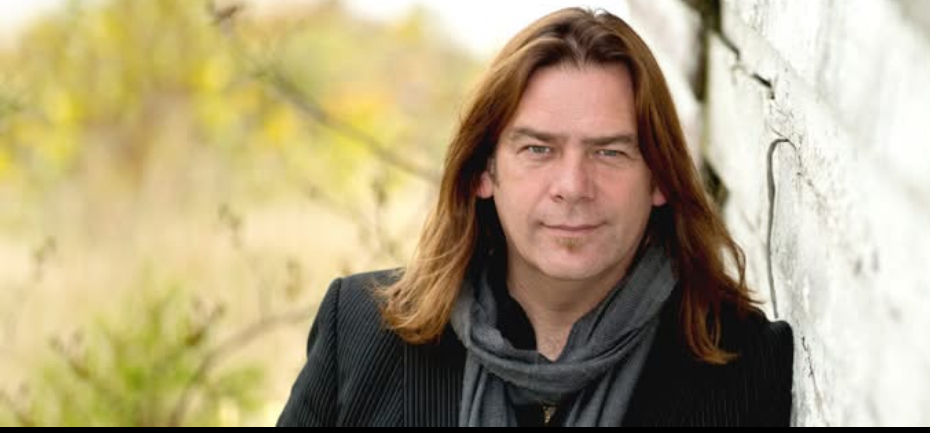
I recently finished reading Alan Doyle’s 2014 memoir Where I Belong: Small Town to Great Big Sea, which chronicles Doyle’s early years growing up in Petty Harbour, Newfoundland, and how his curious and thoughtful nature, along with his family’s long musical tradition there eventually led to him leaving his quite insular hometown and searching for new adventures and meeting a wider array of people with experiences substantially different from his own. That is the opportunity that he had, of course, during the twenty years that he spent as a member of the internationally touring multi-ECMA winning band Great Big Sea.
As the title suggests the memoir is at its heart a meditation on the idea of belonging. In Petty Harbour, at least when Doyle was born there in 1969, you belonged if you were born there. This is a common, if sometimes unspoken, distinction that is familiar to many in the Atlantic Provinces, the idea of really belonging to the place where you were born- no matter how long you happened to live somewhere else. In many ways there is no question at all: Doyle belongs to Petty Harbour. He was born there, he was raised there, and he comes from a long line of Doyles who are well known in the community- so much so that it is difficult for him to date anyone there as a teenager because they are pretty well all related to one another. Doyle has a number of quintessential experiences that root his boyhood and adolescence in Petty Harbour: he learned his business acumen by cutting and selling cod tongues and picking capelin alongside a gang he compares to Fagin’s boys in Dickens’ Oliver Twist. He and Perry Chafe, the creator of Republic of Doyle, co-creator of Saint-Pierre, and writer and producer of Son of a Critch, once almost killed themselves scurrying down a perilous rocky gulch after some “skin magazines” that had been thrown down there to, I guess, be cleansed by the ocean and eventually washed away. It is clear that Doyle loves Petty Harbour deeply and is both bemused and proud of the strange shenanigans he and his friends got up to there that no doubt strongly shaped their lives.
In other ways, though, Doyle felt like he was a bit of an anomaly in Petty Harbour. He grew up having profound questions about why the community was so divided, literally, between its Catholic and Protestant residents. He questioned much of what he, an alter boy, was learning in the Catholic church, and what he was learning in school. Often the grownups around him were dismissive or even hostile to his questions, which just made him even more confused. At one point he investigates a concept he doesn’t understand after an incident in church, consulting an encyclopedia, but is then made to feel that he has done something wrong by the priest in seeking further clarification. This doesn’t sit well with him.
It’s easy for Mainlanders to forget that when Doyle was born Newfoundland had only been a Canadian province for just over twenty years. He writes about his grandfather’s insistence on Newfoundland sovereignty and his deep distrust of the Canadian government and the country’s ability to ever act in a way that was in Newfoundlanders’ best interest. Doyle then comes of age against a backdrop of the collapse of the cod fishery and the moratorium that was imposed by the Canadian government in 1992. It is clear in reading this book, especially after his years of extensive touring, that Doyle feels a deep sense of belonging to Canada, but this too, puts him a bit at odds with his identity as a Bayman. While Doyle’s book doesn’t focus specifically on the fallout from the cod fishery’s collapse, the largest industrial closure in Canadian history, which disproportionately affected Newfoundlanders, it certainly is a launching off point, I think, for folks to take a deeper dive and to better understand the ways in which this time in history has had profound and lasting impacts on our entire region, and also learning opportunities for the country as a whole.
Doyle’s story is full of both heart and humour. He has a glorious gift in the way he creates beautifully vivid characters that leap fully dimensioned off the page. I could picture walking into the Catholic store, cramped and smoky, and being intimidated by Maureen, the shopkeeper who barks insults at kids who have the audacity to interrupt her while she’s watching TV because they want to buy some groceries. There’s also Frank, the gives no fucks seadog, who bursts out of the story with his unbelievable stoicism as Doyle chronicles how, regardless of what level of medical emergency Frank faces, he will respond to it as though it were but a mild annoyance. Culturally, Maureen is an interesting character because she flies in the face of the stereotypes of Atlantic Canadians, particularly Newfoundlanders, that we are all so kind and polite to a fault. There is absolutely nuance there, both when it comes to xenophobia and clannishness, especially, but also the ways in which we are often, actually, quite hard on one another. Frank, for his part, gives us an impressive window into how folks have survived the geological and environmental harshness of settling on this rock dating back centuries.
The culmination of this reflection on the idea of belonging is in the musical legacy of Great Big Sea. On the one hand Alan Doyle left Petty Harbour and travelled far beyond its shores, where he continued to ask big questions, and where he met more and more people who weren’t afraid of uncomfortable answers, or the concept of there being more than one or even no answer at all. And yet, of course, with its musical mixture of Irish, Scottish, and Cornish influence, Great Big Sea brought so much of the rich and vibrant culture of Petty Harbour and Newfoundland as a whole with them wherever they went. Alan Doyle continues to do this with his highly successful solo career, and, as he notes in the book, he is not the only person from his High School to dedicate his life to bringing Newfoundland’s culture to the world stage: the aforementioned Perry Chafe, Robert Chafe, current Artistic Director of Artistic Fraud of Newfoundland, esteemed theatre director Jillian Keiley, and Allan and Greg Hawco, actor of Republic of Doyle, Caught, and Saint-Pierre, and conductor and composer respectively, just to name a few, are all dazzling storytellers and incredibly successful stewards of their distinct culture and history.
In 2022 Alan Doyle starred in Tell Tale Harbour at the Charlottetown Festival, a musical that he co-wrote with Bob Foster, Adam Brazier, and Ed Riche based on the 2013 film The Grand Seduction. The musical follows the residents of a fictional harbour community in Atlantic Canada scheming to try to convince a visiting doctor to make Tell Tale Harbour their full-time home. The musical has since been reworked a bit and opens June 14th, 2025 at the Confederation Centre for the Arts (145 Richmond Street, Charlottetown). It runs there until August 29, 2025, and it will transfer to the Royal Alexandra Theatre in Toronto where it will play September 23rd and November 2nd, 2025. If you are in Charlottetown or Toronto this summer and fall, definitely check this new Atlantic Canadian musical out. You can buy tickets to the show in Charlottetown here.
Alan Doyle’s book Where I Belong: Small Town to Great Big Sea is available wherever you get your books. In Halifax consider buying it from Bookmark or King’s Co-Op Bookstore. You can also find the book at Chapters/Indigo. Doyle is also the author of A Newfoundlander in Canada (2018) and the brand new The Smiling Land, which comes out on November 4th. I am looking forward to reading both of these next. Visit his website for more information about his solo albums. You can also listen to the 2022 cast album of Tell Tale Harbour wherever you get your music.
Incoming search terms:
- https://www twisitheatreblog com/?p=5629