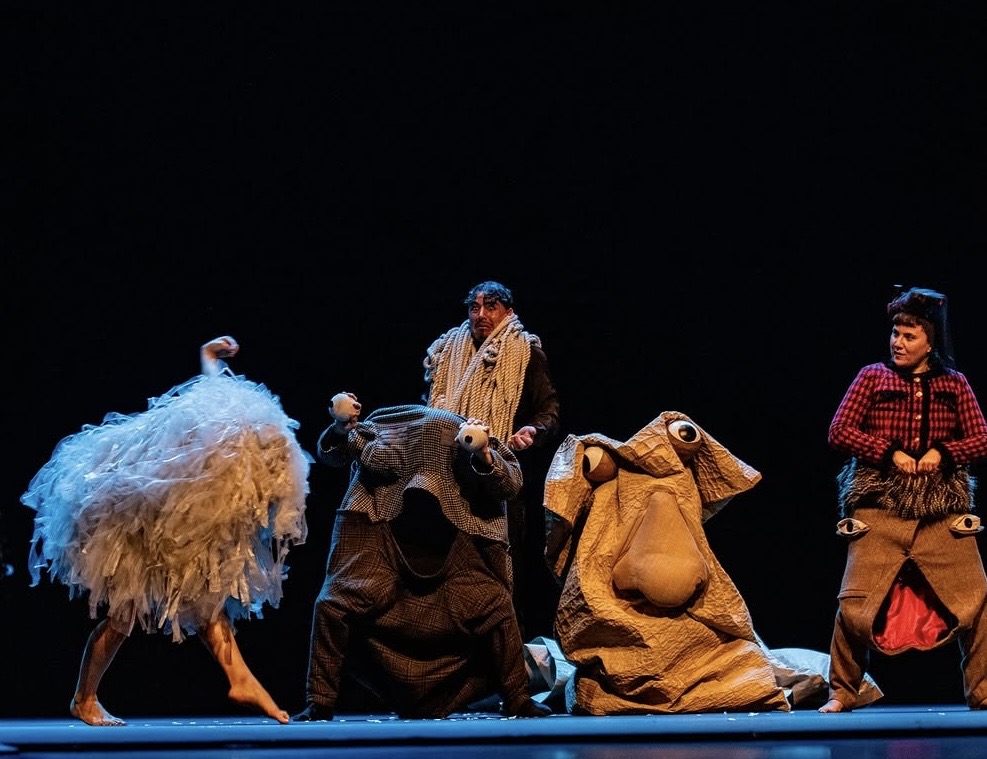
I was in a full house yesterday afternoon at Alderney Landing for La Llave Maestra’s production Pareidolia, which was brought here from Chile as part of the Prismatic Arts Festival in partnership with Eastern Front Theatre. The audience was rapt by this magical piece of theatre that creates delightful creatures out of ordinary objects.
Pareidolia is a feast for the eyes of both children and grownups inspiring a genuine wonder and enchantment that is often less accessible for adults. This imaginative piece doesn’t have one single narrative, but it feels like we have been transported via a large piece of blowing plastic masquerading as fabric into a wonderland of sorts where we encounter a number of different people and creatures who immerse us in a world that mixes puppetry, clown, magic, and pure silliness.
The performance is brought to life by five performers- Edurne Rankin, Marcela Burgos, Magdalena Lecaros, Juan Pablo Neira, and Jose Saenz de Urtury, and they are phenomenal in the ways that they are able to create stories using their bodies.
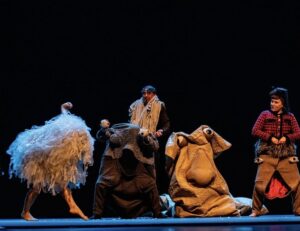
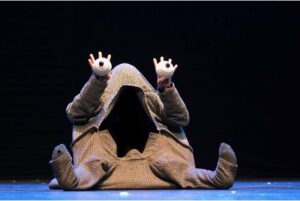
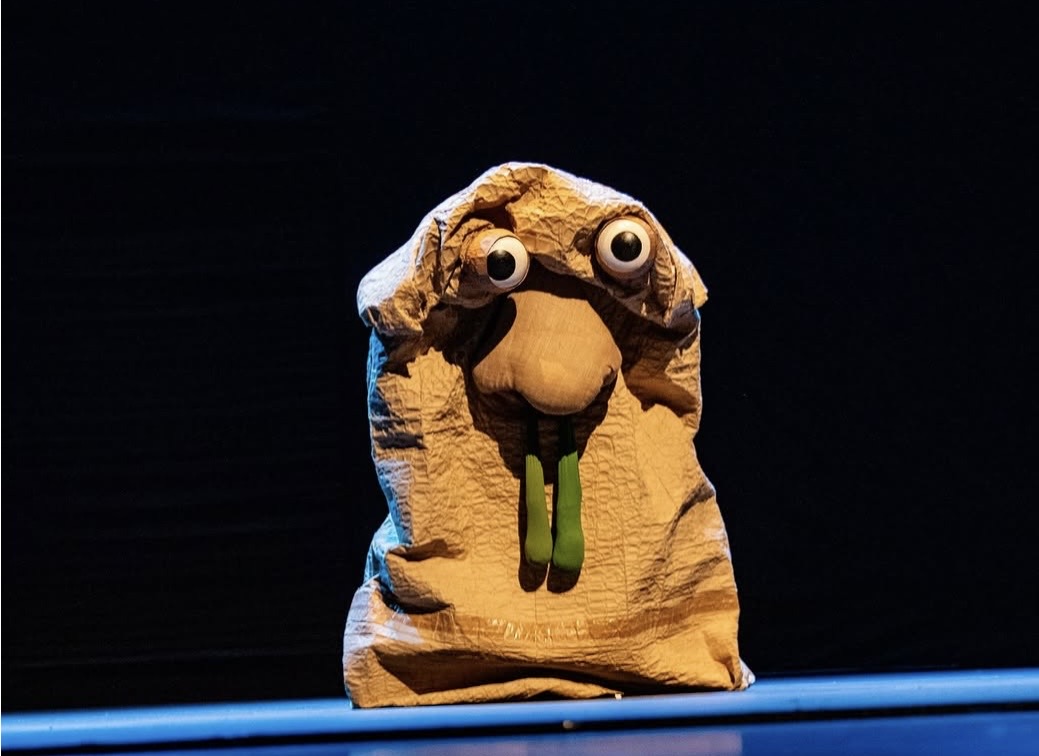
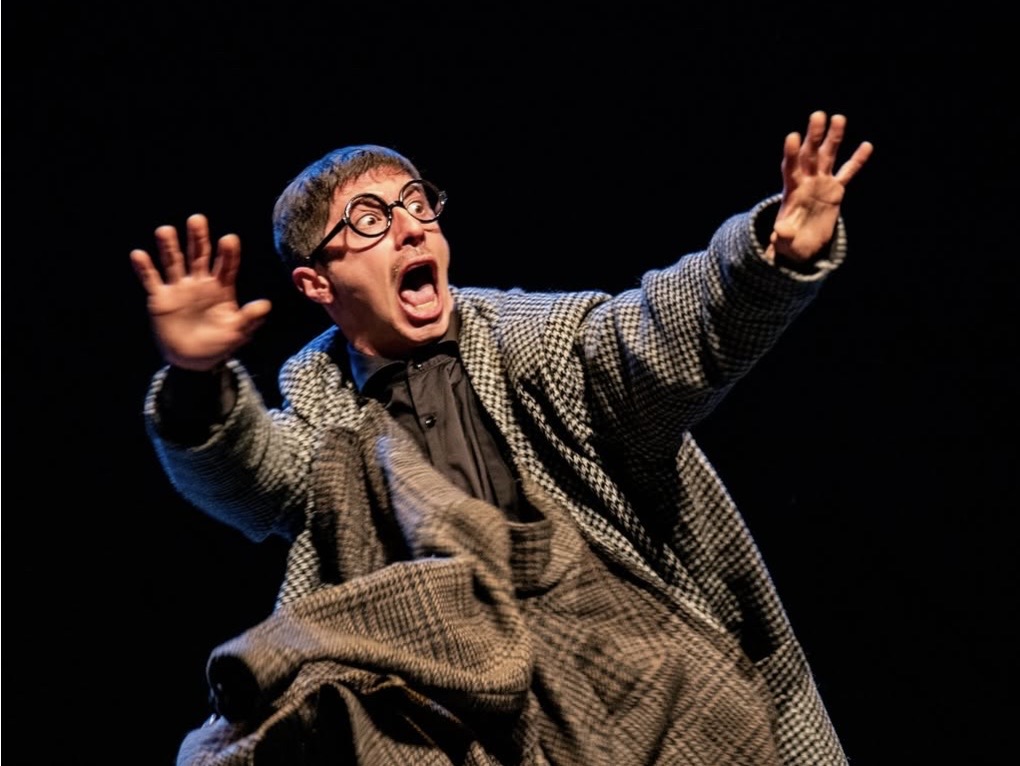
The piece really needs to be seen to be believed, but I will run through some highlights. An actor comes out with a number of large closed bags, like reusable shopping bags to carry large parcels, and then two of these bags take on the characteristics of dogs, and we see them going through some training exercises. One corner at the back of them starts flapping like a tail wagging, and they run around the stage sniffing and standing on their hind legs, rolling over for belly rubs, and sitting on command. Similarly, another creature emerges out of what looks like a large paper potato sack, and we see that they have two big eyes and a large nose, and in fact they look a lot like one of Jim Henson’s Muppets. The puppeteer does an incredible job at changing the dimensions of the creature’s head to express different emotions. When they are happy and excited two corners on either side of the top of them start to wiggle, like ears or horns. When they are embarrassed or shy the puppeteer scrunches up their face, and we find out that the reason that they tend toward embarrassment and shyness is because their nose is running quite badly- to the raucous delight, of course, of all the children. There is a clown character who encounters a coat that, at first, seems quite ordinary, until he keeps putting it on and taking it off to discover that it actually has a number of hidden linings and sides that can trap him inside of it- in fact it can fully transform him into a frog.
There are a few scenes that are more geared toward the adults in the audience, as this isn’t by any means strictly a show for younger audiences. There is one scene where one person is absolutely delighted to give a gift to their partner, and the partner responds with an absolute deluge of angry words, which are dramatized as a long rope coming out of her mouth and wounding around his stunned body. We aren’t meant to understand the specifics of what is said in her tirade, just to recognize the emotions behind it- the woman is very angry and seems to be voicing pent up frustration; the man doesn’t expect this and walks away sadly dejected. Another scene involves us seeing a person grow from a newly born baby to an elderly person just by adding different props and costume pieces and showing brief interactions with others, and there is something about distilling a life down to just these few significant markers that is poignant to see and shows us the inevitability of all of us continually every day walking forward towards death.
One of the images that floats throughout the piece is this sense of plastic- it is used to create tutus that then become birds, it is a large beach ball that a person can magically get inside, it reminds us of the parachute games we used to love playing in elementary school gym class. It also perpetually gets sucked up by an interesting apparatus at the back of the stage that also creates its own share of magic- as people, limbs, and costume pieces emerge and disappear through these slats in ways that often seem impossible. The allusion to plastic, though, is interesting to me, since it is often associated with garbage that can’t be recycled, microplastics in our bodies, and litter in the natural world. Here we see it being used to create something beautiful.
Another especially engaging moment of the show was a creature made out of a pair of pants whose mouth could be manipulated by a sort of drawstring marionette string hybrid who lip synced to a rollicking eleven o’clock number. The precision of the puppeteering here was mesmerizing. The show was created and directed by Álvaro Morales and Edurne Rankin and I was struck by how important having a strong directorial eye (or eyes) on this piece must be considering that there are so many instances where the performers can’t see what they are doing themselves, whether that’s sticking their arms through the slats at the back of the stage, or creating a bird’s head with their hand while they are bent over under a tutu- the specificity of their movements in all of these scenarios is incredibly impressive.
It’s incredible to have the opportunity to see the work of artists from around the world here in Halifax, and La Llave Maestra’s production of Pareidolia was greeted by both rapt attention and torrents of laughter from the kids and the adults alike yesterday afternoon. Unfortunately, this was their only performance in Halifax as part of the Prismatic Arts Festival. Next they will be headed to Toronto to Aluna Theatre’s Rutas Festival where they will be performing October 2nd at Hart House Theatre. The Prismatic Arts Festival continues here in Halifax until October 4th, 2026.
“The Prismatic Arts Festival is a national, multidisciplinary arts festival that showcases and celebrates innovative work by Indigenous artists and artists of colour from across Canada. Based in Kjipuktuk (Halifax, Nova Scotia), Prismatic has been bringing audiences vibrant, boundary-pushing new works in theatre, dance, music, film, visual arts, media arts, and spoken word since 2008.” It runs until October 4th in venues around the city. For more information about the full lineup of programming please visit this website.
Canadian Theatre Criticism is an essential part of a healthy and thriving theatre community. It helps theatre companies find new audiences for their shows, deepens audiences’ engagement with local artists and the work being created in their communities, and it is one of the best ways to preserve a snapshot of an ephemeral art form for future generations of theatre lovers. TWISI relies on support from its Subscribers, folks like you who care about the survival of local and independent arts coverage. Please consider becoming a Subscriber today, or click here for more information. Thank you so much for supporting TWISI.